Sunflower Seeds
Sunflower seeds are a satisfying, nutrient-packed snack and kitchen staple that punch well above their weight.
In a nutshell
Sunflower seeds are the edible kernels harvested from the large flower heads of the sunflower plant. They deliver a pleasant mild, nutty flavor and a satisfying crunch whether eaten raw, roasted, or worked into recipes. Rich in healthy fats, protein, and micronutrients, they’re one of the most versatile seeds in the American pantry.
Nutrition
≈ 79 Calories and 7g fat per tablespoon.
Sunflower seeds are a nutritional powerhouse in a small package. The majority of their fat comes from heart-healthy polyunsaturated and monounsaturated fatty acids, with a relatively modest amount of saturated fat, making them a smart swap for less healthy snacks. They’re a good plant-based protein source, offering roughly 20–21 g of protein per 100 g—comparable to many legumes—plus dietary fiber to support digestion and satiety. They’re one of the best food sources of vitamin E, a fat-soluble antioxidant that protects cells from oxidative stress, and they supply meaningful amounts of magnesium, selenium, copper, and B vitamins—particularly thiamine and folate—that support energy metabolism and immune function. Nutrition per 100 g.
Culinary uses & pairings
Sunflower seeds shine as a snack straight from the bag—raw or dry-roasted, salted or flavored—but their real kitchen value comes from their versatility. Toss them into green salads, grain bowls, slaws, and yogurt parfaits for instant crunch, or fold them into granola, trail mix, muffin batter, and quick breads for nutty texture. They work beautifully as a nut-free topping on oatmeal or overnight oats, and their mild flavor means they rarely clash with other ingredients.
Beyond snacking, sunflower seeds can be blended into sunflower seed butter—a creamy, allergy-friendly alternative to peanut butter—or ground into a flour-like meal for gluten-free coating and crusts. They’re frequently pressed into seed bars and energy bites, stirred into pesto in place of pine nuts, and scattered over roasted vegetables before the pan goes in the oven. In many Eastern European and Middle Eastern cuisines they appear in savory salads, stuffings, and spice blends, showing how far this humble seed travels across the culinary world.
Pairs well with
Substitutions
Buying & storage
Look for sunflower seeds sold in airtight packaging with a clearly visible best-by date; the high fat content means they can go rancid if the package has been sitting on a warm shelf too long. For baking and cooking, buy hulled (shelled) kernels—raw or dry-roasted—rather than in-shell seeds. Raw kernels give you the most flexibility since you can toast them yourself to your preferred level. Opt for unsalted if you want control over seasoning in recipes. Bulk bins can be economical but only buy from stores with high turnover and covered bins to minimize oxidation exposure.
Types
- Oilseed (Black): Small, solid black seeds grown primarily for sunflower oil production; very high in fat and rarely eaten whole.
- Confectionery (Striped): Larger striped seeds bred for snacking and cooking; lower oil content, meatier kernel, and the type most commonly found in grocery stores.
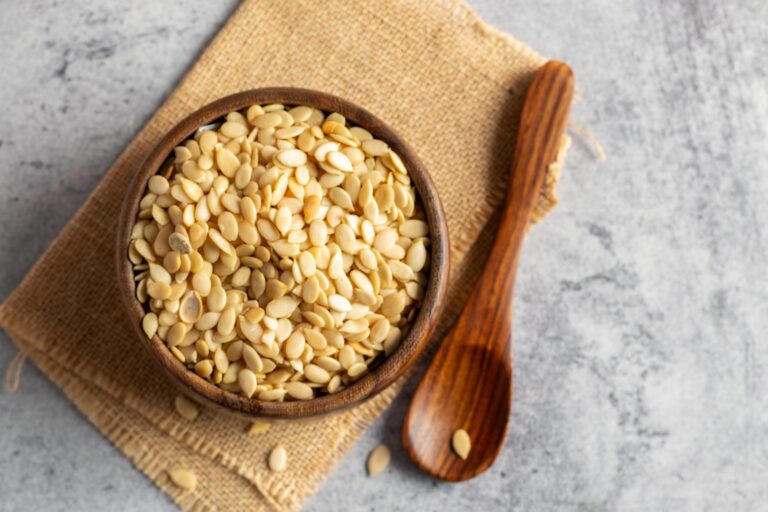
- Raw Hulled Kernels: Shell-removed kernels sold raw; the most versatile form for baking, cooking, and making sunflower seed butter.
- Dry-Roasted: Hulled kernels roasted without oil; deeper, nuttier flavor and longer shelf stability than raw kernels.
- Sprouted: Kernels that have been germinated before drying; some fans find them easier to digest and slightly sweeter in flavor.
Recipes using sunflower seeds
16 recipes across our recipe sites use sunflower seeds. A few favorites:
Cooking with sunflower seeds tonight?
Find sunflower seeds recipes that match your diet — keto, high-protein, vegan, under 30 minutes — and build a shopping list in one tap.
History & origin
Sunflowers (Helianthus annuus) are one of the few crop plants that originated entirely within what is now the continental United States. Indigenous peoples of North America were cultivating sunflowers as a food crop as far back as 3,000 BCE, grinding the seeds into flour, pressing them for oil, and using the plant medicinally. Spanish explorers carried seeds to Europe in the early 1500s, where the plant initially served as an ornamental curiosity. It was in Russia during the 18th and 19th centuries that sunflower seed production truly industrialized—the Russian Orthodox Church’s fasting rules prohibited many animal-based fats but not sunflower oil, which drove enormous commercial demand. By the 20th century, high-yielding Russian cultivars made their way back to North America, and the US eventually became one of the world’s leading sunflower producers, with the Great Plains states of North Dakota and South Dakota leading the harvest today.
How it’s made
Sunflowers are warm-season annual crops planted in spring and harvested in late summer or early fall once the flower heads have dried and the seeds reach low moisture. After mechanical harvesting, seeds are cleaned, dried to a safe moisture level, and separated by size. For confectionery seeds destined for snacking, the outer hull is either left on for in-shell products or mechanically removed to yield hulled kernels. Roasted seeds go through large drum or conveyor roasters at temperatures typically around 320–350°F (160–177°C); dry-roasting uses no added oil. Seeds bound for sunflower oil are expelled or solvent-extracted, leaving behind a protein-rich meal used in animal feed.
Good to know
- A single sunflower head is actually made up of up to 2,000 tiny individual flowers, each capable of producing one seed.
- Sunflower seeds are technically a fruit (an achene), not a true seed in the botanical sense—the black-and-white striped shell is the wall of the fruit.
- The US produces roughly 1.5 to 2 billion pounds of sunflower seeds per year, with the majority going to oil extraction and the rest to snack and bird-feed markets.
- Sunflower seed butter can turn green when baked—chlorogenic acid in the seeds reacts with baking soda or baking powder, a harmless but surprising color change.
- Sunflowers exhibit heliotropism (sun-tracking) only while young; mature plants fix their heads facing east, which warms them in the morning and attracts more pollinators.