Jackfruit Seeds
Jackfruit seeds are a starchy, protein-rich tropical gem that most cooks toss away—but absolutely shouldn’t.
In a nutshell
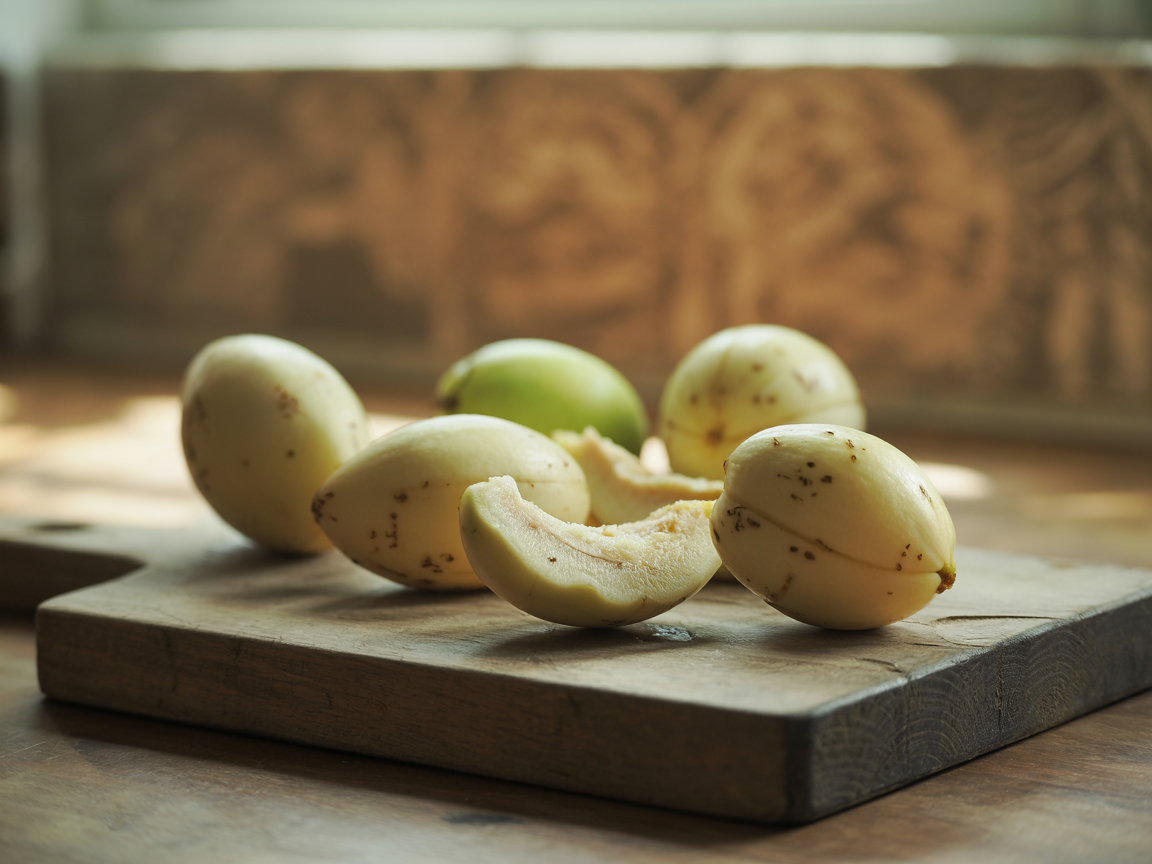
Jackfruit seeds are the large, cream-colored seeds tucked inside the world’s biggest tree fruit. Once boiled or roasted, they turn tender and starchy—similar to chestnuts or mild potatoes. They’re a beloved ingredient across South and Southeast Asia, and they’re finally earning fans in US kitchens.
Nutrition
≈ 13 Calories and 0.1g fat per tablespoon.
Jackfruit seeds are primarily a complex-carbohydrate food, making them a satisfying, slow-burning energy source. They offer a modest but useful hit of plant-based protein and dietary fiber, which together support satiety and digestive health. The fat content is remarkably low and skews toward heart-friendlier unsaturated forms. They also supply B vitamins (particularly thiamine and riboflavin), along with minerals like magnesium, potassium, and zinc that support muscle function and immunity. Because they’re naturally very low in sodium, they fit comfortably into heart-conscious diets. Nutrition per 100 g.
Culinary uses & pairings
The most straightforward approach is to boil jackfruit seeds in salted water for 20 to 30 minutes until fork-tender, then eat them plain as a snack, toss them into curries, or mash them like potatoes. The outer white skin slips off easily after cooking, revealing a creamy, slightly sweet interior. Roasting them at 400°F (200°C) for about 20 minutes produces a nuttier, crispier result that’s great for snacking or adding crunch to salads.
In South Asian cooking, boiled jackfruit seeds are added whole to dals, gravies, and coconut-based curries, where they absorb surrounding spices beautifully. They can be ground into a flour for flatbreads and porridges, or blended into hummus-style dips as a swap for chickpeas. Some cooks slice and stir-fry them with aromatics and chiles for a quick side dish.
Pairs well with
Substitutions
Buying & storage
Fresh jackfruit seeds are most easily found at South Asian, Southeast Asian, or Caribbean grocery stores, often sold loose or scraped straight from a whole jackfruit. Look for seeds that are plump, ivory-white, and free of dark spots or mold. If you’re buying a whole jackfruit, expect roughly 100 to 500 seeds depending on the fruit’s size. Dried jackfruit seeds appear occasionally in specialty stores and online; they require a longer soak before cooking. Some Asian markets sell pre-boiled or vacuum-packed seeds as a convenient shortcut.
Recipes using jackfruit seeds
1 recipes across our recipe sites use jackfruit seeds. A few favorites:
Cooking with jackfruit seeds tonight?
Find jackfruit seeds recipes that match your diet — keto, high-protein, vegan, under 30 minutes — and build a shopping list in one tap.
History & origin
Jackfruit (Artocarpus heterophyllus) is native to the Western Ghats of India and has been cultivated across South and Southeast Asia for thousands of years. Its seeds have long been considered a valuable food source—not a waste product—in countries like India, Bangladesh, Sri Lanka, the Philippines, and Indonesia, where discarding them would be unthinkable. During lean seasons, roasted or boiled jackfruit seeds served as an important calorie and protein source for rural communities. The fruit itself became popular in the West as a meat alternative in the 2010s, which gradually introduced Western cooks to the seeds as well.
How it’s made
Jackfruit seeds require no special processing to become edible—just heat and water. Each seed is wrapped in a thin white membrane and a slippery outer coating, both of which are removed before or after cooking. Boiling is the most common preparation: seeds go directly into salted boiling water and cook until a skewer slides through easily. For roasting, seeds are patted dry and placed in a hot oven or dry skillet. In some regions, seeds are sun-dried and then ground into a flour used in baked goods and porridges, extending their shelf life considerably.
Good to know
- A single large jackfruit can contain anywhere from 100 to over 500 seeds, making the seeds a serious haul of free nutrition.
- Jackfruit seeds contain natural compounds called lectins and tannins that are reduced to safe levels by thorough cooking—always cook them before eating.
- In India, jackfruit seeds are sometimes ground and mixed with wheat flour to make a nutrient-boosted flatbread.
- The jackfruit is the largest tree-borne fruit in the world, sometimes weighing over 80 pounds (36 kg), and its seeds are themselves impressively large—roughly the size of a large date or small Brazil nut.
- Jackfruit seed flour has been studied as a gluten-free baking ingredient with promising results for texture and nutrition in breads and snacks.