Tangerine
Tangerines are the sunny, easy-peel citrus that make snacking feel like a little gift you give yourself.
In a nutshell
Tangerines are a loose-skinned member of the mandarin family prized for their sweet-tart juice, vibrant color, and almost effortless peel. They’re smaller and sweeter than a navel orange with a floral aroma that sets them apart. Most US home cooks reach for them as a no-fuss snack or a bright finishing touch in both sweet and savory dishes.
Nutrition
≈ 7 Calories and 0g fat per tablespoon.
Tangerines are a solid source of vitamin C, delivering a meaningful chunk of your daily needs in a single fruit to support immune function and skin health. They also supply folate and potassium, the latter helpful for maintaining healthy blood pressure. Their flavonoids—particularly tangeretin and nobiletin—have drawn interest for antioxidant and anti-inflammatory properties. At just 53 calories per 100 grams with nearly no fat and about 1.8 grams of fiber, they’re a genuinely guilt-free, naturally sweet option that satisfies a sugar craving without a spike-and-crash. Nutrition per 100g via Spoonacular.
Culinary uses & pairings
Fresh tangerines shine brightest eaten out of hand, but they’re just as welcome segmented into green salads, grain bowls, or salsas where their juice brightens everything around them. The zest is intensely fragrant—stir it into vinaigrettes, whipped butter, or cake batter for a floral citrus punch that orange zest alone can’t quite replicate.
On the savory side, tangerine juice makes a fantastic base for glazes on roasted duck, pork tenderloin, or salmon, caramelizing beautifully thanks to its natural sugars. Squeeze it into a pan sauce, use it to deglaze after searing shrimp, or reduce it with a splash of soy and a knob of ginger for a quick stir-fry sauce. It also juices easily for cocktails, agua fresca, and homemade vinaigrette.
Pairs well with
Substitutions
Buying & storage
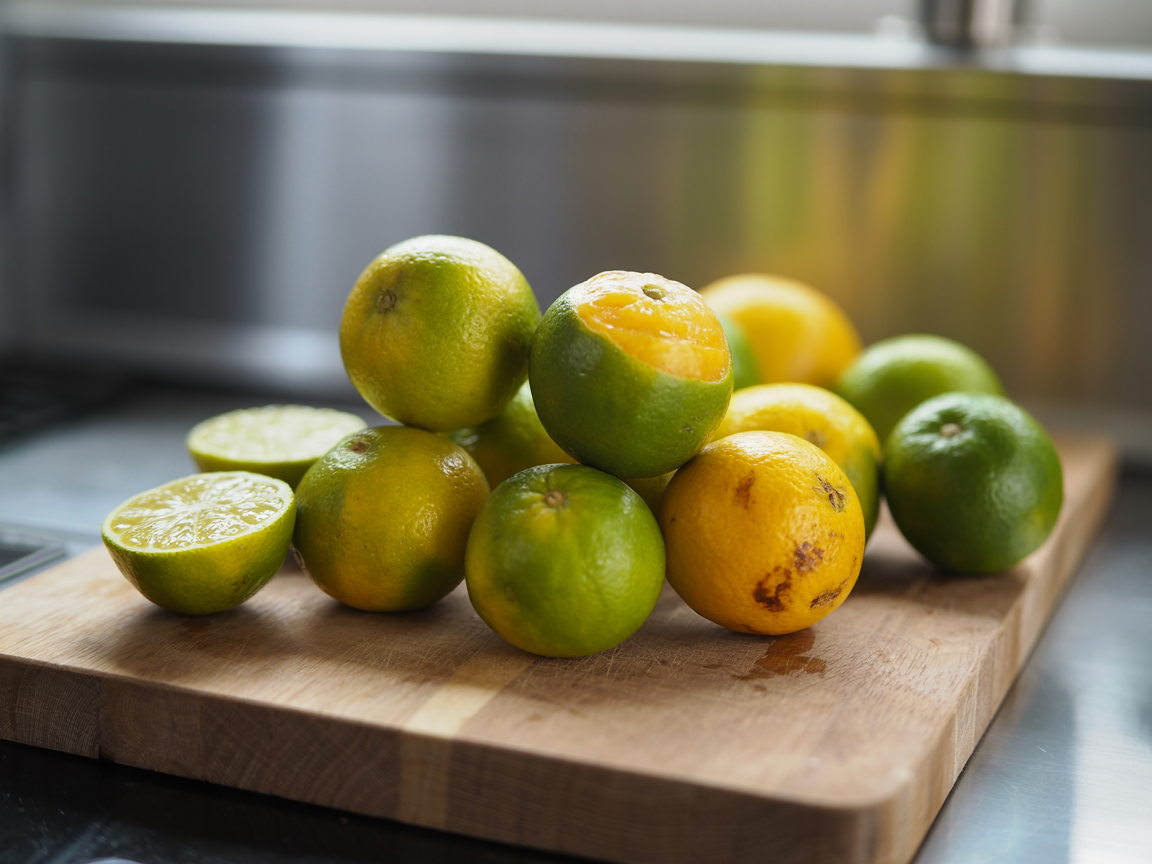
Look for tangerines that feel heavy for their size—that weight signals juiciness. The skin should be a deep orange and snug enough that it doesn’t rattle when you shake the fruit; a little puffiness is normal for the variety but excessive looseness means it’s drying out inside. Avoid any with soft spots, mold near the stem end, or a dull grayish cast. Don’t be put off by a patch of green—tangerines can re-absorb chlorophyll in warm storage conditions and still taste perfectly ripe and sweet. Peak season in the US runs from November through March, when prices drop and quality is highest.
Varieties
- Clementine: A mandarin-sweet orange hybrid, but widely grouped with tangerines; typically seedless, very sweet, and among the most common varieties in US grocery stores.
- Satsuma: The mildest and least acidic; thin, delicate skin and reliably seedless, making it a favorite for kids and low-acid diets.
- Murcott (Honey Murcott): Rich, intensely sweet flesh with a higher sugar content than most; seeds are present but the flavor payoff is worth it.
- Dancy: An older heirloom variety with a spicy, complex tartness; it has more seeds but is considered by many to have the classic ‘tangerine’ flavor.
- Page: A mandarin-orange hybrid with deep orange skin and exceptionally juicy, sweet flesh; great for juicing and fresh eating.
Cooking with tangerine tonight?
Find tangerine recipes that match your diet — keto, high-protein, vegan, under 30 minutes — and build a shopping list in one tap.
History & origin
Tangerines take their common name from the port city of Tangier, Morocco, through which shipments of the fruit passed on their way to Europe in the 19th century. The fruit itself is far older—mandarins have been cultivated in China and Southeast Asia for well over 3,000 years and were prized by Chinese nobility long before they reached Western tables. They arrived in the United States around the 1840s, finding a natural home in Florida and California. For much of the 20th century, tangerines were a beloved Christmas tradition, tucked into stockings as a sweet and affordable seasonal treat before refrigerated shipping made them available nearly year-round.
How it’s made
Tangerines grow on small to medium evergreen trees that thrive in subtropical climates with mild winters and hot summers—Florida, California, Arizona, and Texas are among the primary US-producing states. Trees are typically propagated by grafting a desired variety onto a hardy rootstock to ensure consistent fruit quality and disease resistance. The fruit develops over several months after flowering, with sugars accumulating as temperatures cool in fall and winter. Unlike many citrus varieties, tangerines are largely hand-harvested because their fragile, loose skin bruises easily under mechanical picking. After harvest, fruit may be lightly washed and sometimes coated with a food-safe wax to slow moisture loss before it reaches store shelves.
Good to know
- The loose, easy-peel skin that makes tangerines so convenient is sometimes called a ‘zipper skin’ in the citrus trade.
- Tangeretin, a flavonoid found in high concentrations in tangerine peel, has been studied for potential cholesterol-lowering effects in preliminary research.
- China produces the majority of the world’s mandarin and tangerine supply each year by a wide margin.
- The scent of tangerine peel comes primarily from limonene, the same terpene used in many natural cleaning products and aromatherapy blends.
- A single medium tangerine provides roughly 20–25% of the recommended daily intake of vitamin C for an average adult.