Rambutan
Rambutan’s jewel-bright shell and lychee-like sweetness make it one of the most fun tropical fruits to discover.
In a nutshell
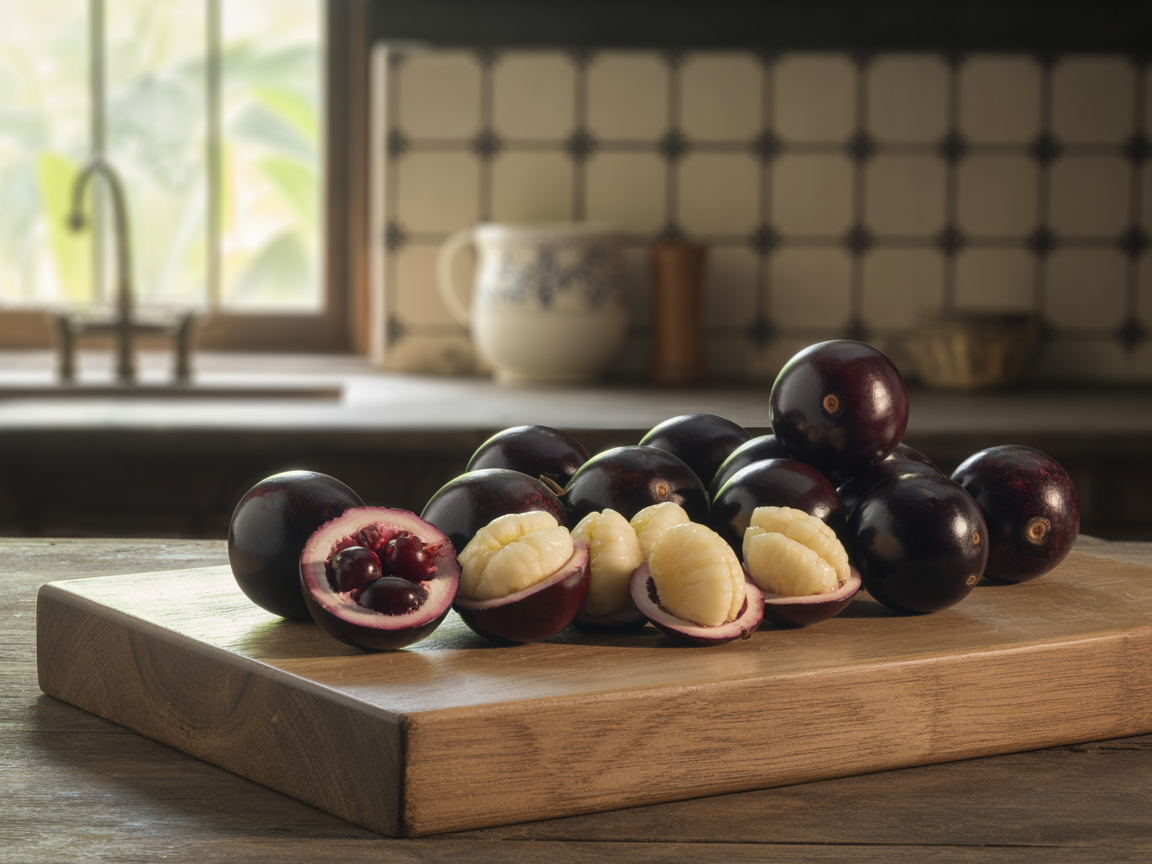
Rambutan is a Southeast Asian tropical fruit covered in soft, hair-like spines that peel away to reveal a juicy, translucent white flesh. Its flavor is sweet with a gentle floral tartness, very close to lychee but a touch creamier. In the US you’ll find it fresh in Asian grocery stores or canned in syrup at many supermarkets.
Nutrition
≈ 9 Calories and 0g fat per tablespoon.
Rambutan is a low-fat, moderate-calorie fruit whose carbohydrates come partly from dietary fiber — roughly 0.9 gram per 100-gram serving — useful for digestive support without a heavy calorie load. It delivers a solid hit of vitamin C, which supports immune function and helps the body absorb plant-based iron. The fruit also contains small amounts of copper and manganese, minerals that play roles in connective-tissue formation and antioxidant defense. Its natural sugars provide quick energy, while the fiber helps moderate how fast those sugars enter the bloodstream. Nutrition per 100g via Spoonacular.
Culinary uses & pairings
The most rewarding way to eat rambutan is fresh and out of hand — just score the skin around the equator with a thumbnail or paring knife, twist, and pop out the seed-bearing flesh. The peeled arils are wonderful tossed into fruit salads, layered over yogurt or ice cream, or blended into tropical smoothies and lassi-style drinks. They pair especially well with coconut milk in both savory and sweet preparations.
In the kitchen, rambutan can be poached lightly in a simple syrup flavored with ginger or lemongrass and served as a refined dessert with a scoop of coconut sorbet. Canned rambutan (packed in syrup) works well chopped into salsas alongside jalapeño and lime for a bright topping for grilled fish or shrimp tacos, since the sweetness balances heat beautifully.
Pairs well with
Substitutions
Buying & storage
Look for rambutan with bright red or yellow-red skin and soft, flexible spines that are still greenish at the tips — those green tips signal freshness. Avoid fruit with blackened or dried-out spines, brown patches on the skin, or any fermented smell, all of which indicate the fruit is past its prime. When buying canned rambutan, check that the syrup is clear, not cloudy, and that the can shows no dents or swelling. Fresh rambutan is most reliably found at Asian grocery stores and well-stocked international markets, typically imported from Southeast Asia or Mexico.
Varieties
- Rongrien: A popular Thai cultivar with deep crimson skin, very sweet flesh, and a seed that separates cleanly from the aril — a variety well regarded for fresh eating.
- Lebakbulus: An Indonesian variety with pale red to orange-red skin and a rich, slightly acidic flavor balance that makes it versatile for both fresh eating and preserves.
- Binjai: A Malaysian variety known for its large fruit, thick flesh, and notably sweet, almost honey-like taste.
- Yellow Rambutan: A less common color variant with yellow to orange skin; flavor is similarly sweet with a slightly milder floral note than the red types.
Cooking with rambutan tonight?
Find rambutan recipes that match your diet — keto, high-protein, vegan, under 30 minutes — and build a shopping list in one tap.
History & origin
Rambutan (Nephelium lappaceum) is native to the Malay Archipelago — present-day Malaysia and Indonesia — where it has been cultivated for many centuries. The name comes from the Malay word rambut, meaning hair, a nod to its distinctive spiny coat. It spread throughout Southeast Asia over time, and European colonists introduced it to the Caribbean and parts of Central America in the 19th century. Today it’s commercially grown in Thailand, Vietnam, the Philippines, Malaysia, Indonesia, and Mexico, with small groves in Hawaii and Florida, making it increasingly accessible to US shoppers.
How it’s made
Rambutan grows on medium-sized evergreen trees (Nephelium lappaceum) that thrive in hot, humid tropical climates with well-distributed rainfall and no frost. Trees are typically propagated by grafting or air-layering from superior parent stock to ensure fruit quality and shorten the time to first harvest to about three to five years. The trees flower in clusters and set fruit that matures in roughly 90 to 120 days after flowering, ripening in dramatic bunches of 10 to 20 fruits. Harvest is done entirely by hand — workers climb or use long poles to cut whole clusters — because the delicate skin bruises easily. After harvest the fruit is sorted, graded by skin color and spine condition, and either shipped fresh (with a very short shelf life) or processed into syrup-packed cans for export.
Good to know
- The word rambutan literally means ‘hairy’ in Malay, referring to the soft spines covering its skin.
- Rambutan is in the same plant family (Sapindaceae) as lychee, longan, and maple trees.
- A productive rambutan tree can yield substantial harvests of fruit per year under ideal tropical conditions, though yields vary widely by cultivar, age, and growing conditions.
- The seed inside rambutan contains saponins and tannins and should not be eaten raw; it is reportedly edible and takes on a nutty flavor after roasting or boiling, a practice in some parts of Southeast Asia.
- Rambutan skin has been studied for its content of ellagic acid and other polyphenols, and is used in traditional medicine in Malaysia and Indonesia, though it is not consumed as food in Western cooking.