Paprika
Paprika brings warm color and gentle sweetness to everything from deviled eggs to slow-braised stews.
In a nutshell
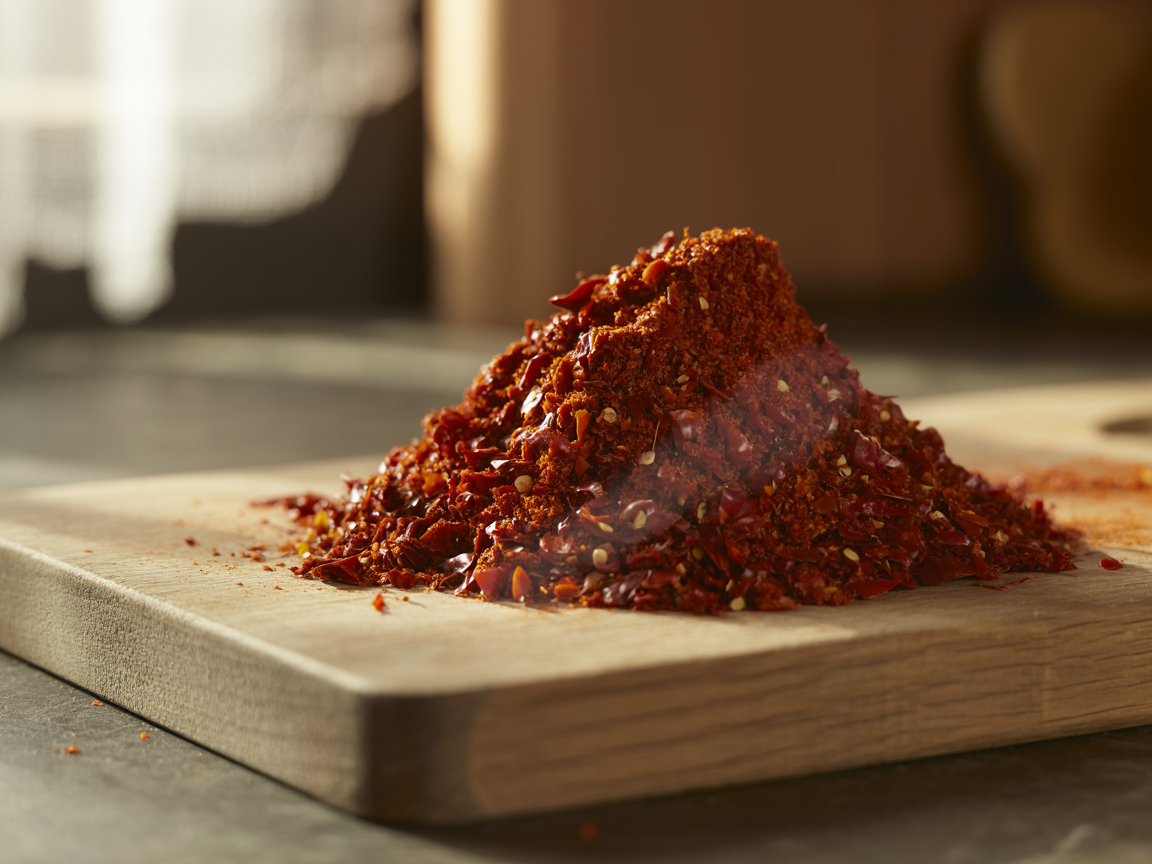
Paprika is a ground spice made from dried red peppers ranging from mild and sweet to bold and smoky. It’s a pantry staple across Hungarian, Spanish, and American cooking alike. The style you choose — sweet, hot, or smoked — dramatically changes a dish’s character.
Nutrition
≈ 38 Calories and 1.7g fat per tablespoon.
Paprika is surprisingly rich in vitamins A, E, and C, all delivered through its dense concentration of carotenoids — the same pigments that give it that vivid red hue. Those carotenoids, particularly capsanthin and beta-carotene, act as antioxidants that support eye health and immune function. It also contributes meaningful iron and B6 per tablespoon, and while the fiber count is relatively high for a spice, portions used in cooking are small, so the real day-to-day benefit comes from its antioxidant load rather than macronutrients. Nutrition per 100g via Spoonacular.
Culinary uses & pairings
Paprika is the backbone of classic dishes like Hungarian goulash, chicken paprikash, and Spanish chorizo. Stir it into the oil or fat early in cooking to bloom its color and deepen its flavor — a step Hungarian cooks call the key to a truly red stew. It’s equally at home in dry rubs for ribs, brisket, or roasted chicken, where it builds a gorgeous mahogany crust.
Smoked paprika (pimentón de la Vera) is the finishing cook’s secret weapon — a pinch over hummus, roasted cauliflower, or potato soup adds a campfire depth without any heat. Sweet paprika shines as a garnish on deviled eggs, potato salad, and creamy dips, adding color and mild pepper flavor right at the table.
Pairs well with
Substitutions
Buying & storage
Look for paprika with a deep, vivid brick-red color — dull brown or orange hues signal age. Buy from stores with good turnover, and check the best-by date; spice-rack paprika that’s been sitting two years has lost most of its punch. Spanish pimentón de la Vera is worth seeking out in tins for authentic smoked flavor, and Hungarian paprika in sealed foil packets tends to be fresher and more aromatic than generic supermarket jars.
Varieties
- Sweet Paprika (Hungarian): The most common variety in US kitchens; mild, slightly sweet, and fruity with brilliant red color. The default for chicken paprikash and deviled eggs.
- Hot Paprika (Hungarian): Made from spicier pepper varieties; adds a moderate kick alongside the characteristic red color. Used in goulash when a little heat is wanted.
- Smoked Paprika — Sweet (Pimentón Dulce): Spanish peppers slowly oak-smoked before grinding; deeply smoky with no heat. Transformative on roasted vegetables, paella, and dips.
- Smoked Paprika — Hot (Pimentón Picante): Same slow-smoked Spanish process using hotter pepper varieties; brings both smoke and genuine heat to chorizo and marinades.
- Half-Sharp Paprika: A blend of sweet and hot Hungarian peppers landing at medium heat; popular in traditional Hungarian cooking where balance is key.
Recipes using paprika
429 recipes across our recipe sites use paprika. A few favorites:
Cooking with paprika tonight?
Find paprika recipes that match your diet — keto, high-protein, vegan, under 30 minutes — and build a shopping list in one tap.
History & origin
Paprika’s story begins with Columbus bringing chili peppers back from the Americas to Spain in the late 15th century. The peppers spread east through the Ottoman Empire into Hungary by the 16th century, where farmers in the Kalocsa and Szeged regions began drying and grinding them into the brilliant spice we know today. It became the defining flavor of Hungarian cuisine by the 19th century — a national symbol so important that Nobel Prize–winning scientist Albert Szent-Györgyi isolated vitamin C using Hungarian paprika as a key source in 1932. In Spain, the tradition of smoking peppers over oak before grinding them gave rise to pimentón de la Vera, which became central to Spanish charcuterie and regional cooking.
How it’s made
Paprika is made by harvesting fully ripe red peppers — typically varieties such as those grown in Hungary’s Kalocsa region or Spain’s Nora pepper — then drying them either in the sun, in warm air dryers, or over wood smoke in the case of Spanish pimentón. Once dried to a low moisture level, the peppers are ground into a fine powder, sometimes with seeds and placenta included (which increases heat) or with them removed (for milder, sweeter paprika). The grind size and pepper variety determine the final heat level and color intensity. Quality paprika is tested for its ASTA color value, a standardized measure of red pigment concentration that processors use to grade and blend the final product.
Good to know
- Hungary produces some of the world’s most prized paprika, and the city of Kalocsa holds an annual paprika festival celebrating the harvest each autumn.
- Nobel laureate Albert Szent-Györgyi used Hungarian paprika as a key source when he isolated and identified vitamin C, work recognized with his Nobel Prize in 1937.
- Spanish pimentón de la Vera has a Protected Designation of Origin (PDO), meaning authentic smoked paprika can only legally carry that name if it comes from the La Vera valley in Extremadura.
- The vivid red color in paprika comes largely from capsanthin, a carotenoid so potent it’s used commercially as a natural food dye (listed as E160c).
- Paprika is typically low in heat — the capsaicin-containing seeds and white ribs are often removed during processing, which is why even ‘hot’ paprika is far milder than cayenne.