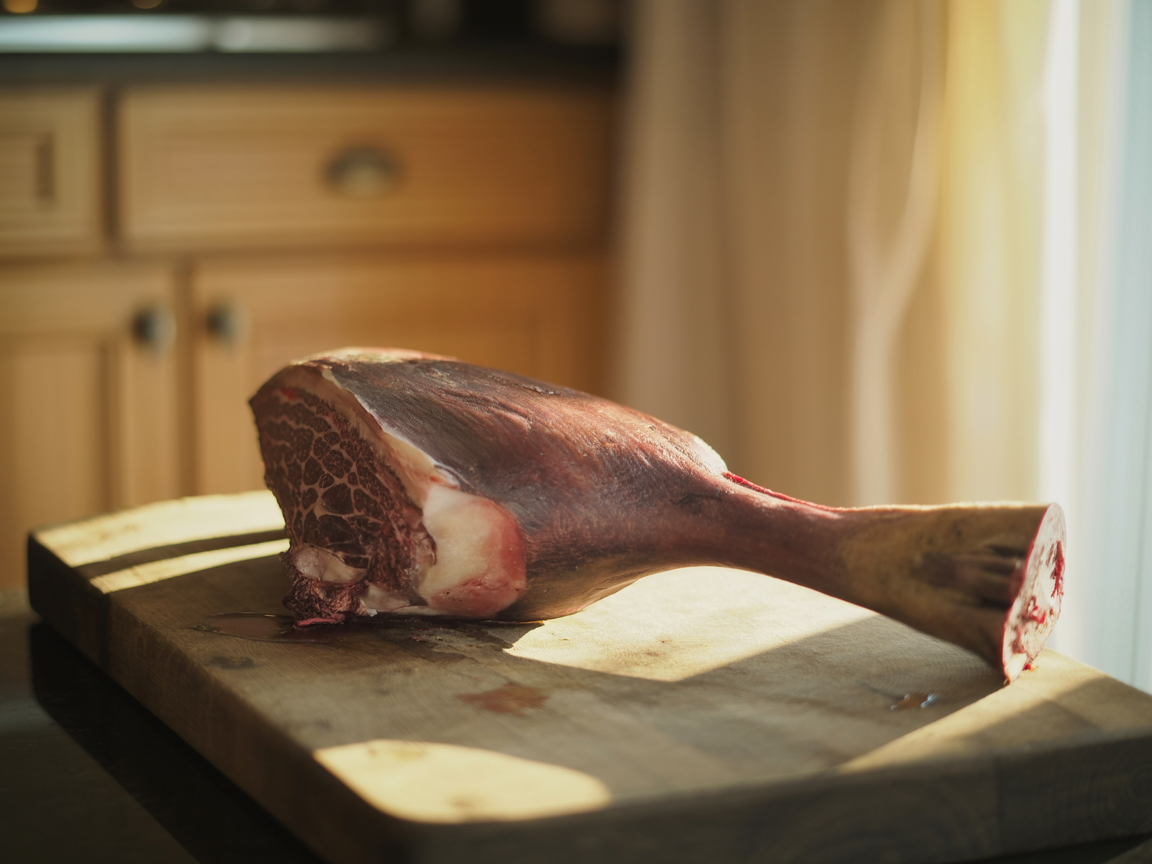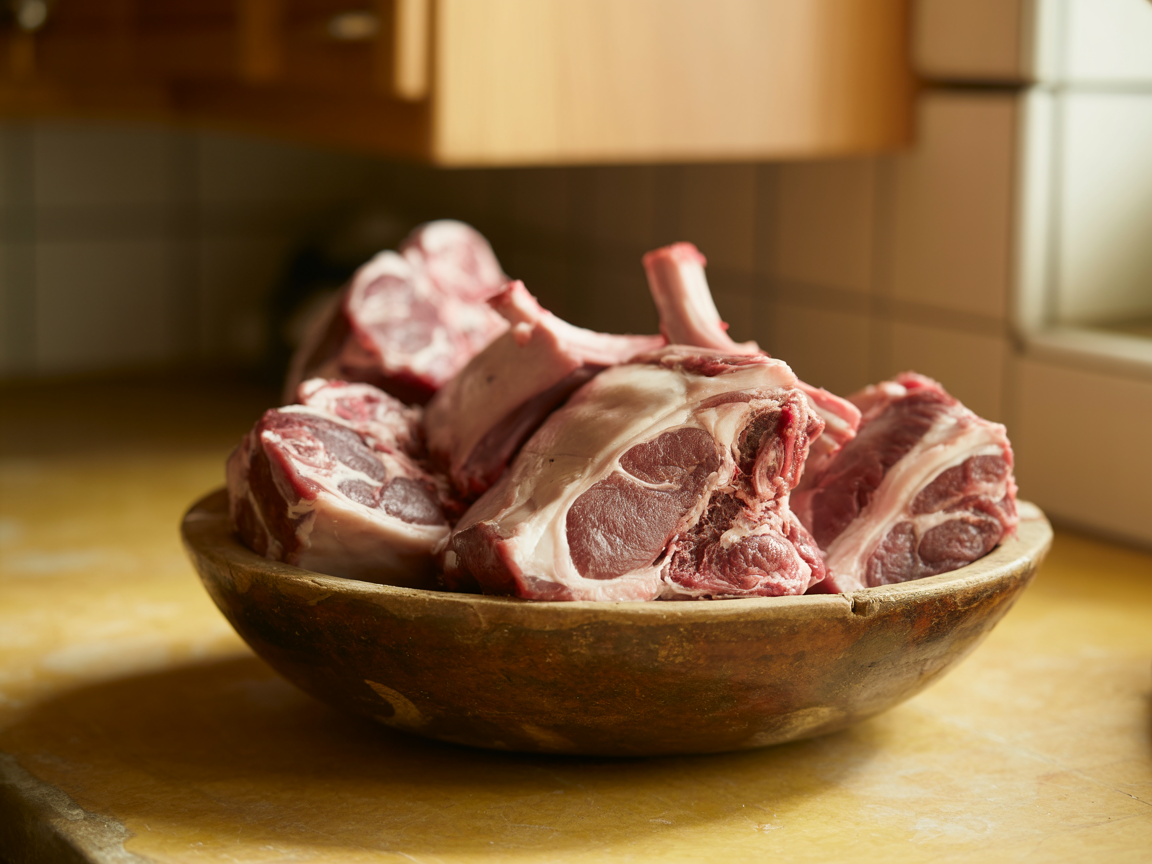
Reindeer
Reindeer is a lean, deeply flavorful game meat that brings a taste of the Nordic wilderness to your table.
In a nutshell
Reindeer (also called caribou in North America) is an exceptionally lean red meat with a rich, slightly sweet, and earthy flavor that sits somewhere between venison and beef. It’s prized in Scandinavian and Arctic cuisines and is increasingly available to US home cooks through specialty butchers and online retailers. Its low fat content and high protein make it one of the most nutritionally efficient red meats you can cook with.
Nutrition
≈ 17 Calories and 0.5g fat per tablespoon.
Reindeer meat is a nutritional standout among red meats, delivering over 22 grams of protein per 100-gram serving while keeping total fat remarkably low. The fat profile is fairly favorable, with a mix of saturated and unsaturated fats, with saturated fat staying well below what you’d find in beef or lamb. It’s a solid source of B vitamins—particularly B12 and niacin—as well as iron, zinc, and selenium, all critical for energy metabolism, immune function, and muscle repair. The sodium content is naturally low, which is a plus for those watching their intake, and its near-zero carbohydrate content makes it naturally compatible with low-carb eating patterns. Nutrition per 100g via Spoonacular.
Culinary uses & pairings
Because reindeer is so lean, it responds best to cooking methods that either work quickly over high heat or build moisture slowly over low heat. Pan-searing loin steaks or medallions to medium-rare is a classic approach—the meat is tender and flavorful in the best way, needing little more than butter, thyme, and juniper berries. It’s also excellent thinly sliced and flash-sautéed in the Swedish style known as renskav, often finished with cream and served over flatbreads or mashed potatoes.
For tougher cuts like shoulder or shank, braising and slow cooking bring out the deep, earthy qualities of the meat. Reindeer pairs beautifully in hearty stews with root vegetables, dried mushrooms, and dark ale or red wine. Ground reindeer can be used in meatballs, burgers, or meat sauces anywhere you’d use venison or lean beef, adding a distinctive wild flavor without heaviness. Because the fat content is so low, avoid overcooking—internal temperatures above 160°F (71°C) can quickly make it dry and tough.
Pairs well with
Substitutions
Buying & storage
In the US, fresh or frozen reindeer meat is most reliably sourced from specialty online butchers, Scandinavian import shops, or Alaska-based producers—it’s rarely stocked in mainstream supermarkets. Look for meat with a deep red to burgundy color and very little visible marbling, which is normal for this ultra-lean game. Frozen reindeer imported from Finland or Norway is perfectly fine and often what’s available; just make sure packaging is vacuum-sealed with no signs of freezer burn or ice crystals inside. If you’re buying ground reindeer, check that it contains no fillers or added fat unless that’s your preference.
Types
- Reindeer (Rangifer tarandus tarandus): The semi-domesticated Eurasian subspecies herded across Scandinavia and Russia; the most common form found in commercial US markets, typically imported from Finland or Norway.
- Caribou (Rangifer tarandus): The wild North American subspecies; legally hunted in Alaska and Canada and available through licensed Alaskan producers. Flavor is nearly identical to farmed reindeer, though wild caribou can be slightly leaner and more intensely flavored depending on the animal’s diet.
Cooking with reindeer tonight?
Find reindeer recipes that match your diet — keto, high-protein, vegan, under 30 minutes — and build a shopping list in one tap.
History & origin
Reindeer have been central to the survival and culture of Arctic and sub-Arctic peoples—including the Sámi of Scandinavia, the Nenets of Siberia, and Indigenous Alaskans—for at least 10,000 years, providing meat, hides, bone, and transportation. Semi-domestication of reindeer in northern Eurasia is thought to date back at least 2,000 years, making reindeer herding one of the oldest pastoral traditions in the world. In Scandinavian cuisine, reindeer meat has long been a staple ingredient in countries like Finland, Norway, and Sweden, where it appears in everything from traditional dried preparations to modern fine-dining menus. In the United States, commercial reindeer ranching has existed in Alaska since the late 19th century, introduced largely through government programs aimed at providing a sustainable food source for Indigenous Alaskan communities.
How it’s made
Most reindeer meat available in the US comes from either semi-domesticated herds managed by Sámi herders in Scandinavia or ranched reindeer operations in Alaska. Scandinavian reindeer are typically raised under a free-range, extensive herding system where animals roam vast tundra and forest landscapes, grazing on lichen, mosses, grasses, and shrubs—a natural diet that contributes to the meat’s distinctive earthy flavor. Animals are generally slaughtered in autumn when they reach peak condition after the summer grazing season. The carcass is processed much like other ungulates, with primal cuts including loin, shoulder, haunch, and shank, as well as organs and bones used for stock. Because the animals feed almost entirely on wild forage and are managed without intensive farming inputs, reindeer meat is often considered a sustainable and low-impact protein.
Good to know
- Reindeer and caribou are the same species—Rangifer tarandus—the primary distinction is geography and management: reindeer generally refers to Eurasian populations and domesticated Alaskan herds, while caribou refers to wild North American herds.
- Reindeer are the only deer species in which both males and females regularly grow antlers, a trait unique among the world’s deer species.
- Traditional Sámi smoked reindeer meat called suovas is smoked over open fires and considered a delicacy across northern Scandinavia.
- Reindeer lichen (Cladonia rangiferina), a major part of the reindeer’s winter diet, is almost indigestible to humans—making the reindeer’s rumen essentially a nutrient-conversion machine for Arctic ecosystems.
- Alaska’s reindeer industry was established in the 1890s when roughly 1,280 animals were imported from Siberia over several shipments to help feed Alaska Native communities facing food shortages.