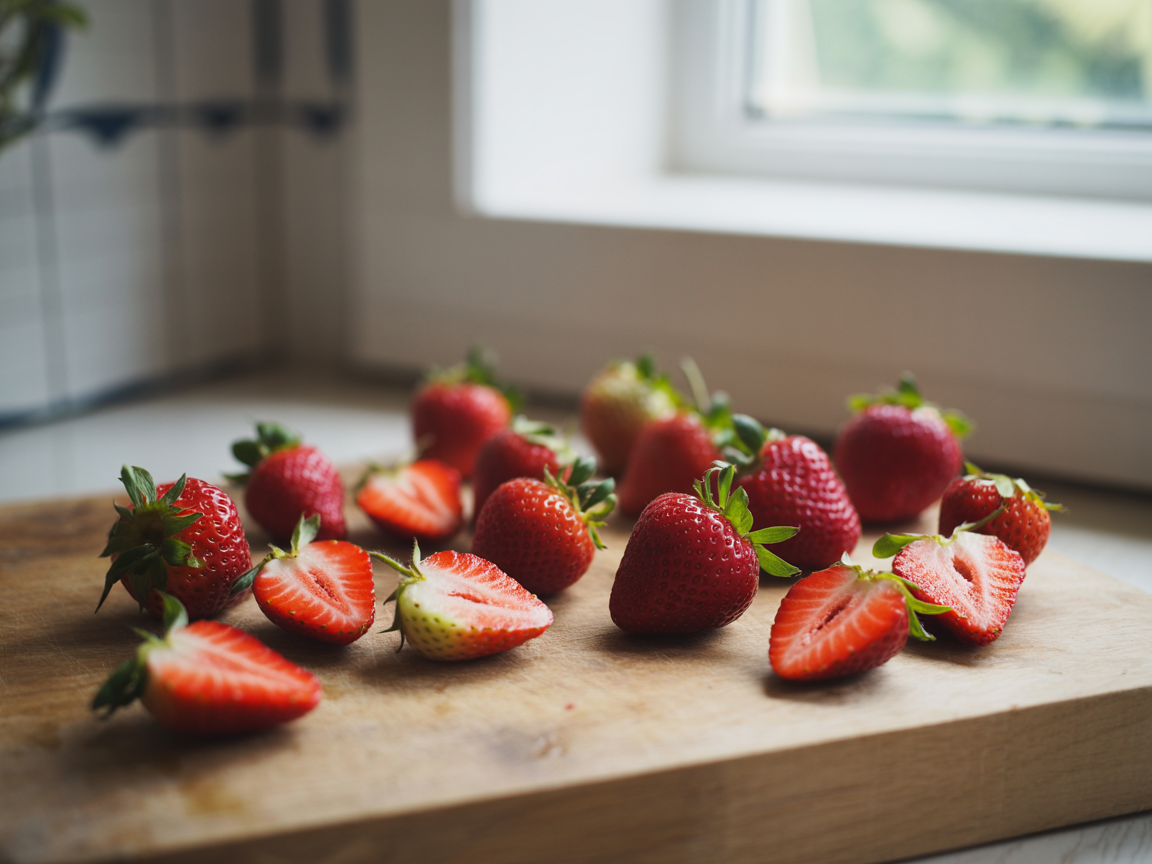
Raspberry
Raspberries bring a bright, jewel-toned burst of sweet-tart flavor that makes even simple dishes feel special.
In a nutshell
Raspberries are a delicate summer berry with a hollow center and an intensely fruity flavor that balances sweetness with a lively tartness. They’re one of the highest-fiber fruits you can eat, making them as nutritious as they are delicious. Fresh, frozen, or pureed, they shine in everything from breakfast to elegant desserts.
Nutrition
≈ 7 Calories and 0.1g fat per tablespoon.
Raspberries are a genuinely impressive nutritional package for such a small fruit. Their 6.5 grams of fiber per 100g is exceptionally high — much of it pectin, which supports healthy digestion and helps stabilize blood sugar. They’re rich in vitamin C and manganese, and loaded with polyphenols including anthocyanins (the pigments behind their red color) and ellagic acid, both of which have been studied for antioxidant and anti-inflammatory properties. At only 52 calories per 100g with virtually no saturated fat and just 1mg of sodium, they’re one of the most nutrient-dense sweet foods available to home cooks. Nutrition per 100g via Spoonacular.
Culinary uses & pairings
Fresh raspberries need almost no preparation — rinse them gently and they’re ready to top yogurt, oatmeal, pancakes, or a green salad. Their natural tartness makes them a perfect counterpoint to rich creamy desserts like cheesecake, panna cotta, and whipped cream. Toss them into muffins or scones just before baking, keeping in mind that fresh berries will bleed into the batter more than frozen ones added straight from the freezer.
Cooked raspberries break down quickly into a velvety sauce or coulis that pairs beautifully with chocolate, lamb, and duck. Simply simmer them with a little sugar and a squeeze of lemon, then strain out the seeds if you prefer a smooth finish. They also make exceptional jams, curd, and vinaigrettes, and their pectin content helps jam set up reliably, though raspberries are only moderate in pectin compared to high-pectin fruits like apples or currants, so some recipes benefit from added pectin.
Pairs well with
Substitutions
Buying & storage
Look for raspberries that are deeply colored, plump, and dry — any moisture or juice staining the bottom of the container signals overripe or crushed fruit. Since raspberries are hollow and extremely fragile, check that the berries hold their shape and have no visible mold; mold spreads fast in a punnet, so one fuzzy berry means inspect them all. Fresh local raspberries at a farmers’ market in peak summer (June through August depending on your region) will almost always outperform supermarket ones shipped from a distance. When fresh aren’t available, frozen raspberries are an excellent choice — they’re picked and frozen at peak ripeness and often taste more intensely flavored than off-season fresh.
Varieties
- Heritage (Red): A widely grown and well-known fall-bearing variety; reliable sweet-tart flavor with a classic bright red color and good firmness. It is common at farmers’ markets and in home gardens, though many supermarket berries come from other commercial varieties.
- Golden (Yellow): A mutant form of red raspberry with a honeyed, less acidic flavor; beautiful in fresh presentations but rarely found outside farmers’ markets.
- Black Raspberry: A distinct species (Rubus occidentalis) with a deeper, winier flavor and high antioxidant content; smaller and seedier than red raspberries and a regional favorite in the Pacific Northwest and Midwest.
- Purple Raspberry: A natural hybrid of red and black raspberries; bold and complex flavor that works especially well in jams and baked goods.
- Autumn Bliss: A popular fall-bearing variety grown by home gardeners; produces large, firm, sweet berries in late summer through first frost.
Recipes using raspberry
3 recipes across our recipe sites use raspberry. A few favorites:
Cooking with raspberry tonight?
Find raspberry recipes that match your diet — keto, high-protein, vegan, under 30 minutes — and build a shopping list in one tap.
History & origin
Raspberries have been gathered and eaten since prehistoric times, with evidence of consumption at ancient sites across Europe and Asia. The Romans are credited with spreading cultivation across Europe, and by the Middle Ages raspberries were cultivated in monastery gardens for both food and medicinal purposes. The name likely derives from the early modern English word ‘raspis,’ of uncertain origin, sometimes associated with a sweet wine made from the berries. European settlers brought cultivated varieties to North America, though wild red and black raspberries were already well known to Indigenous peoples across the continent, who used the berries, leaves, and roots for food and traditional remedies. Commercial cultivation in the United States expanded in the 19th century, and today Washington, Oregon, and California are the leading domestic producers.
How it’s made
Raspberries grow on thorny canes of the Rubus idaeus plant (red raspberry) and related species, members of the rose family. The plant produces biennial canes — first-year canes (primocanes) grow vegetatively, while second-year canes (floricanes) flower and fruit before dying back. Some everbearing cultivars also produce a fall crop on primocane tips. Each berry is actually an aggregate fruit made up of dozens of individual drupelets clustered around a central receptacle that stays on the plant when the berry is picked, leaving the characteristic hollow center. Commercial growers in cool, temperate climates train canes along trellises for sun exposure and airflow. Because raspberries are too fragile for mechanical harvesting without quality loss, most fresh-market fruit is still picked by hand, which contributes to their relatively higher price. Berries destined for freezing or processing are often harvested mechanically.
Good to know
- A single raspberry is not one fruit but a cluster of up to 100 tiny individual drupelets, each containing its own seed.
- Raspberry leaves have long been used in herbal tea, particularly as a traditional remedy during pregnancy, though you should always consult a healthcare provider before use.
- Black raspberries (Rubus occidentalis) are a completely different species from blackberries — you can tell them apart because black raspberries have the same hollow center as red raspberries when picked.
- The United States produces only a fraction of the world’s raspberries; Russia, Mexico, and Serbia are among the largest global producers.
- Raspberries ripen very quickly after picking and have one of the shortest shelf lives of any commercially sold fruit, often lasting fewer than 48 hours at room temperature.