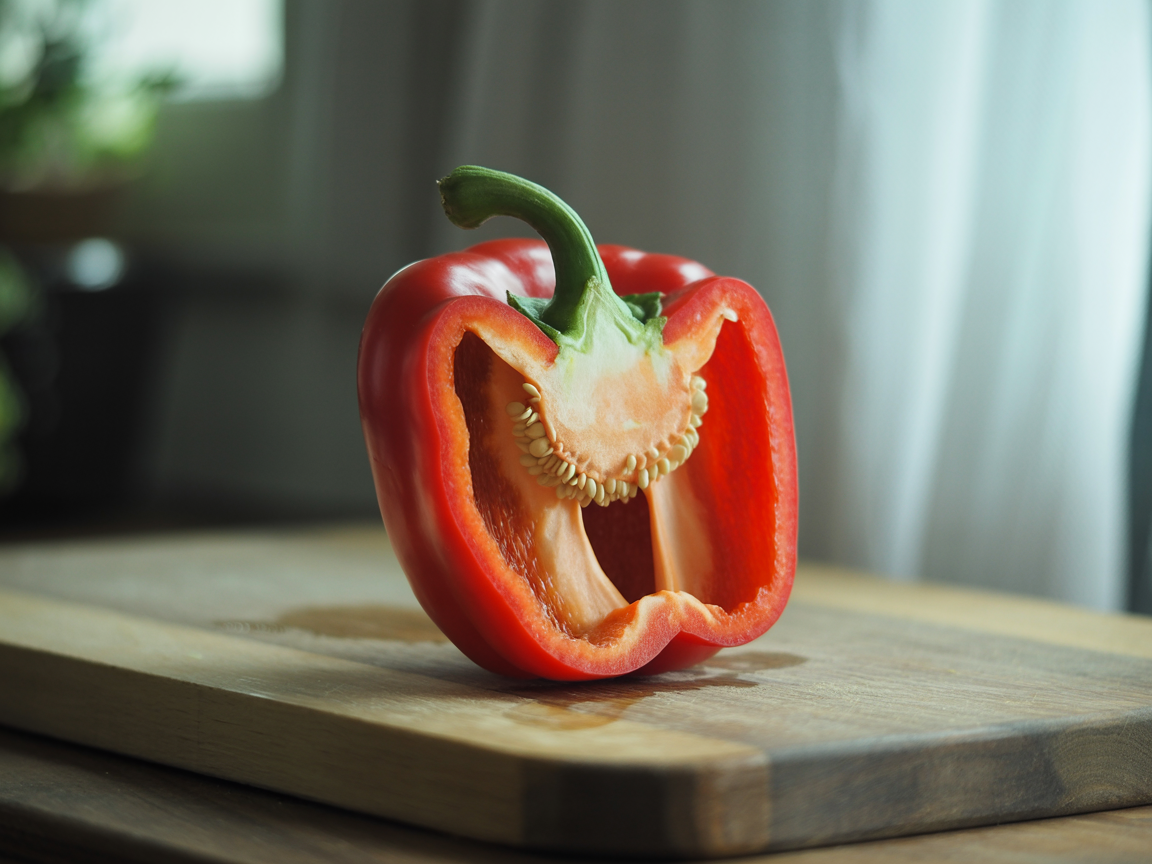
Chilli Pepper
Chili peppers bring fiery personality and vibrant color to everything from weeknight stir-fries to slow-simmered salsas.
In a nutshell
Chili peppers are the fresh or dried fruits of Capsicum plants, ranging from gently warm to face-meltingly hot. Their heat comes from capsaicin, a compound concentrated in the inner white pith and seeds. With bold flavor and minimal calories, they’re one of the most versatile ingredients in any home cook’s kitchen.
Nutrition
≈ 5 Calories and 0.1g fat per tablespoon.
Chili peppers are impressively nutrient-dense for such a low-calorie food. They’re an excellent source of vitamin C—fresh red chilis can deliver well over 100% of your daily needs in a single serving—and they supply meaningful amounts of vitamin B6 and vitamin A precursors. The capsaicin responsible for their heat has been widely studied for its potential to support metabolism, reduce inflammation, and act as a natural pain-modulating compound. Their modest fiber content supports digestive health, and the nearly negligible fat and sodium content makes them a smart seasoning choice for heart-conscious cooks. Nutrition per 100g via Spoonacular.
Culinary uses & pairings
Fresh chili peppers shine as an aromatic base in sauces, curries, and braises—simply chop them and sweat them with onion and garlic to build depth. They can also be sliced thin and scattered raw over tacos, noodle bowls, or avocado toast for a sharp, grassy heat that dried chilis can’t replicate.
Dried, smoked, or powdered chilis open up an entirely different pantry world: stir them into dry rubs, bloom them in hot oil for chili crisp, steep them in cream for a kick-forward pasta sauce, or rehydrate whole dried pods in warm water before blending into an authentic enchilada or mole sauce.
Pairs well with
Substitutions
Buying & storage
Look for chili peppers with taut, glossy skin and firm flesh—any wrinkling, soft spots, or dull patches are signs of age. The stem end should look fresh and green, not dry or shriveled. Color should be vivid and even, whether you’re buying green jalapeños, red Fresno chilis, or orange habaneros. At the grocery store, a quick sniff near the stem can hint at freshness; a faint grassy, peppery aroma is a good sign. For dried whole chilis, choose ones that are still pliable and richly colored rather than brittle and faded.
Varieties
- Jalapeño: The American go-to; mild-to-medium heat (2,500–8,000 SHU) with a crisp, grassy flavor. Excellent fresh, pickled, or smoked (when smoked and dried it becomes a chipotle).
- Serrano: Hotter and thinner-walled than a jalapeño (10,000–23,000 SHU), with a bright, clean bite. Great raw in salsas and guacamole.
- Habanero: Fruity, floral, and intensely hot (100,000–350,000 SHU). A little goes a long way in Caribbean jerk, hot sauces, and fruit salsas.
- Thai Bird’s Eye: Tiny but ferocious (50,000–100,000 SHU), with a clean, piercing heat that’s foundational in Southeast Asian cooking.
- Fresno: Similar in shape to a jalapeño but fruitier and slightly hotter; turns from green to red as it ripens. Excellent for quick pickles and salsa.
- Ancho / Poblano: The poblano is mild fresh (1,000–2,000 SHU) and is the chile of choice for chiles rellenos; dried and fully ripened to red it becomes an ancho, earthy and slightly sweet.
- Ghost Pepper (Bhut Jolokia): Once certified as the world’s hottest pepper (over 1,000,000 SHU); used sparingly in extreme hot sauces and adventurous cooking. It has since been surpassed by newer cultivars such as the Carolina Reaper.
Recipes using chilli pepper
6 recipes across our recipe sites use chilli pepper. A few favorites:
Cooking with chilli pepper tonight?
Find chilli pepper recipes that match your diet — keto, high-protein, vegan, under 30 minutes — and build a shopping list in one tap.
History & origin
Chili peppers have been cultivated in Mesoamerica and South America for at least 6,000 years, making them one of humanity’s oldest spices. Indigenous peoples of Mexico, Central America, and the Andes used them medicinally and culinarily long before European contact. When Christopher Columbus encountered them in the Caribbean during his first voyage in 1492–93, he mistakenly called them ‘peppers’ after the unrelated black pepper he was searching for—and the name stuck. Portuguese and Spanish traders then carried chili seeds around the globe with astonishing speed; within roughly a century, chilis had been adopted into the cuisines of India, China, Korea, and West Africa, fundamentally reshaping what those food cultures tasted like. Today they are among the world’s most widely grown spice crops.
How it’s made
Chili peppers are the mature or immature fruits of plants in the genus Capsicum, which belong to the nightshade family. They are grown from seed—started indoors in colder climates, since they love heat—and transplanted outdoors once temperatures are reliably warm. The plants thrive in well-drained soil with full sun and moderate water; mild water stress can actually increase capsaicin concentration. Peppers are harvested green (immature) or allowed to fully ripen to red, orange, or yellow. For dried forms such as anchos or chili flakes, the harvested fruits are either air-dried, oven-dried, or smoked before being ground or left whole.
Good to know
- The Scoville scale, which measures a chili’s heat, was invented in 1912 by pharmacist Wilbur Scoville—it originally relied on human tasters diluting pepper extract until no heat was detected.
- Capsaicin triggers the same pain receptors (TRPV1) that sense physical heat above approximately 109°F (43°C), which is why spicy food literally makes you feel like your mouth is on fire.
- Birds cannot detect capsaicin at all, which is why chili plants rely on birds as seed dispersers—the pepper’s heat evolved specifically to deter mammals from eating the seeds.
- Drinking water after eating a hot chili can make the burn worse; dairy (milk or yogurt) is more effective because casein protein binds to and helps remove capsaicin molecules.