Bell Pepper
Bell peppers bring sweet crunch and vivid color to almost any dish — and they’re one of the most versatile vegetables in your kitchen.
In a nutshell
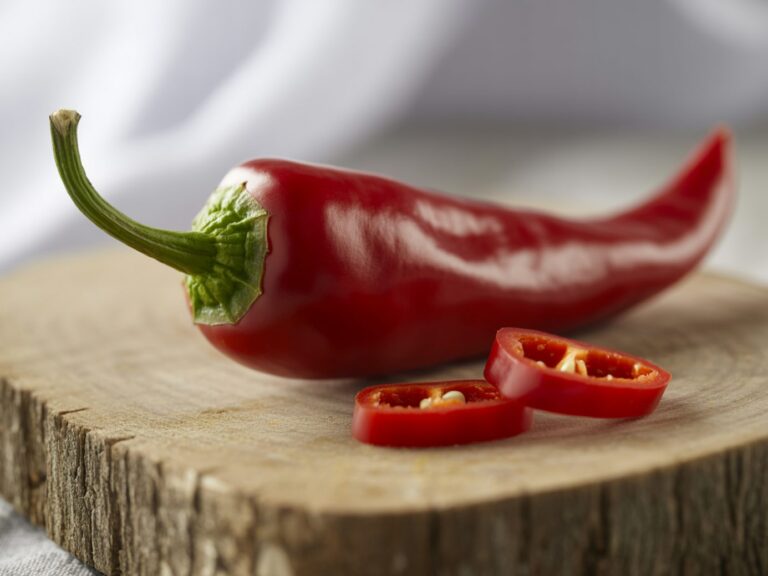
Bell peppers are mild, sweet members of the capsicum family that come in green, yellow, orange, and red. They’re prized for their crisp texture when raw and their mellow, slightly smoky sweetness when cooked. Red bells are simply fully ripened green peppers and pack the most nutrients of all the colors.
Nutrition
≈ 4 Calories and 0g fat per tablespoon.
Bell peppers are nutritional overachievers hiding in a very low-calorie package. A red bell pepper delivers more than 150% of your daily vitamin C — actually outpacing oranges — while also providing meaningful amounts of vitamin A and B6. The fiber content supports digestive health, and the vibrant pigments (chlorophyll in green, carotenoids in red and orange) double as antioxidants linked to reduced inflammation. With virtually no fat and only modest natural sugars, they fit comfortably into nearly any eating pattern. Nutrition per 100g via Spoonacular.
Culinary uses & pairings
Raw bell peppers are a go-to for crudité platters, sliced into salads, or tucked into wraps for satisfying crunch with zero prep beyond a quick rinse and chop. Their natural sweetness makes them appealing straight from the fridge, and they hold up well in grain bowls or alongside dips like hummus.
When heat is applied, bell peppers transform beautifully. Roasting at 425°F (220°C) until charred and blistered concentrates their sweetness and adds a lightly smoky depth perfect for sandwiches, pasta, or antipasto. Sautéing them with onions is a classic foundation for fajitas, shakshuka, and stir-fries, while stuffed bell peppers — hollowed out and filled with seasoned meat, rice, or beans — remain a beloved weeknight centerpiece.
Pairs well with
Substitutions
Buying & storage
Choose peppers that feel heavy for their size with taut, glossy skin and firm walls — soft spots, wrinkles, or a dull sheen signal age. The stem should look fresh and green rather than dry or brown. Fully ripe red, orange, and yellow bells will be uniformly colored with no large patches of green remaining (unless you prefer the sharper bite of a transitional pepper). Avoid any with mold at the stem end. Larger peppers tend to have thicker walls, which matters most for stuffing.
Varieties
- Green Bell Pepper: Harvested before full ripeness; slightly bitter and grassy with a firm bite. The most affordable color and the best for long-cooked dishes like gumbo or stuffed peppers where you want structure.
- Red Bell Pepper: A fully ripened pepper — sweeter, more tender, and richest in vitamin C and beta-carotene. Ideal for roasting, raw snacking, and anywhere you want maximum color impact.
- Yellow Bell Pepper: Mellow, fruity, and mildly sweet; yellow bells are a distinct variety that ripens to yellow rather than red. Beautiful in salads and crudité trays and slightly less acidic than red.
- Orange Bell Pepper: Similar sweetness to red with a slightly fruitier edge; high in beta-carotene. A crowd-pleasing choice for raw eating and roasting alike.
- Mini Sweet Pepper: Thin-walled, snack-sized peppers in mixed colors; naturally sweeter and nearly seedless. Great for lunchboxes, appetizer bites, and quick roasting whole.
Recipes using bell pepper
454 recipes across our recipe sites use bell pepper. A few favorites:
Cooking with bell pepper tonight?
Find bell pepper recipes that match your diet — keto, high-protein, vegan, under 30 minutes — and build a shopping list in one tap.
History & origin
Bell peppers are native to Central and South America, where wild capsicums were cultivated by indigenous peoples for thousands of years before European contact. Columbus encountered capsicums in the Caribbean around 1492 and brought seeds back to Spain. Europeans had been searching for black pepper, and while these plants were unrelated, the name stuck. By the 16th century, peppers had spread across Europe, Africa, and Asia with remarkable speed. The large, sweet, non-pungent varieties we recognize today as bell peppers were largely developed through selective breeding in Europe and later refined by American seed companies through the 19th and 20th centuries.
How it’s made
Bell peppers are warm-season annual fruits (botanically speaking) grown from seed started indoors 8 to 10 weeks before the last frost date. Transplanted seedlings need full sun, consistent moisture, and well-drained soil with temperatures reliably above 60°F (16°C). Plants bloom with small white flowers that self-pollinate, and the peppers begin as green fruits regardless of their final color — they’re simply harvested at different stages of ripeness. Green peppers are picked earliest, while red, orange, and yellow bells are left on the vine to mature fully, a process that can add two to four additional weeks. Commercial production in the US is concentrated in California and Florida, with significant imports from Mexico supplementing year-round supply.
Good to know
- Bell peppers are technically a fruit by botanical definition because they develop from the flower and contain seeds — the ‘vegetable’ label is purely culinary.
- A single medium red bell pepper contains roughly twice the vitamin C of a medium orange.
- Bell peppers are one of the few members of the capsicum family with no capsaicin, the compound responsible for heat, due to a recessive gene mutation.
- The color of a bell pepper reflects its ripeness and sugar content: red bells have significantly more sugar than green ones, which is why they taste so much sweeter.
- Bell peppers are among the most popular vegetables in the US by sales volume, consistently ranking alongside tomatoes, onions, and potatoes.