Smoked Paprika
Smoked paprika brings a deep, campfire warmth to everyday cooking that regular paprika simply can’t match.
In a nutshell
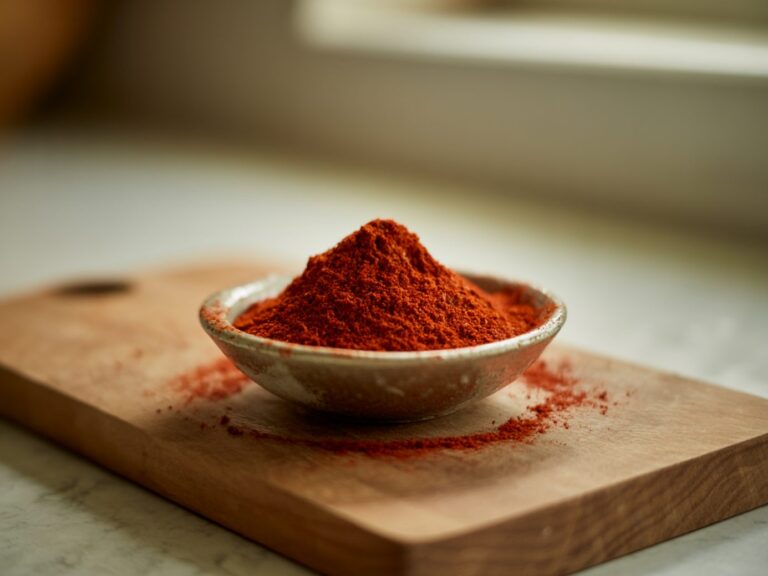
Smoked paprika is made from red peppers that are slowly dried over oak wood fires before being ground into a rich, rust-colored powder. It delivers a complex smokiness layered with mild-to-hot pepper flavor depending on the variety you choose. A little goes a long way, and it’s one of the most transformative spices you can keep in your pantry.
Nutrition
≈ 38 Calories and 1.7g fat per tablespoon.
Smoked paprika contains dietary fiber, which accounts for a portion of its carbohydrate content — something worth noting even though you’re only ever using it by the teaspoon. It provides small amounts of plant-based protein and contains both saturated and unsaturated fats from the ground pepper seeds. The deep red pigment comes from carotenoids like beta-carotene and capsanthin, which act as antioxidants in the body. It also contributes small but meaningful amounts of vitamin E and vitamin A precursors, supporting immune function and skin health. Nutrition per 100g via Spoonacular.
Culinary uses & pairings
Smoked paprika is the backbone of dry rubs for grilled or roasted meats — chicken thighs, pork ribs, and beef brisket all benefit enormously from its earthy depth. Stir it into marinades, chili, or beef stew early in cooking so the heat can bloom its oils and fully integrate that smoky character into the dish.
It’s equally at home in everyday cooking: dust it over roasted potatoes or cauliflower, whisk it into aioli or hummus, and sprinkle it over deviled eggs or avocado toast for instant visual drama and flavor. Spanish dishes like patatas bravas and chorizo-style seasoning blends rely on it as a defining ingredient.
Pairs well with
Substitutions
Buying & storage
Look for smoked paprika sold in a tightly sealed tin or glass jar rather than a cardboard shaker, which lets moisture and light degrade the spice faster. Spanish Pimentón de la Vera (with a PDO designation) is widely considered the gold standard and is available at many grocery stores and online — check the label for dulce (sweet), agridulce (bittersweet), or picante (hot). The powder should look deep brick-red, not faded orange, and smell immediately smoky when you open the jar.
Varieties
- Dulce (Sweet): Mild heat with a rich, rounded smokiness; the most versatile everyday choice.
- Agridulce (Bittersweet): A blend of sweet and hot peppers with a slightly more complex, medium-heat profile.
- Picante (Hot): Made with hotter pepper varieties; delivers noticeable heat alongside the signature smoke.
Recipes using smoked paprika
751 recipes across our recipe sites use smoked paprika. A few favorites:
Cooking with smoked paprika tonight?
Find smoked paprika recipes that match your diet — keto, high-protein, vegan, under 30 minutes — and build a shopping list in one tap.
History & origin
Smoked paprika’s story begins when Spanish explorers brought chili peppers back from the Americas in the late 15th century. Monks in the La Vera valley of Extremadura, Spain, are credited with developing and refining the practice of slowly drying the peppers over smoldering oak wood — partly as a preservation technique and partly because the rainy local climate made sun-drying unreliable. Over generations, this method became a regional tradition, and Pimentón de la Vera earned protected designation of origin status in 1993. Today it remains one of Spain’s most celebrated exports and a cornerstone of dishes like chorizo, paella, and mojo rojo.
How it’s made
After harvest in autumn, ripe red peppers — primarily varieties like Jaranda, Jariza, and Bola — are laid on wooden racks inside traditional smoking houses. Oak wood fires burn slowly beneath them for up to two weeks, with farmers turning the peppers by hand daily to ensure even drying and smoke penetration. Once fully dried, the peppers are stone-ground between granite millstones, which keeps the temperature low and preserves the volatile aromatic compounds responsible for smoked paprika’s distinctive character. The result is a fine, oily powder with a fat content that comes from the pepper seeds ground into the final product.
Good to know
- Smoked paprika is an exceptionally rich source of carotenoid antioxidants, including capsanthin and beta-carotene, which contribute to its deep red color.
- The oak-smoking process can take up to 15 days — making Pimentón de la Vera one of the most labor-intensive spices in the world.
- Smoked paprika is the spice that gives Spanish chorizo its distinctive red color and smoky flavor — without it, chorizo would just be plain seasoned pork.
- Despite its deep color, smoked paprika can turn bitter and lose delicate aromatics if cooked in a dry pan over high heat for too long — blooming it briefly in a little oil helps integrate its flavor.
- Hungary produces its own celebrated paprika tradition, but Hungarian paprika is typically sun-dried rather than smoked, giving it a sweeter, very different flavor profile.