Cilantro Seeds (Coriander seeds)
Coriander seeds are the warm, citrusy dried fruits of the cilantro plant — a pantry staple that bridges spice cabinets across nearly every cuisine on earth.
In a nutshell
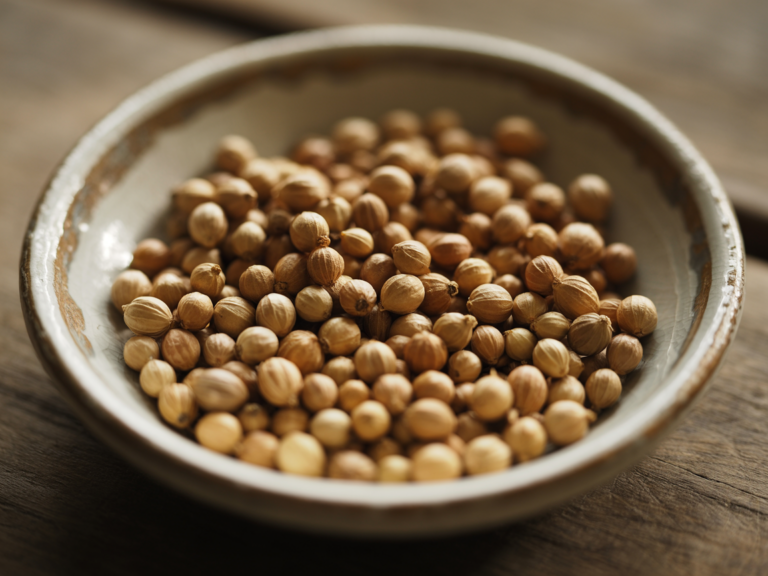
Coriander seeds are the round, dried fruits of Coriandrum sativum — the same plant that gives us fresh cilantro leaves. They taste nothing like the herb, offering a warm, lemony, slightly floral flavor with a hint of pepper. Toast them whole and grind them fresh for the most vibrant results in everything from curry to barbecue rubs.
Nutrition
≈ 3 Calories and 0.1g fat per tablespoon.
Coriander seeds punch above their weight nutritionally for a spice used in small amounts. They are notably high in dietary fiber relative to their calorie count, supporting digestive health, and deliver a modest amount of plant protein for a seed-derived spice. They contain beneficial antioxidants and phytonutrients, including linalool and flavonoids, which are linked to anti-inflammatory properties. Traditional medicine systems have long used coriander to support digestion, and some research suggests compounds in the seed may help with blood sugar regulation and cholesterol management. Nutrition per 100g via Spoonacular.
Culinary uses & pairings
Coriander seeds are extraordinarily versatile in savory cooking. Use them whole when pickling vegetables, brining meats, or blooming in hot oil to flavor a dish at its start. Crack them coarsely in a mortar for spice rubs on pork, lamb, or salmon, where their citrusy warmth holds up beautifully to heat. Ground coriander is a backbone spice in Indian curries, garam masala, and Middle Eastern baharat, as well as North African chermoula and spice blends like ras el hanout.
Beyond savory applications, coriander seeds have a quiet role in baking and drinks. They show up in certain rye bread traditions, Belgian witbier and some craft ales, and mulled wine or cider spice blends. A pinch of ground coriander brightens carrot cake, orange-scented cookies, and fruit chutneys in ways that are hard to identify but easy to love. Try toasting a few seeds and steeping them in warm simple syrup for a cocktail ingredient with real depth.
Pairs well with
Substitutions
Buying & storage
Buy coriander seeds whole whenever possible — pre-ground coriander loses its volatile oils and flattens out within a few months, while whole seeds stay lively for up to three years. Look for seeds that are uniformly tan to light brown, plump, and fragrant when you crush one between your fingers. Bulk bins are a smart choice if you use coriander regularly, since turnover tends to be high and you can buy exactly what you need. For the most complex flavor, seek out Moroccan or Indian coriander, which tend to have a more pronounced citrus character than some other varieties.
Types
- Indian (small-seeded): The most common variety in the US; slightly oval, earthy, and warm with a mild citrus note. The workhorse of curry pastes and spice blends.
- Moroccan: Rounder and lighter in color with a bright, lemony aroma that makes it especially prized for finishing dishes and spice blends where fragrance matters.
- European / Russian (large-seeded): Larger seeds with a milder, slightly sweeter flavor; commonly grown in Eastern Europe and Russia and widely used in pickling and bread.
Cooking with cilantro seeds tonight?
Find cilantro seeds recipes that match your diet — keto, high-protein, vegan, under 30 minutes — and build a shopping list in one tap.
History & origin
Coriander is one of the oldest documented spices in human history, with seeds found in Egyptian tombs dating back more than 3,000 years and references in Sanskrit texts and the Old Testament. Ancient Greeks and Romans used it both as a culinary spice and a medicine, and it traveled trade routes into India and China over many centuries. Spanish colonizers carried it to the New World in the 16th century, where it quickly took root in Mexican, Peruvian, and Caribbean cuisines. Today it is one of the most widely consumed spices on the planet, grown commercially across India, Morocco, Canada, and Argentina.
How it’s made
Coriander seeds are actually the dried whole fruits of the cilantro plant (Coriandrum sativum), making the same plant responsible for two very different culinary ingredients. The plant is an annual herb that flowers as it bolts; the small white or pale pink blossoms develop into round, ribbed green fruits. Once the fruits turn tan and the plant begins to dry naturally, the seed heads are harvested — often by hand in small-scale farming — and then dried in the sun or in low-heat dryers to reduce moisture content. The dried fruits are threshed to separate them from the stems, cleaned, and sorted. Unlike many spices, coriander seeds require no curing or fermentation; their essential oils develop simply through drying.
Good to know
- The word coriander comes from the ancient Greek koriannon, and some ancient texts described the unripe seeds as having an unpleasant odor — an association that may also connect to the name for the herb in various languages.
- Coriander seeds and fresh cilantro leaves taste so different that many people who claim to hate cilantro actually enjoy coriander without knowing the two come from the same plant.
- Canada is one of the world’s largest exporters of coriander seed, growing vast quantities on the prairies of Saskatchewan.
- Toasting coriander seeds in a dry skillet for just 60 to 90 seconds before grinding dramatically transforms their flavor, activating linalool and other volatile compounds that give them their signature warm citrus character.
- Coriander seed is a key botanical in many gin recipes, contributing floral and citrus notes alongside juniper berries.