Fava Bean
Fava beans are a beloved springtime staple that reward a little extra prep work with a rich, buttery, distinctly earthy flavor.
In a nutshell
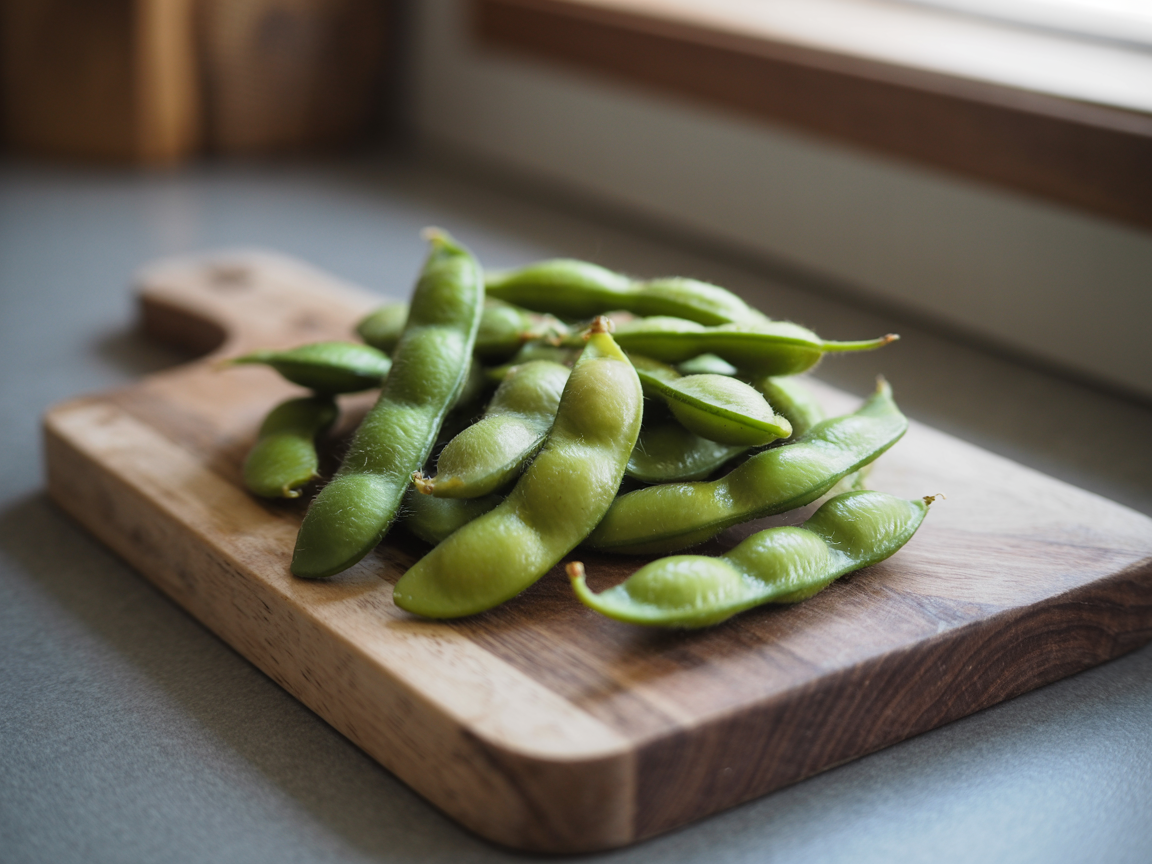
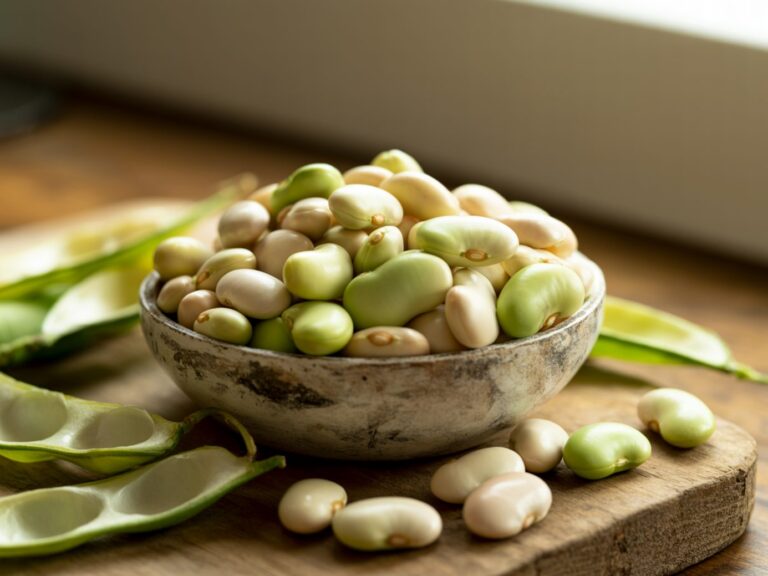
Fava beans (also called broad beans) are large, flat legumes harvested in spring and early summer. Fresh favas come tucked inside thick, spongy pods, and the beans themselves have a second skin you’ll want to peel off before eating. The result is a vibrant green, creamy bean with a flavor somewhere between a pea and a lima bean — earthy, slightly sweet, and deeply satisfying.
Nutrition
≈ 15 Calories and 0.1g fat per tablespoon.
Fava beans punch well above their weight nutritionally. They deliver an impressive amount of plant-based protein and a meaningful contribution toward your daily fiber needs per 100-gram serving, supporting both satiety and digestive health. They’re an excellent source of folate, which is critical for cell repair and especially important during pregnancy, and they supply meaningful amounts of iron, manganese, copper, and thiamine. Their fat content is remarkably low, and the small amount present is mostly the heart-friendly unsaturated kind. Favas also contain L-dopa (levodopa), a naturally occurring compound that is a precursor to dopamine — something to be aware of if you take MAO inhibitors, and a reason people with G6PD deficiency should avoid them. Nutrition per 100 g.
Culinary uses & pairings
Fresh fava beans shine in simple springtime preparations. Blanch and peel them, then toss with good olive oil, shaved pecorino, lemon zest, and fresh mint for a classic Italian-style salad. They’re equally at home folded into a creamy pasta, scattered over crostini with ricotta, or stirred into a risotto just before serving so they keep their vibrant color and tender bite. Because their season is short, it’s worth cooking them as simply as possible to let their flavor take center stage.
Dried fava beans are a pantry workhorse with a longer history than the fresh variety. Simmered until soft, they become the backbone of ful medames, the Egyptian breakfast stew seasoned with garlic, cumin, and lemon that has been eaten for thousands of years. Dried favas are also pureed into silky dips, added to hearty winter soups, and ground into flour. Split and skinned dried favas cook faster and break down into a thick, luscious mash that pairs beautifully with bitter greens like rapini or escarole.
Pairs well with
Substitutions
Buying & storage
When buying fresh fava beans, look for pods that are firm, plump, and bright green with no yellowing or soft spots — the pods should feel heavy and full, a sign the beans inside are well-developed. Keep in mind that roughly 2 to 3 pounds (900g–1.4kg) of pods will yield about 1 cup of peeled beans, so buy more than you think you need. Frozen fava beans are a convenient and nutritionally comparable alternative; many are already shelled, though you’ll likely still need to slip off the outer skin. For dried fava beans, choose split and skinned varieties if you want faster cooking; whole dried favas need a long soak and longer cook time but have a deeper, more complex flavor.
Types
- Fresh (in-pod): The springtime treat — available roughly March through June depending on region; requires shelling and double-peeling but rewards with unmatched flavor.
- Frozen: Pre-shelled and blanched; convenient year-round option that still benefits from peeling the outer skin before use.
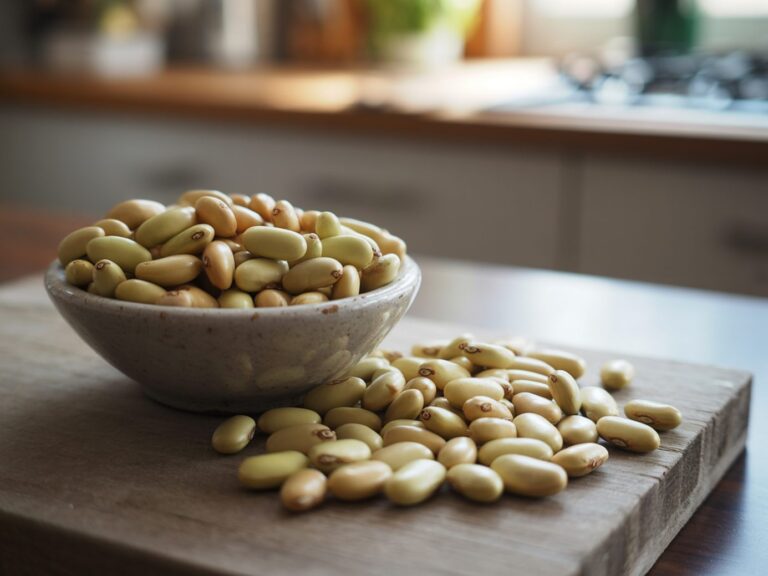
- Dried whole: Require overnight soaking and long cooking; rich, earthy flavor ideal for stews and traditional dishes like ful medames.
- Dried split and skinned: The outer skin has been removed; cook faster than whole dried favas and break down into a smooth, creamy mash or puree.
- Fava bean flour: Ground from dried favas; used to add protein and a slightly nutty, earthy note to bread, pasta, and gluten-free baking blends.
Recipes using fava bean
1 recipes across our recipe sites use fava bean. A few favorites:
Cooking with fava bean tonight?
Find fava bean recipes that match your diet — keto, high-protein, vegan, under 30 minutes — and build a shopping list in one tap.
History & origin
Fava beans are among the oldest cultivated crops in the world, with archaeological evidence of their use stretching back at least 8,000 years in the Middle East and Mediterranean. They were a cornerstone of ancient Egyptian, Greek, and Roman diets — so essential that the prominent Roman family the Fabii were said to have taken their name from the Latin word faba, meaning bean. For millennia they were one of the few reliable protein sources for both peasants and soldiers across the Old World. Long before New World beans like pintos and black beans made their way to Europe, the fava was simply the bean. Today they remain a beloved staple across the Middle East, North Africa, Italy, Spain, and China, and they’ve earned an enthusiastic following among American farmers’ market shoppers who look forward to their brief spring appearance each year.
How it’s made
Fava beans are a cool-season crop planted in early spring or fall depending on the climate, thriving in temperatures between 60°F and 65°F (15–18°C). The plants grow tall — sometimes reaching 3 to 5 feet — and produce thick, leathery pods that each hold 3 to 8 large, flat beans. Like most legumes, favas fix nitrogen in the soil and are often grown as a cover crop to improve soil health. Once harvested, fresh pods head straight to market. For dried favas, the pods are left on the plant until fully mature and dry, then harvested, threshed, and cleaned. Split and skinned dried favas go through an additional milling step to remove the tough outer hull and split the bean in two, making them easier and faster to cook.
Good to know
- Fava beans are one of the few plant foods that contain L-dopa, a direct precursor to dopamine — the same compound used in Parkinson’s disease medication.
- People with G6PD deficiency, a genetic condition more common in people of Mediterranean, African, and Middle Eastern descent, can have a serious hemolytic reaction to fava beans — a condition historically called ‘favism.’
- The ancient Greeks and Romans associated fava beans with the dead and used them in funerary rituals, believing the souls of the deceased could inhabit the beans.
- Favas are among the higher-protein legumes you’ll find at a farmers’ market, making them a favorite among plant-based eaters looking for whole-food protein sources.
- Fresh fava bean pods yield a relatively small amount of usable peeled bean — roughly 1 pound of pods produces only about ⅓ cup of double-peeled beans — which is why buying them feels like you always need twice as much as you expect.