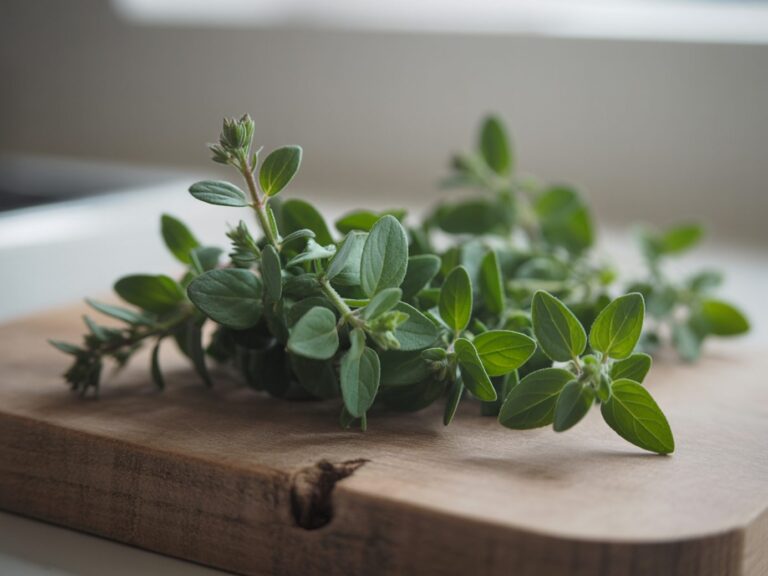
Bay Leaves
Bay leaves are the quiet backbone of countless slow-cooked dishes, lending a subtle, woodsy depth you’d miss if they weren’t there.
In a nutshell
Bay leaves are dried or fresh aromatic leaves most often added whole to soups, stews, and braises, then removed before serving. Their flavor is hard to pin down — earthy, faintly floral, and a little eucalyptus-like — but they round out a dish in a way that’s noticed more by their absence. A single leaf goes a long way.
Nutrition
≈ 42 Calories and 1.1g fat per tablespoon.
Because bay leaves are used in tiny amounts and always removed before eating, their per-100g numbers are mostly academic — but they do tell you something interesting. The leaves are surprisingly rich in dietary fiber and contain modest amounts of vitamins A and C, along with iron, calcium, and manganese. The volatile oils responsible for bay’s aroma — chiefly eucalyptol (1,8-cineole) — have been studied for mild anti-inflammatory and antimicrobial properties. Some research also points to antioxidant compounds like eugenol in the leaves. Again, you’re not eating the leaf itself, but those aromatic compounds do infuse into your food during cooking. Nutrition per 100g via Spoonacular.
Culinary uses & pairings
Bay leaves shine in long, slow cooking. Drop one or two into a pot of beef stew, chicken stock, tomato sauce, or bean soup at the start and let the heat slowly coax out their woodsy, faintly herbal oils. They’re a classic component of a bouquet garni alongside thyme and parsley stems. The rule is simple: add early, remove before you serve.
Beyond the stovetop, bay leaves turn up in pickling brines for cucumbers, beets, and olives, where they add a subtle savory backbone. They’re also slipped into rice-cooking water, court-bouillon for poaching fish, and even dry spice rubs. Some cooks in Mediterranean traditions tuck a dried bay leaf into a container of flour or rice to deter pantry pests — a trick that actually works.
Pairs well with
Substitutions
Buying & storage
For dried bay leaves, look for whole, unbroken leaves with a consistent olive-green to grayish-green color — yellowing or brown edges signal age and lost potency. Give the jar a sniff before you buy if you can; you should catch a clear, aromatic fragrance. Turkish (Mediterranean) bay leaves are the standard in American kitchens and have a milder, more versatile flavor than California bay, which is noticeably more intense. Buy in small quantities from a shop with decent turnover so you’re not working with leaves that have been sitting on a shelf for two years.
Varieties
- Turkish (Mediterranean) Bay — Laurus nobilis: The standard culinary bay leaf sold in most US grocery stores. Mild, subtly floral, and versatile — the right choice for everyday cooking.
- California Bay — Umbellularia californica: Native to the US West Coast and significantly more pungent than Turkish bay. Use half the amount called for, or it can turn medicinal and sharp.
- Indian Bay Leaf (Tej Patta) — Cinnamomum tamala: Despite the name, this is a different plant entirely, related to cinnamon. It tastes of clove and cinnamon and is used in Indian, Nepali, and Bhutanese cooking — not interchangeable with Mediterranean bay in most recipes.
- Indonesian Bay Leaf (Salam) — Syzygium polyanthum: Used in Indonesian and Malaysian cooking; milder and fruitier than Laurus nobilis. Rarely found fresh outside Southeast Asian markets in the US.
Recipes using bay leaves
1 recipes across our recipe sites use bay leaves. A few favorites:
Cooking with bay leaves tonight?
Find bay leaves recipes that match your diet — keto, high-protein, vegan, under 30 minutes — and build a shopping list in one tap.
History & origin
Bay laurel has been woven into human culture for thousands of years. Ancient Greeks and Romans considered it sacred to Apollo and used it to crown victorious athletes, generals, and poets — the word baccalaureate traces back to the Latin for laurel berries. Its culinary use is just as old, appearing in Roman cookbooks such as Apicius. The spice trade carried Mediterranean bay around Europe during the Middle Ages, and it became a foundational herb in French cuisine classique, particularly through the bouquet garni. Spanish and Portuguese colonizers brought it to the Americas, where it has naturalized in parts of the Southeast.
How it’s made
Bay leaves come from the bay laurel tree (Laurus nobilis), an evergreen native to the Mediterranean basin that can grow 20 to 60 feet tall when left unpruned. Commercially, trees are kept as large shrubs for easier harvesting. Leaves are picked year-round, though many producers harvest in late summer and fall when the essential oil content peaks. For dried bay, freshly cut leaves are air-dried slowly — sometimes flat on racks, sometimes bundled — over one to two weeks until moisture drops and the oils concentrate. Quick-drying with heat is avoided because it degrades the aromatic compounds. Most of the dried Turkish bay leaves sold in the US are grown in Turkey, Albania, and other Mediterranean countries.
Good to know
- The phrase ‘resting on your laurels’ comes directly from the ancient tradition of crowning victors with bay laurel wreaths — meaning to coast on past success.
- A bay leaf added to a container of stored flour or dried pasta is a traditional trick to repel weevils and pantry moths; the eucalyptol in the leaves acts as a natural insect deterrent.
- Despite the common warning that bay leaves are toxic, Laurus nobilis is perfectly safe — the real reason to remove them before serving is the hard, rigid texture of the whole leaf, which is unpleasant to eat and can be a choking hazard.
- California bay leaves are so much stronger than Turkish bay that cooks sometimes use just a small torn piece of one leaf rather than a whole one.
- Dried bay leaves have been found in ancient Egyptian archaeological contexts, pointing to a long history of use in the region, though specific claims about Tutankhamun’s tomb are not reliably documented.