Chinese Five-Spice
Five-spice is the bold, aromatic backbone of Chinese cooking that makes everything from roast duck to braised pork sing.
In a nutshell
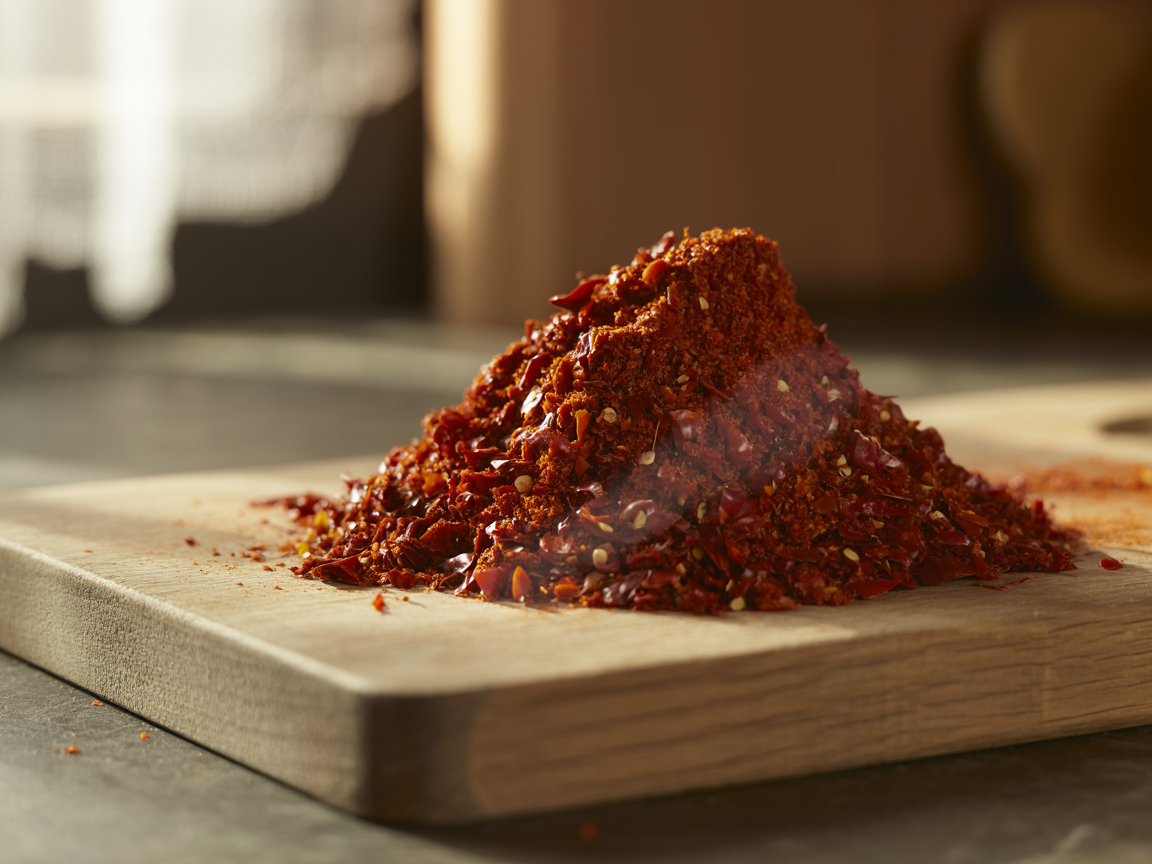
Chinese five-spice is a ground spice blend built around five core flavors — sweet, sour, bitter, salty, and pungent — that mirror the five elements of traditional Chinese philosophy. The classic formula combines star anise, cloves, Chinese cinnamon, Sichuan pepper, and fennel seeds into a warm, complex powder. A little goes a long way, and it’s equally at home in savory braises and sweet baked goods.
Nutrition
≈ 45 Calories and 2.1g fat per tablespoon.
Because five-spice is used in small amounts, its per-100g numbers are mostly academic — but they reflect a genuinely nutrient-dense blend. The spices collectively contribute a meaningful amount of dietary fiber along with notable minerals including iron and manganese. The blend is naturally very low in sodium, making it a smart way to add depth without salt. Star anise and cloves are particularly rich in antioxidant compounds like anethole and eugenol, which have been studied for anti-inflammatory properties. Sichuan pepper brings hydroxy-alpha-sanshool, the compound responsible for that distinctive mouth-tingling sensation. Nutrition per 100g via Spoonacular.
Culinary uses & pairings
Five-spice is most famous in Chinese roasted and braised meats — think Cantonese roast duck, red-braised pork belly (hong shao rou), and char siu. Rub it directly onto proteins before roasting or stir it into a braising liquid with soy sauce, rice wine, and aromatics. Even a quarter teaspoon transforms a simple chicken marinade into something deeply savory and fragrant.
Beyond meat, five-spice shines in stir-fries, fried rice, and dumpling fillings where a pinch adds backbone without identifying itself as a single spice. It’s also a natural in baking — swirl it into gingersnap dough, pumpkin pie filling, or a spiced simple syrup for cocktails. Some cooks add a small amount to chocolate desserts for a subtle warm complexity.
Pairs well with
Substitutions
Buying & storage
Look for five-spice in the spice aisle of most grocery stores, Asian grocery stores, or online — but quality varies widely. Pre-ground blends from Asian specialty brands tend to be fresher and more aromatic than generic supermarket versions. Check the ingredient list: a quality blend should list recognizable whole-spice names rather than vague ‘spices.’ If you can smell the jar through the lid it’s likely stale. For the best results, buy whole spices and grind your own in a dedicated spice grinder; the aroma difference is dramatic.
Regional Variations
- Classic Cantonese: Star anise, cloves, Chinese cinnamon (cassia), Sichuan pepper, fennel — the benchmark formula found on most US store shelves.
- Vietnamese (Ngũ Vị Hương): Often includes licorice root in place of or alongside fennel, giving it a slightly sweeter, more floral character common in pho spice kits.
- Taiwanese variation: Sometimes adds dried tangerine peel or cardamom for a brighter, citrus-forward profile used in braised beef noodle soup.
- Homemade custom blends: Home cooks frequently adjust ratios — dialing up star anise for sweetness or Sichuan pepper for heat — to suit personal preference.
Cooking with chinese five spice tonight?
Find chinese five spice recipes that match your diet — keto, high-protein, vegan, under 30 minutes — and build a shopping list in one tap.
History & origin
Five-spice has roots stretching back over 2,000 years into traditional Chinese medicine, where blending five flavors was believed to harmonize the body’s energy according to the five-element theory of Taoism. Early medicinal texts referenced spice combinations designed to balance qi, and these ideas gradually migrated from apothecary to kitchen. By the time of the Tang Dynasty (618–907 CE), aromatic spice blends were firmly embedded in Chinese culinary culture, and trade along the Silk Road ensured that star anise and cloves — some originally sourced from Southeast Asia — were widely available to cooks across China. The blend as most Western cooks know it today was popularized through Cantonese cuisine and spread globally with Chinese immigration in the 19th and 20th centuries.
How it’s made
Five-spice is produced by dry-grinding a fixed proportion of five whole spices into a fine, uniform powder. Commercial producers toast the component spices individually at low heat to volatilize surface moisture and deepen aroma, then blend them in calibrated ratios before passing the mixture through a hammer mill or roller grinder. The resulting powder is screened for consistent particle size and packaged in airtight containers. Home cooks can replicate this by dry-toasting whole star anise, cloves, cassia bark, Sichuan peppercorns, and fennel seeds in a skillet over medium heat until fragrant (about 2 minutes), cooling completely, and grinding in a spice grinder to a fine powder.
Good to know
- Despite its name, five-spice doesn’t always contain exactly five spices — some commercial blends include six or seven ingredients while still carrying the traditional name.
- The numeral five in the name refers not only to a count of ingredients but also to the five fundamental flavor categories of Chinese culinary philosophy: sweet, sour, bitter, salty, and pungent.
- Star anise, the dominant flavor in most blends, is the primary commercial source of shikimic acid, a compound used in the synthesis of the antiviral drug oseltamivir (Tamiflu).
- Sichuan peppercorns were actually banned from import into the United States between 1968 and 2005 due to concerns about citrus canker disease; many older American five-spice blends substituted black pepper as a result.
- Five-spice is one of the few spice blends that appears in both savory main courses and sweet desserts with equal culinary credibility across its home cuisine.