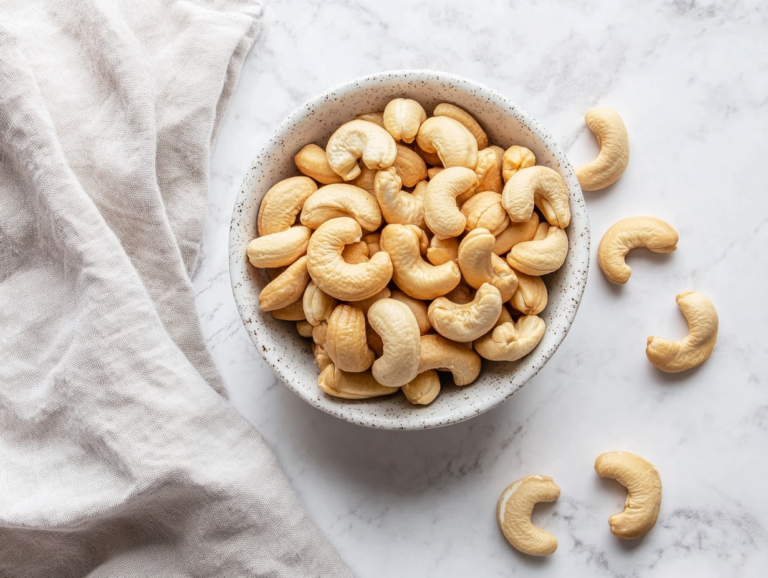
Hazelnut
Hazelnuts bring a rich, toasty sweetness to both sweet and savory cooking that few other nuts can match.
In a nutshell
Hazelnuts — also called filberts — are small round nuts with a thin papery skin and an intensely buttery, slightly sweet flavor. They shine roasted and are the backbone of classic spreads, pralines, and European pastries. American home cooks are rediscovering them far beyond Nutella, from salad toppings to savory brown butter sauces.
Nutrition
≈ 85 Calories and 8.2g fat per tablespoon.
Hazelnuts are dominated by monounsaturated fat — the same heart-friendly type found in olive oil — making up the lion’s share of their impressive fat content. They’re a meaningful source of vitamin E, a fat-soluble antioxidant that supports skin and immune health, along with solid amounts of magnesium, copper, and manganese. Their fiber content supports digestive health, and research suggests regular tree-nut consumption is linked to improved cholesterol profiles. Because they’re calorie-dense, a small handful goes a long way nutritionally. Nutrition per 100 g.
Culinary uses & pairings
In baking and desserts, hazelnuts are nearly indispensable. Roughly chop or grind them into flour for financiers, tortes, and macarons; fold whole roasted nuts into brownies or biscotti; or blend them into homemade hazelnut butter and chocolate spreads. Their high fat content keeps baked goods moist and adds a depth that plain flour never can.
On the savory side, toasted and chopped hazelnuts add crunch to green salads, roasted vegetable dishes, and pasta. Brown butter with hazelnuts — a classic French beurre noisette — is one of the quickest, most impressive finishing sauces you can make. They also work beautifully ground into a crust for fish or chicken, or stirred into stuffings and grain bowls.
Pairs well with
Substitutions
Buying & storage
Look for hazelnuts that are plump, uniform in size, and free of cracks or shriveling — signs of age or poor storage. In-shell hazelnuts should feel heavy and rattle cleanly when shaken; avoid any with mold or off smells. Shelled hazelnuts are sold raw, blanched (skin removed), or pre-roasted; buying raw gives you the most control over flavor. Blanched hazelnuts save prep time and are worth the slight premium for recipes where the skin’s slight bitterness would be unwelcome. Check the best-by date carefully, as the high fat content means they go rancid faster than many other nuts.
Varieties
- Barcelona: The most widely grown commercial variety in the Pacific Northwest; large, round nut with good flavor and easy blanching.
- Willamette: An Oregon-bred variety with a slightly smaller nut and mild, sweet flavor; popular with specialty growers.
- Jefferson: A newer disease-resistant variety developed by Oregon State University; gaining ground among domestic growers for its reliable yields.
- Tonda Gentile: Italy’s prized variety from Piedmont, considered the gold standard for confectionery and gianduja chocolate; occasionally found at specialty importers.
Recipes using hazelnut
14 recipes across our recipe sites use hazelnut. A few favorites:
Cooking with hazelnut tonight?
Find hazelnut recipes that match your diet — keto, high-protein, vegan, under 30 minutes — and build a shopping list in one tap.
History & origin
Hazelnuts have been eaten by humans for at least 9,000 years, with archaeological evidence of large-scale processing found in Scotland and Scandinavia. The Romans spread hazelnut cultivation across Europe, and the nut became a staple food across the continent long before global trade made exotic ingredients available. In the early 19th century, Piedmont, Italy — where cocoa was scarce and expensive — began blending ground hazelnuts with chocolate to stretch the supply, giving rise to gianduja, the ancestor of modern hazelnut-chocolate spreads. The United States became a significant producer in the 20th century, with Oregon’s Willamette Valley now supplying the vast majority of the American domestic crop.
How it’s made
Hazelnuts grow on deciduous shrubs or small trees in the genus Corylus, thriving in temperate climates with mild, wet winters and warm summers — conditions Oregon’s Willamette Valley provides perfectly. Trees begin producing nuts in 3 to 5 years and reach full production around year 10. The nuts develop inside leafy husks and are harvested in autumn, typically by mechanically shaking the trees so nuts fall to the ground, where sweepers collect them. After harvest, nuts are dried to reduce moisture, then cracked, sorted, and graded. Roasting — either dry or oil-roasted — develops the characteristic deep, toasty flavor by triggering Maillard browning reactions in the nut’s sugars and proteins. Blanching (removing the papery inner skin) is done by briefly roasting and then rubbing the nuts in a towel.
Good to know
- About 99% of US hazelnuts are grown in Oregon’s Willamette Valley, making it one of America’s most regionally concentrated specialty crops.
- The word ‘filbert’ — a common American name for the hazelnut — is believed by some to come from St. Philibert, a French saint whose feast day falls in late August around the traditional hazelnut harvest season, though the etymology is debated.
- Hazelnuts are one of the few nuts that pair naturally with chocolate because their roasted, slightly sweet flavor directly complements cocoa’s bitterness without competing with it.
- A productive hazelnut tree can yield several pounds of nuts per season at peak maturity, though output varies considerably by variety, age, and growing conditions.
- Hazelnut oil pressed from the nuts is prized by chefs as a finishing oil — it burns too easily for high-heat cooking but adds extraordinary aroma drizzled over salads or desserts.