Gingko Nuts
Ginkgo nuts bring a subtle, earthy richness to Asian dishes that no other ingredient quite replicates.
In a nutshell
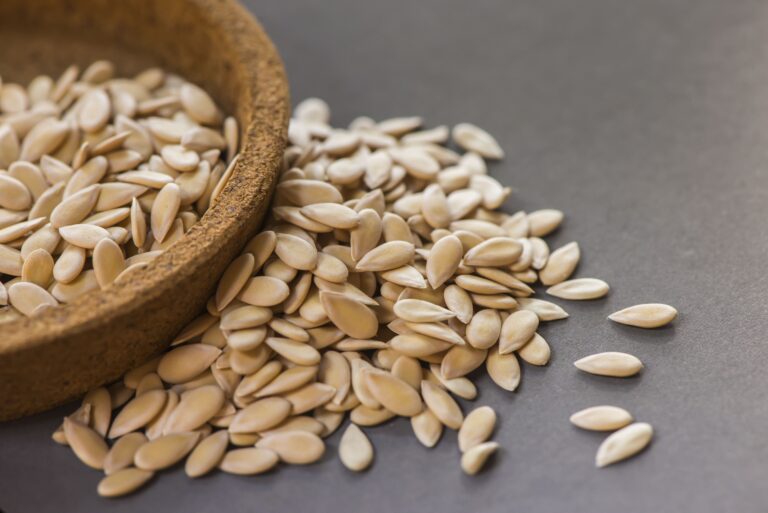
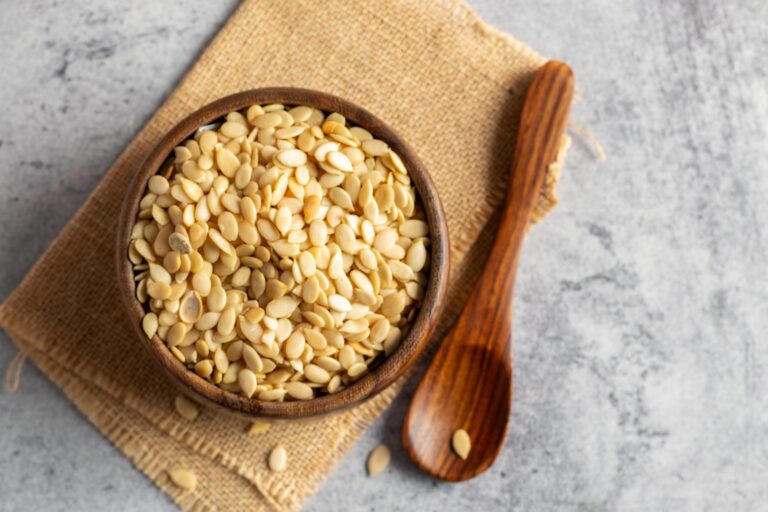
Ginkgo nuts are the seeds of the ancient ginkgo tree, prized in Chinese, Japanese, and Korean cooking for their creamy texture and mildly bitter, slightly sweet flavor. They’re most often found shelled and vacuum-packed or canned in US Asian grocery stores. A little goes a long way — they’re eaten in small quantities both for flavor and safety reasons.
Nutrition
≈ 80 Calories and 7g fat per tablespoon.
Despite their small serving size, ginkgo nuts have a nutritional profile driven primarily by carbohydrates — starch makes up the bulk of their calories, not fat. They provide a modest amount of protein and some dietary fiber. They also contribute B vitamins, particularly niacin and thiamine, along with minerals like manganese, copper, and phosphorus. That said, ginkgo nuts contain ginkgotoxin (4-methoxypyridoxine), a naturally occurring compound that can interfere with vitamin B6 metabolism, which is why moderation — typically no more than a small handful per sitting — is always recommended for adults, and they should be avoided entirely by young children and pregnant women. Nutrition per 100 g.
Culinary uses & pairings
In Chinese and Japanese cooking, ginkgo nuts are a classic addition to congee, chawanmushi (Japanese savory egg custard), and braised dishes, where their creamy, slightly waxy texture holds up beautifully during gentle cooking. They absorb surrounding flavors well, making them a quiet but satisfying presence in slow-cooked soups and rice porridges. Their mild bitterness provides a gentle counterpoint to rich broths and fatty meats.
They’re also skewered and grilled at Japanese izakayas, tossed into stir-fries, and tucked into savory rice dishes and other festive preparations. In Korean cuisine they sometimes appear as a simple banchan, pan-fried in sesame oil. Because they can be overpowering in large amounts, most recipes call for just 10 to 20 nuts, used as an accent rather than a main ingredient.
Pairs well with
Substitutions
Buying & storage
In the US, ginkgo nuts are most reliably found at Chinese, Japanese, or Korean grocery stores, typically sold vacuum-packed, canned in brine, or occasionally dried. Vacuum-packed or canned are the most practical choices — they’re already shelled and ready to use, and the quality is consistent. If you’re lucky enough to find fresh nuts in autumn, look for smooth, uncracked off-white shells with no discoloration or musty smell. Dried ginkgo nuts require soaking and a longer cooking time, so they’re best for experienced cooks. Always check the package date on vacuum-packed versions and avoid any with a grayish or greenish tint, which signals age.
Types
- Fresh (in shell): Available in autumn at some Asian markets; require cracking, brief blanching, and skin removal before eating. Richest flavor but most labor-intensive.
- Vacuum-packed (shelled): The most convenient form for US home cooks — pre-shelled, lightly cooked, and ready to use straight from the package.
- Canned in brine: Shelf-stable and widely available; rinse before using to reduce the slightly metallic edge from the canning liquid.
- Dried: Longest shelf life but require overnight soaking and extended cooking; used mainly in traditional medicinal preparations and long-simmered soups.
Recipes
We do not have recipes featuring gingko nuts in our collection just yet — but you can discover thousands of recipes, filtered to your diet and your pantry, over at Tucker Finder.
Find your next recipe
Discover thousands of recipes — matched to your diet, your pantry, and your schedule — and build a shopping list in one tap.
History & origin
The ginkgo tree (Ginkgo biloba) is often called a living fossil — it has survived essentially unchanged for over 200 million years, predating the dinosaurs. Native to China, the tree has been cultivated there for at least 1,000 years, primarily around Buddhist and Taoist temples, where monks prized both its longevity and the edibility of its seeds. Ginkgo nuts appear in Chinese culinary and medicinal texts from the Song Dynasty onward, used to tonify the lungs and treat respiratory ailments. The tree was introduced to Japan likely by the 12th century and to Europe in the late 17th century, with Dutch traders playing a key role in its introduction to Western botany. Today, ginkgo-lined streets are common in cities across East Asia, and nut harvest in autumn is a well-known — if pungent-smelling — seasonal event.
How it’s made
Ginkgo trees are dioecious, meaning individual trees are either male or female. Only female trees produce seeds, which develop inside a fleshy, plum-like outer coating that turns yellow-orange in autumn and has a notoriously strong odor (often compared to rancid butter or vomit) due to butyric and hexanoic acids in the pulp. Harvesters — typically wearing gloves to avoid skin irritation from the outer flesh — collect the fallen fruits, remove and discard the fleshy coating, and wash the hard inner shells. The shells are then cracked to reveal the pale green or ivory kernel inside, which must be cooked before eating to reduce ginkgotoxin levels. Commercial processors blanch, dry, and either vacuum-pack or can the kernels for retail sale.
Good to know
- The ginkgo tree is the sole surviving species of an entire plant division — all its relatives went extinct millions of years ago.
- Six ginkgo trees survived the atomic bombing of Hiroshima in 1945, located roughly 1 to 2 kilometers from the hypocenter, and are still alive today.
- The fleshy outer coating of the ginkgo seed is technically a sarcotesta — a fleshy seed coat — not a true fruit, which is why botanists classify ginkgo separately from flowering plants.
- Eating more than about 10 roasted ginkgo nuts in a sitting has been linked to nausea and, in rare cases, seizures — a property known since at least the Ming Dynasty.
- Ginkgo nuts are considered a symbol of longevity and resilience in Chinese and Japanese culture, and are a traditional food served at New Year celebrations.