Mustard Seed
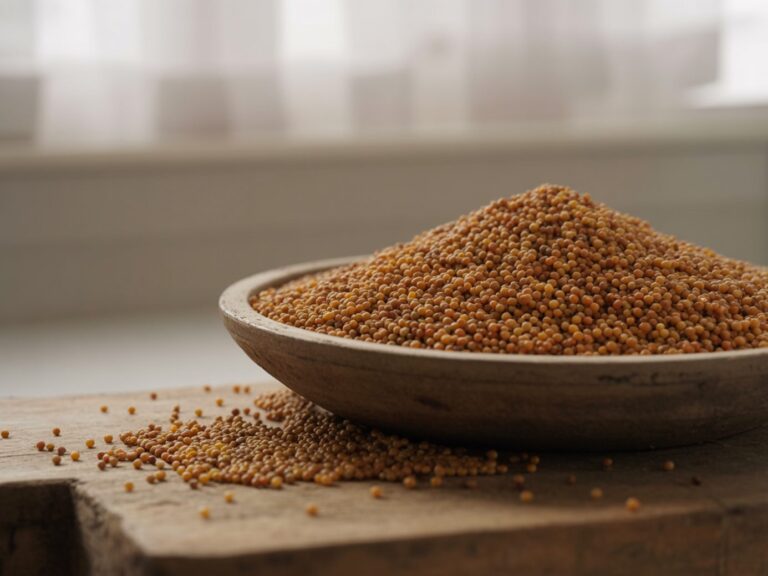
Tiny but mighty, mustard seeds pack bold flavor and surprising nutrition into every little pop.
In a nutshell
Mustard seeds are the dried seeds of the mustard plant and one of the oldest spices in recorded history. They range from mild yellow to fiery brown and black, each bringing a different heat level and depth to cooking. Toast or crack them to unlock their pungency — raw whole seeds are surprisingly quiet until they hit fat or liquid.
Nutrition
≈ 69 Calories and 4.9g fat per tablespoon.
Mustard seeds are a surprisingly nutrient-dense spice, offering a notable amount of plant-based protein and healthy unsaturated fats — a mix of monounsaturated and polyunsaturated — for such a small seed. Their fiber content supports digestive health, and they supply meaningful amounts of selenium, magnesium, and manganese, minerals tied to antioxidant function and bone support. They also contain glucosinolates, the sulfur compounds responsible for mustard’s heat, which research associates with anti-inflammatory properties. Because mustard seeds are used in small quantities, the caloric density is less relevant day to day, but even a teaspoon contributes real nutritional value. Nutrition per 100 g.
Culinary uses & pairings
In Indian and South Asian cooking, mustard seeds are one of the first ingredients dropped into hot oil for tempering — they sizzle, pop, and release a nutty, almost smoky flavor that forms the aromatic base for dals, curries, and vegetable dishes. In American and European kitchens, cracked or ground seeds go into spice rubs, pickling brines, and barbecue seasonings, and whole seeds are a classic addition to pickled cucumbers, beets, and relishes.
Ground mustard seed — also called dry mustard or mustard powder — is the backbone of homemade prepared mustard and adds sharp heat to salad dressings, cheese sauces, deviled eggs, and marinades. Yellow mustard seeds are milder and suit pickling and American-style preparations, while brown and black seeds bring more intensity and are preferred in South Asian recipes and robust spice blends like panch phoron.
Pairs well with
Substitutions
Buying & storage
Look for whole mustard seeds with a uniform color and no dusty or musty smell — freshness matters more than most people realize. Yellow (white) seeds are the mildest and most common in American supermarkets; brown seeds offer more complexity and are widely available in Indian grocery stores; black seeds are the sharpest and most aromatic and may require a specialty or international market. Buy in quantities you’ll use within a year, and choose sealed bags or jars from stores with decent turnover rather than bulk bins that may have sat out for months.
Varieties
- Yellow (White) Mustard Seed: The mildest of the three, with a tangy rather than hot flavor. It’s the seed behind classic American yellow mustard and is the go-to for pickling brines and mild spice blends.
- Brown Mustard Seed: More pungent and aromatic than yellow, this is the workhorse of Indian cooking and the seed used in most whole-grain and Dijon-style mustards. It’s the most versatile for home cooks who want real heat.
- Black Mustard Seed: The smallest, sharpest, and most intensely flavored variety. Widely used in South Asian tempering and traditional European preparations; its heat dissipates quickly in hot oil, giving way to deep nuttiness.
Recipes using mustard seed
2 recipes across our recipe sites use mustard seed. A few favorites:
Cooking with mustard seed tonight?
Find mustard seed recipes that match your diet — keto, high-protein, vegan, under 30 minutes — and build a shopping list in one tap.
History & origin
Mustard seed is one of the oldest documented spices in the world, with references appearing in ancient Sanskrit texts dating back roughly 5,000 years and mentions in both the Bible and the writings of ancient Greeks and Romans. Ancient Egyptians placed seeds in tombs, and Roman cooks ground them with grape must to make the condiment they called mustum ardens — ‘burning must’ — a phrase widely cited as the etymological root of the word mustard. By the Middle Ages, Dijon in Burgundy, France had become the undisputed center of European mustard production, a reputation it has never really lost. Mustard seeds traveled to the Americas with European colonists and quickly naturalized across the continent.
How it’s made
Mustard plants belong to the Brassica and Sinapis genera and are annual crops grown in cool climates — Canada is by far the world’s largest producer, followed by Nepal and Russia. The plants flower quickly and produce long seed pods that are harvested when they begin to dry and before they shatter. After cutting, the plants are windrowed and left to dry in the field, then combined to separate the seeds from the pods and stems. Seeds are cleaned, sorted by size and color, and either sold whole, cold-pressed for mustard oil, or milled into powder. The heat compounds in mustard — isothiocyanates — only form when the seeds are cracked or ground and come into contact with water, which triggers an enzymatic reaction; dry whole seeds stay comparatively mild.
Good to know
- Mustard seeds don’t actually contain the sharp heat compounds in ready form — the pungency is created on the spot by an enzyme reaction that only starts when the seed is crushed and wetted.
- Canada grows roughly half the world’s mustard seed supply, making the Canadian prairies the global epicenter of an ancient spice.
- Adding cold water to ground mustard maximizes heat, while hot water or vinegar halts the enzyme reaction early and produces a milder result — which is why classic English mustard mixed with cold water is so ferociously sharp.
- The mustard plant is a member of the same family as broccoli, cabbage, and kale, and the greens are fully edible with a pleasantly bitter, peppery flavor.
- In the Bible’s Parable of the Mustard Seed, the tiny seed growing into a large tree became one of the most recognized metaphors in Western literature, a testament to how familiar this humble spice was across ancient cultures.