Oregano
Oregano is the herb that turns a simple tomato sauce into something you’ll crave all week.
In a nutshell
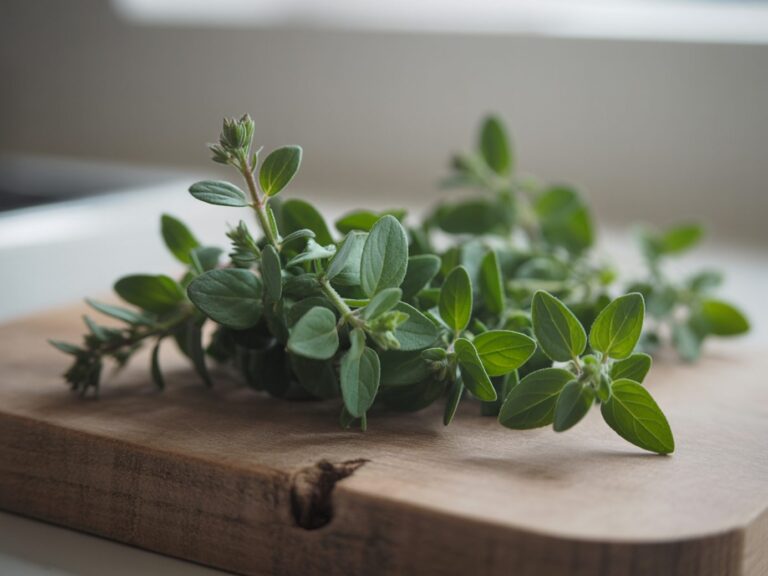
Oregano is a bold, earthy herb from the mint family used in cuisines from Italy to Mexico. Dried oregano is actually more potent than fresh, making it one of the rare herbs that thrives in a spice jar. A small pinch goes a long way, and it’s a pantry staple no home cook should be without.
Nutrition
≈ 36 Calories and 0.6g fat per tablespoon.
Oregano is more than just a flavor booster — it packs a surprising nutritional punch for an herb used in small amounts. Dried oregano provides dietary fiber and a modest amount of plant protein. Oregano is rich in vitamin K, which plays a key role in blood clotting and bone health, along with solid levels of iron and manganese. Its standout health story, though, is its remarkable concentration of antioxidants — compounds like rosmarinic acid and carvacrol give oregano one of the highest antioxidant capacities of any culinary herb. Carvacrol in particular has been studied for its antimicrobial properties. The fat content is modest and comes with a favorable ratio of unsaturated fats. Nutrition per 100g via Spoonacular.
Culinary uses & pairings
Dried oregano is the workhorse of Italian-American and Greek kitchens — crumble it into tomato sauces, pizza dough, meatballs, and baked pasta dishes. It’s equally at home in dry rubs for chicken, lamb, or pork, and in vinaigrette-style marinades where its oils have time to bloom. A quick bloom in warm olive oil — just 30 seconds over medium heat — unlocks its full aromatic depth before you build a sauce around it.
Fresh oregano shines in lighter, brighter applications. Chop it over grilled fish, stir it into Greek salads, or tuck sprigs under the skin of a roasted chicken. In Mexican cooking, fresh or dried oregano (often the more robust Mexican variety) goes into pozole, chorizo blends, and chili. Unlike delicate herbs like basil, oregano holds up well to moderate heat, so you can add it early in a braise without losing its character.
Pairs well with
Substitutions
Buying & storage
When buying dried oregano, look for a deep green color with a strong, resinous fragrance when you open the jar — dull, grayish herb with little smell has lost most of its potency. Opt for whole or hand-rubbed leaves over finely ground powder, which loses its aroma fastest. Spice-shop or bulk-bin oregano is often fresher than a jar that’s been on a supermarket shelf for a year. For fresh oregano, choose bunches with firm, bright green leaves and no yellowing or sliminess at the stem ends. Mexican oregano, sold in Latin grocery stores, is a distinct species with a stronger, slightly citrusy edge — worth tracking down if you cook a lot of Tex-Mex or pozole.
Varieties
- Mediterranean Oregano (Greek/Italian): The most common type in US kitchens; bold, earthy, and slightly peppery. Greek oregano is often considered the most intensely flavored.
- Mexican Oregano: A different plant species with a stronger, more citrusy and slightly earthy flavor. Essential in authentic pozole, chili, and chorizo.
- Turkish Oregano: Milder and slightly sweet compared to Greek; popular in Middle Eastern cooking and widely exported.
- Syrian Oregano (Za’atar Oregano): The key herb in traditional za’atar spice blends; herbaceous with earthy, slightly bitter notes.
Recipes using oregano
163 recipes across our recipe sites use oregano. A few favorites:
Cooking with oregano tonight?
Find oregano recipes that match your diet — keto, high-protein, vegan, under 30 minutes — and build a shopping list in one tap.
History & origin
Oregano’s name comes from the Greek words oros (mountain) and ganos (joy), meaning ‘joy of the mountain’ — a nod to the wild hillsides of the Mediterranean where it grows so abundantly. Ancient Greeks and Romans used it both as a culinary herb and a medicinal plant, applying it to wounds and prescribing it for digestive ailments. For much of American history, oregano was a fringe ingredient known mainly to Italian and Greek immigrant communities. Its big moment came after World War II, when US soldiers returning from Italy brought home a taste for pizza and tomato-sauced dishes, sparking a surge in oregano imports and consumption through the late 1940s and 1950s that transformed it into an American pantry staple.
How it’s made
Oregano is a hardy perennial herb in the mint family (Lamiaceae) grown across the Mediterranean basin, Turkey, Mexico, and parts of the US. It thrives in well-drained, rocky or sandy soils with plenty of sun and moderate drought — conditions that concentrate its essential oils and intensify flavor. Plants are harvested just before or at the start of flowering, when volatile oil content is at its peak. Stems are cut, bundled, and hung to air-dry in warm, well-ventilated spaces, or dried quickly in low-heat commercial dryers. Once dry, leaves are stripped from stems and either left whole, hand-rubbed into flakes, or ground into powder. The drying process concentrates the phenolic compounds — especially carvacrol and thymol — which is why dried oregano delivers more flavor per teaspoon than fresh.
Good to know
- Dried oregano is roughly three to four times more potent than fresh by volume, one of the few herbs where the dried form outperforms fresh in most cooked applications.
- Oregano has one of the highest ORAC scores (a measure of antioxidant capacity) of any culinary herb or spice, outranking many fruits and vegetables gram for gram.
- Oregano consumption in the US skyrocketed in the late 1940s and 1950s as returning WWII veterans popularized pizza across the country, cementing it as an American pantry staple.
- Mexican oregano (Lippia graveolens) is not even the same plant species as Mediterranean oregano (Origanum vulgare), though both share a similar name and overlapping flavor profile.
- Oregano oil, derived from the herb, is one of the most studied natural antimicrobial agents, with research focusing on carvacrol’s ability to disrupt bacterial cell membranes.