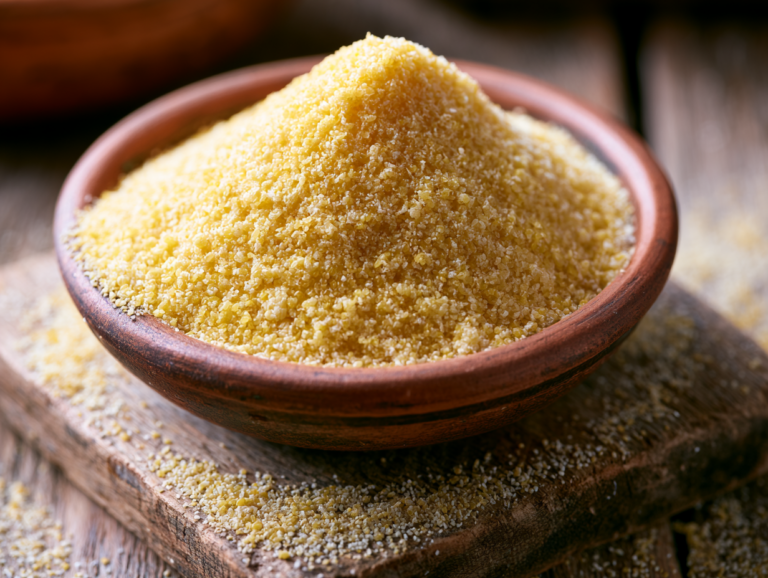
Rice Flour
Rice flour is the gluten-free baker’s secret weapon—silky, neutral, and surprisingly versatile in both sweet and savory kitchens.
In a nutshell
Rice flour is finely milled from white or brown rice and acts as a near-seamless stand-in for all-purpose flour in many recipes. It’s naturally gluten-free, making it essential for those with celiac disease or gluten sensitivity. Its mild flavor and light texture let other ingredients shine without competing.
Nutrition
≈ 37 Calories and 0.1g fat per tablespoon.
Rice flour is almost entirely carbohydrate-driven energy, which makes it a quick-fuel ingredient but not a high-protein one—with only about 6 grams of protein per 100 grams, it won’t carry the structural role gluten normally does on its own. The fat content is minimal. Brown rice flour retains the bran layer and delivers meaningfully more fiber, B vitamins, and minerals like magnesium and phosphorus than its white counterpart. The sodium-free profile is a bonus for anyone watching sodium intake, and its low allergenic potential makes it one of the safest flours for sensitive households. Nutrition per 100 g.
Culinary uses & pairings
Rice flour is a workhorse in gluten-free baking—use it as the base of cookie, cake, muffin, and quick-bread blends, typically combined with a starch like tapioca or potato starch and a binder like xanthan gum to mimic the elasticity of wheat flour. It produces a tender, slightly crumbly crumb that works beautifully in shortbread, pancakes, and crepes, and it’s the traditional flour in many Asian sweets like mochi, rice cakes, and Filipino puto.
In savory cooking, rice flour shines as a coating for frying—it creates an exceptionally light, crispy crust on chicken, fish, and vegetables that stays crunchy longer than all-purpose flour coatings. It also makes a smooth, lump-resistant slurry for thickening soups, gravies, and sauces, and it’s used in fresh pasta and noodle doughs across Southeast and East Asian cuisines.
Pairs well with
Substitutions
Buying & storage
Look for rice flour that is finely milled with a smooth, powdery feel—coarser grinds and products labeled sweet rice flour are different products suited to different tasks, so read labels carefully. White rice flour is the most widely available and neutral-tasting, while brown rice flour has a slightly nuttier flavor and more nutrients; choose based on your recipe. For strict gluten-free diets, look for packages that carry a certified gluten-free seal, since cross-contamination during milling is a real risk. Asian grocery stores often carry high-quality, finely milled rice flour at a lower price than specialty health-food stores.
Varieties
- White Rice Flour: Milled from polished white rice; the most neutral-tasting and widely used variety for baking, frying, and thickening.
- Brown Rice Flour: Ground from whole-grain brown rice with the bran intact; nuttier in flavor, higher in fiber and nutrients, and best used in hearty baked goods.
- Sweet Rice Flour (Glutinous Rice Flour): Despite the name, it contains no gluten—’glutinous’ refers to its sticky, chewy texture when cooked. Essential for mochi, dumplings, and thick sauces.
- Rice Flour (Superfine): An extra-fine grind that produces the smoothest results in delicate cakes, crepes, and tempura batters with minimal grittiness.
Recipes using rice flour
18 recipes across our recipe sites use rice flour. A few favorites:
Cooking with rice flour tonight?
Find rice flour recipes that match your diet — keto, high-protein, vegan, under 30 minutes — and build a shopping list in one tap.
History & origin
Rice has been cultivated in Asia for more than 7,000 years, and grinding it into flour followed naturally as civilizations developed stone milling. Rice flour has been a kitchen staple across China, Japan, Korea, India, and Southeast Asia for millennia, forming the foundation of iconic foods from Japanese mochi to South Indian rice-based sweets and batters to Vietnamese bánh cuốn. In the West, rice flour remained largely a specialty ingredient until the late 20th century, when rising awareness of celiac disease and gluten intolerance drove demand for wheat alternatives—today it sits on mainstream supermarket shelves across the United States.
How it’s made
Rice flour is produced by milling dried rice grains into a fine powder. For white rice flour, the bran and germ are removed before milling; for brown rice flour, the whole grain goes directly to the mill. Industrial production uses high-speed roller mills or hammer mills that grind the rice to a consistent particle size, which is then sifted to the desired fineness. Wet milling—soaking rice before grinding—is a traditional Asian method that produces an especially fine, smooth flour used in rice noodles and sweets. The moisture is then removed by drying before the flour is packaged.
Good to know
- Despite the word ‘glutinous’ in its name, glutinous or sweet rice flour contains absolutely no gluten—it’s safe for those with celiac disease.
- Rice flour is among the oldest known flours in the world, with rice cultivation and milling traditions in Asia stretching back thousands of years.
- Because rice flour lacks gluten proteins, batters made with it don’t develop the same elasticity as wheat batters—which is exactly why fried foods coated in it come out lighter and crisper.
- In Japan, rice flour has seen a major domestic resurgence as a way to support local rice farmers and reduce reliance on imported wheat.
- A single cup of white rice flour weighs about 5.6 to 5.7 ounces (158–160 grams) depending on how it’s measured—noticeably different from all-purpose flour by volume, so weight measurements give far more consistent baking results.