Semolina
Semolina is the golden, coarse-ground durum wheat that gives pasta, bread, and porridge their satisfying chew and nutty warmth.
In a nutshell
Semolina is the granular flour milled from the endosperm of hard durum wheat. Its high gluten strength and coarse texture make it the backbone of dried pasta and a secret weapon for crispy roasted potatoes. Most US grocery stores carry it in the baking or bulk aisle, often labeled ‘semolina flour’ or ‘pasta flour.’
Nutrition
≈ 49 Calories and 0.1g fat per tablespoon.
Semolina delivers a solid hit of plant-based protein — notably higher than all-purpose flour — which helps give pasta dough its elasticity and staying power. Its complex carbohydrates digest more slowly than refined white flour, thanks in part to a respectable fiber content that supports digestive health. It’s naturally very low in sodium and fat, and it provides meaningful amounts of B vitamins (especially thiamine and folate), iron, and magnesium that support energy metabolism and red blood cell production. The high proportion of gluten-forming proteins is exactly what makes it so functional in the kitchen, but it also means it’s not suitable for anyone with celiac disease or gluten sensitivity. Nutrition per 100 g.
Culinary uses & pairings
Semolina’s most celebrated role is in fresh and dried pasta: kneaded with water or eggs, it forms a firm, golden dough that holds its shape during cooking and delivers that pleasantly toothsome bite. It’s equally at home in gnocchi alla romana and North African couscous, where its granular texture is the whole point. Bakers fold it into pizza dough, focaccia, and rustic loaves to add a slightly crunchy crust and a mild, wheaty sweetness.
Beyond pasta and bread, semolina shines as a hot breakfast porridge (simply stirred into simmering milk or water with butter and a pinch of salt) and as a coating for fried or roasted foods — tossing potatoes in semolina before roasting creates an irresistibly crisp exterior. It’s also the base for classic Indian upma and halwa, Middle Eastern basbousa cake, and Italian semolina puddings, showing off its versatility across savory and sweet applications.
Pairs well with
Substitutions
Buying & storage
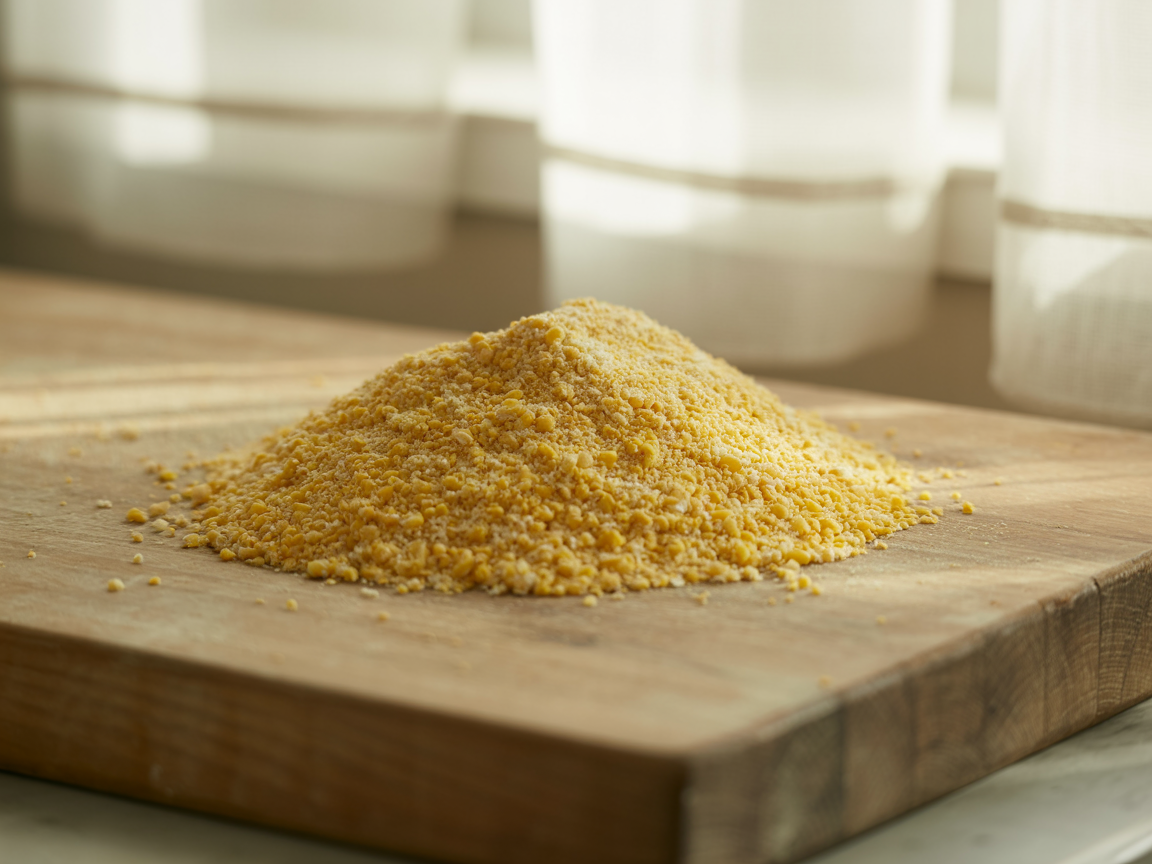
Look for semolina that is bright golden-yellow with a uniform, sandy grain — dullness or grayish tones can signal age or improper storage. US grocery stores typically stock two grinds: coarse semolina (ideal for porridge, coatings, and rustic pasta) and fine semolina or semolina flour (better for silkier pasta doughs and baking). Bags labeled ‘durum semolina’ are your best bet for pasta-making because they confirm the wheat variety. Check the milling date if possible, and avoid bags with any off or musty smell, which indicates the natural oils have gone rancid.
Grades
- Coarse semolina: The most common supermarket form; sandy and granular, perfect for porridge, polenta-style dishes, coatings, and traditional couscous.
- Fine semolina (semolina flour): Ground to a finer texture closer to all-purpose flour; preferred for smooth pasta doughs, pizza crusts, and Middle Eastern cakes like basbousa.
- Whole-wheat semolina: Milled from the whole durum kernel; nuttier and denser with more fiber, great for heartier breads and rustic pasta.
- Baby (extra-fine) semolina: The finest grind, used mainly for infant porridges and delicate puddings; rare in US mainstream retail but available at specialty stores.
Recipes using semolina
7 recipes across our recipe sites use semolina. A few favorites:
Cooking with semolina tonight?
Find semolina recipes that match your diet — keto, high-protein, vegan, under 30 minutes — and build a shopping list in one tap.
History & origin
Durum wheat has been cultivated in the Fertile Crescent for more than 10,000 years, and the practice of stone-milling it into coarse granules likely followed soon after. Ancient Romans relied on a porridge called puls made from coarsely ground wheat — a direct ancestor of semolina porridge. Arab traders carried durum cultivation and the art of drying pasta across North Africa and into Sicily during the Middle Ages, cementing semolina’s role in what would become one of the world’s most beloved cuisines. The word ‘semolina’ itself derives from the Italian semolino, a diminutive of semola meaning bran, reflecting the granular character of the mill’s yield. Commercial roller milling in the 19th century made consistent, high-quality semolina widely available and fueled the explosive growth of the industrial pasta industry across Europe and, eventually, the United States.
How it’s made
Semolina is produced by milling the endosperm of durum wheat (Triticum durum), the hardest commercially grown wheat species. Harvested durum kernels are cleaned, tempered with water to toughen the bran, and then passed through a series of steel roller mills that crack and gradually reduce the grain. Because durum endosperm is exceptionally hard and vitreous, it shatters into coarse, glassy particles rather than a fine powder — those particles are semolina. Sifting separates the granules from the bran and germ: the coarsest fractions are sold as semolina, while progressively finer sifting yields semolina flour and ultimately durum flour. The natural yellow carotenoid pigments in durum endosperm give semolina its characteristic golden color, a quality millers actively select for in durum wheat breeding.
Good to know
- Semolina’s golden color comes from carotenoid pigments — the same family of antioxidant compounds responsible for the orange in carrots.
- Italy legally requires commercially sold dried pasta to be made exclusively from durum semolina and water, protecting its texture and quality.
- Tossing diced potatoes in a tablespoon of semolina before roasting at 425°F (220°C) is a trick that produces an extraordinarily crispy crust without deep frying.
- Despite both coming from wheat, semolina has a lower glycemic index than most refined white flours, largely because its dense protein network slows starch digestion.
- The global pasta industry consumes roughly 8 to 9 million tons of durum wheat per year, making semolina one of the most economically significant milled grain products on earth.