Rosemary
Rosemary is the bold, piney herb that turns everyday roasts, breads, and sauces into something unforgettable.
In a nutshell
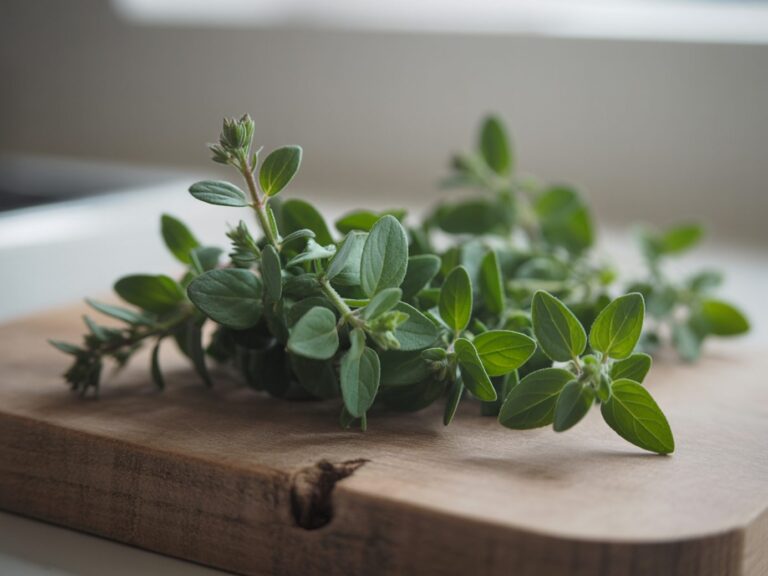
Rosemary is a woody Mediterranean herb with needle-like leaves and a powerful, resinous aroma that blends pine, camphor, and a hint of lemon. A little goes a long way — it holds up beautifully to high heat, making it a go-to for roasted meats, potatoes, and breads. Fresh and dried forms are widely available year-round in most US grocery stores.
Nutrition
≈ 45 Calories and 2.1g fat per tablespoon.
Because rosemary is used in very small amounts, its per-100g numbers tell only part of the story — but they do reveal why this herb punches above its weight nutritionally. Rosemary is notably high in dietary fiber, which supports digestive health, and it delivers a meaningful amount of iron, calcium, and manganese relative to its size. It’s rich in antioxidant compounds — particularly rosmarinic acid and carnosic acid — that research links to anti-inflammatory and antimicrobial properties. Vitamins A, C, and B6 are also present, and the herb contains compounds that have been studied for their potential to support memory and circulation. While you’d need to eat unrealistic quantities to hit significant daily values, even culinary doses contribute beneficial plant compounds to your diet. Nutrition per 100g via Spoonacular.
Culinary uses & pairings
Rosemary is a natural partner for roasted and grilled meats — tuck whole sprigs under chicken skin, press chopped leaves into a lamb crust, or lay branches directly on hot coals to perfume grilled vegetables. It shines in focaccia and other savory breads, pressed into the dough with olive oil and flaky salt before baking. Strip the leaves from a sturdy stem and use the bare stalk as a skewer for kebabs — it perfumes the food from the inside out.
Beyond the grill and oven, rosemary infuses beautifully into oils, butters, and simple syrups, bringing its piney character to salad dressings, cocktails, and lemonades. Add a sprig to simmering beans, lentil soups, or braises for a savory backbone that melds into the background. It’s equally at home in shortbread cookies and caramel sauces, where its slight bitterness creates an elegant contrast to sweetness — an unexpected pairing that home bakers are increasingly exploring.
Pairs well with
Substitutions
Buying & storage
Look for fresh rosemary sprigs that are deep green, firm, and fragrant — avoid any with yellowing, wilted, or dry-brittle needles, which signal age. The stems should feel sturdy, not limp. When buying dried rosemary, choose whole needles over ground if you can; whole needles retain their volatile oils longer and give you more control. Check that dried rosemary has a strong, immediate piney scent when you open the jar — a faint or dusty smell means it’s past its prime. Organic options are widely available and worth considering if pesticide residue is a concern for you.
Varieties
- Common Rosemary (Salvia rosmarinus): The standard upright variety found in most grocery stores and gardens; bold flavor and widely available fresh or dried.
- Tuscan Blue: A tall, vigorous cultivar with broad, intensely aromatic needles — a favorite among cooks who grow their own.
- Prostrate (Creeping) Rosemary: A low-growing trailing variety with a slightly milder flavor; more commonly grown as a landscape plant but fully edible.
- Arp: A cold-hardy variety that survives winters in much of the US; the flavor is slightly more lemony than standard rosemary.
Recipes using rosemary
132 recipes across our recipe sites use rosemary. A few favorites:
Cooking with rosemary tonight?
Find rosemary recipes that match your diet — keto, high-protein, vegan, under 30 minutes — and build a shopping list in one tap.
History & origin
Rosemary has been prized around the Mediterranean for thousands of years, first as a sacred and medicinal plant before it migrated firmly into the kitchen. Ancient Greeks and Romans associated it with memory and fidelity — students were said to wear garlands of it to aid concentration, and it was used at weddings and funerals alike. Arab physicians of the medieval era documented its therapeutic uses, and it appeared in early European herbal texts. It was brought to the Americas by European colonists, and it naturalized readily in California and the warm-winter South. Today it’s one of the most planted culinary herbs in US home gardens and a cornerstone of cuisines from Tuscany to Provence to coastal Spain.
How it’s made
Rosemary is a perennial woody shrub in the mint family (Lamiaceae) that grows best in well-drained, slightly alkaline soil with full sun and low humidity — conditions that mimic its native Mediterranean coastlines. It’s propagated most reliably from stem cuttings rather than seed, which germinates slowly and unevenly. Plants take several months to establish but then grow vigorously for years with minimal water, making them a popular herb-garden anchor in warm US climates. For commercial fresh-cut production, stems are harvested by hand, chilled quickly, and packed in humidity-controlled containers. For dried rosemary, harvested stems are either air-dried in bundles or dried at low heat in commercial dehydrators, then the needles are stripped and packaged whole or ground.
Good to know
- Rosemary’s botanical name was reclassified from Rosmarinus officinalis to Salvia rosmarinus in 2017 after genetic analysis confirmed it belongs within the sage genus.
- The name rosemary derives from the Latin ros maris, meaning ‘dew of the sea’ — a nod to its natural habitat on rocky coastal cliffs.
- Rosemary is notably heat-stable and holds its flavor well through long cooking, making it well suited to braises and slow-roasted dishes.
- A single established rosemary plant in a warm climate can live for many years and grow into a shrub several feet wide.
- Rosemary contains compounds that have been shown in some studies to inhibit the formation of heterocyclic amines (HCAs) — potential carcinogens that form when meat is cooked at high heat — giving your herb crust a functional benefit beyond flavor.