Apricot
Sunny and sweet, the apricot brings a fragrant stone-fruit warmth to everything from jam jars to tagines.
In a nutshell
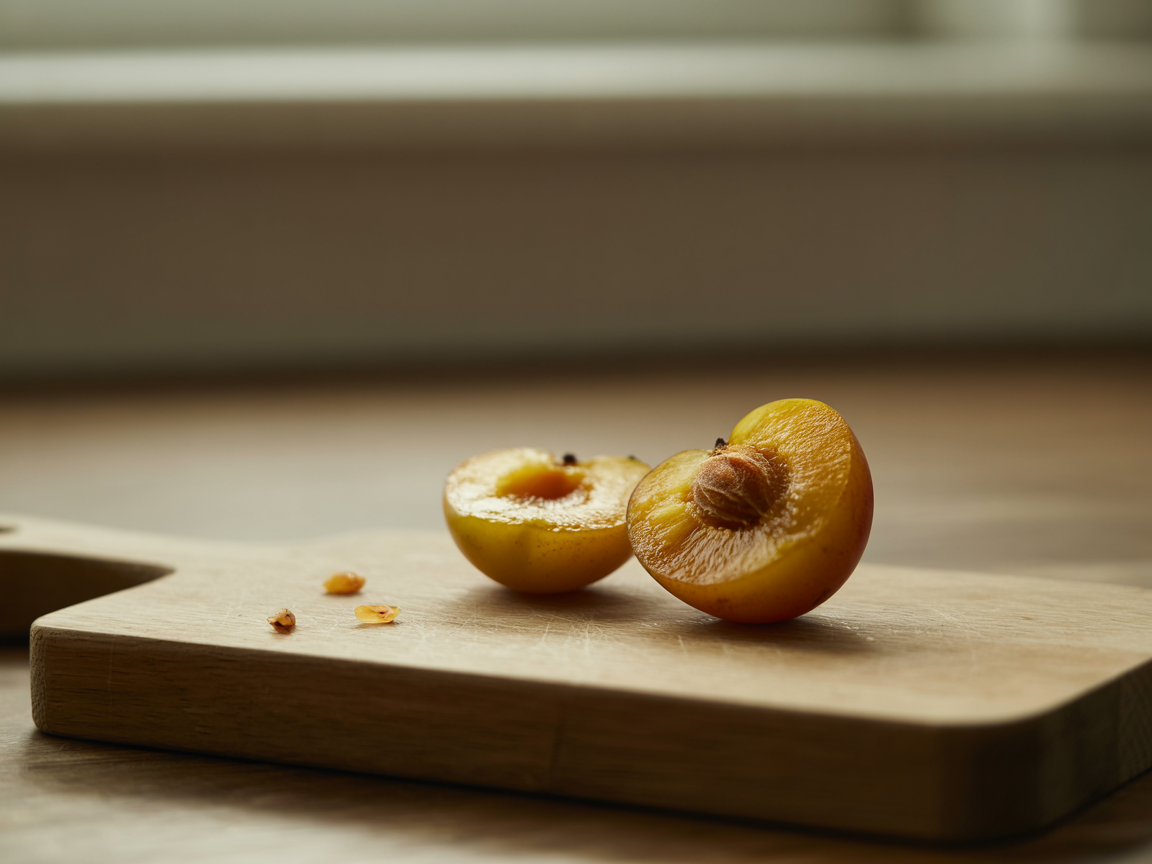
The apricot is a small, golden-orange stone fruit with velvety skin and a honey-sweet flavor that carries a gentle tartness near the pit. It shines fresh in summer but is equally beloved dried, cooked into preserves, or simmered into savory sauces. American home cooks prize it for its versatility across both sweet and savory kitchens.
Nutrition
≈ 6 Calories and 0.1g fat per tablespoon.
Apricots are remarkably light in calories and nearly fat-free, making them one of the more diet-friendly stone fruits. Their vivid orange color signals a rich store of beta-carotene, which the body converts to vitamin A—important for eye health, immune function, and skin integrity. Fresh apricots also deliver a useful hit of vitamin C and potassium, while their roughly 2 grams of fiber per 100g supports digestive regularity. Dried apricots concentrate all of these nutrients significantly, though they also concentrate natural sugars, so portion size matters there. Nutrition per 100g via Spoonacular.
Culinary uses & pairings
Fresh apricots shine in summer desserts—fold sliced fruit into galettes, crisps, and upside-down cakes, or simply halve and grill them until caramelized, then serve over yogurt or vanilla ice cream. Their natural pectin content helps them set into jams and preserves, and a jar of homemade apricot jam doubles as a glaze for roasted chicken or pork tenderloin.
In savory cooking, apricots pair beautifully with warm spices and braised meats. Stir dried apricots into Moroccan-style lamb tagines or chicken braises alongside cinnamon, cumin, and ginger. Purée fresh or canned apricots into barbecue sauces and glazes, or chop them into salsas and chutneys to serve alongside grilled fish or duck breast.
Pairs well with
Substitutions
Buying & storage
Look for apricots that feel heavy for their size with a deep golden-orange blush—pale yellow or greenish fruit was picked too early and will never develop full flavor on the counter. The skin should yield slightly to gentle thumb pressure; rock-hard apricots need a few days at room temperature, while bruised or mushy ones are past their prime. Farmers’ market apricots in June and July typically far outshine supermarket varieties, which are often bred for shipping durability rather than flavor. For dried apricots, choose unsulfured dark-brown ones if you want the most natural flavor; the bright-orange sulfured variety has a livelier color but a slightly chemical edge.
Varieties
- Blenheim (Royal): The gold standard of California apricots—intensely sweet and fragrant with thin skin; superb fresh or dried but too delicate to ship widely.
- Tilton: A firm, mildly tart variety popular for commercial canning and cooking; holds its shape well under heat.
- Moorpark: Large, richly flavored heirloom variety with a complex honey-sweet taste; a favorite for jam makers.
- Goldcot: Cold-hardy variety grown in the Midwest and Northeast; good fresh eating with a pleasantly mild flavor.
- Turkish Dried Apricot: Not a fresh variety but the dominant style of dried apricot in US stores—whole, pit-free, and sulfured to a vivid orange.
Recipes using apricot
14 recipes across our recipe sites use apricot. A few favorites:
Cooking with apricot tonight?
Find apricot recipes that match your diet — keto, high-protein, vegan, under 30 minutes — and build a shopping list in one tap.
History & origin
Apricots are believed to have originated in the high-altitude regions of northwestern China more than 4,000 years ago, making them one of humanity’s oldest cultivated fruits. They traveled westward along the Silk Road into Persia and the Mediterranean world, where the Romans called them praecox—”early-ripening”—a nod to their brief summer season. Spanish missionaries introduced the apricot to California in the late 18th century, and by the early 20th century the Santa Clara Valley was a leading center of apricot production in the United States, supplying a large share of the nation’s fresh and canned fruit before suburban development claimed most of those orchards.
How it’s made
Apricots grow on small to medium deciduous trees that bloom early in spring—so early that late frosts are their biggest commercial enemy. Trees require a period of winter chill to break dormancy properly, which is why California, Washington, and Utah produce most of the US crop. Fruits develop from fertilized blossoms over roughly 100 to 120 days, transitioning from hard green nubs to their signature golden-orange color as sugars accumulate and the flesh softens. Commercial growers harvest by hand or mechanical shaker when the fruit reaches full color but is still firm enough to travel; fruit destined for drying or canning is left to ripen a few days longer on the tree for maximum sugar content.
Good to know
- The apricot pit kernel inside the hard stone contains amygdalin, a compound that releases hydrogen cyanide when metabolized—so the kernels should not be eaten, especially in quantity.
- California once dominated US apricot production, but output has dropped dramatically since the 1970s as development consumed prime growing land, particularly in the Santa Clara Valley.
- Drying concentrates an apricot’s beta-carotene considerably; a small serving of dried apricot halves can contribute meaningfully toward an adult’s daily vitamin A needs.
- The word ‘apricot’ traces through Portuguese albricoque and Arabic al-barquq all the way back to the Latin praecoquum, meaning early-ripening fruit.
- Apricot oil, cold-pressed from the kernel, is a popular carrier oil in cosmetics and is occasionally used as a light cooking oil in some cuisines.