Plum
Juicy, sweet-tart plums are one of summer’s most versatile stone fruits for snacking, baking, and preserving.
In a nutshell
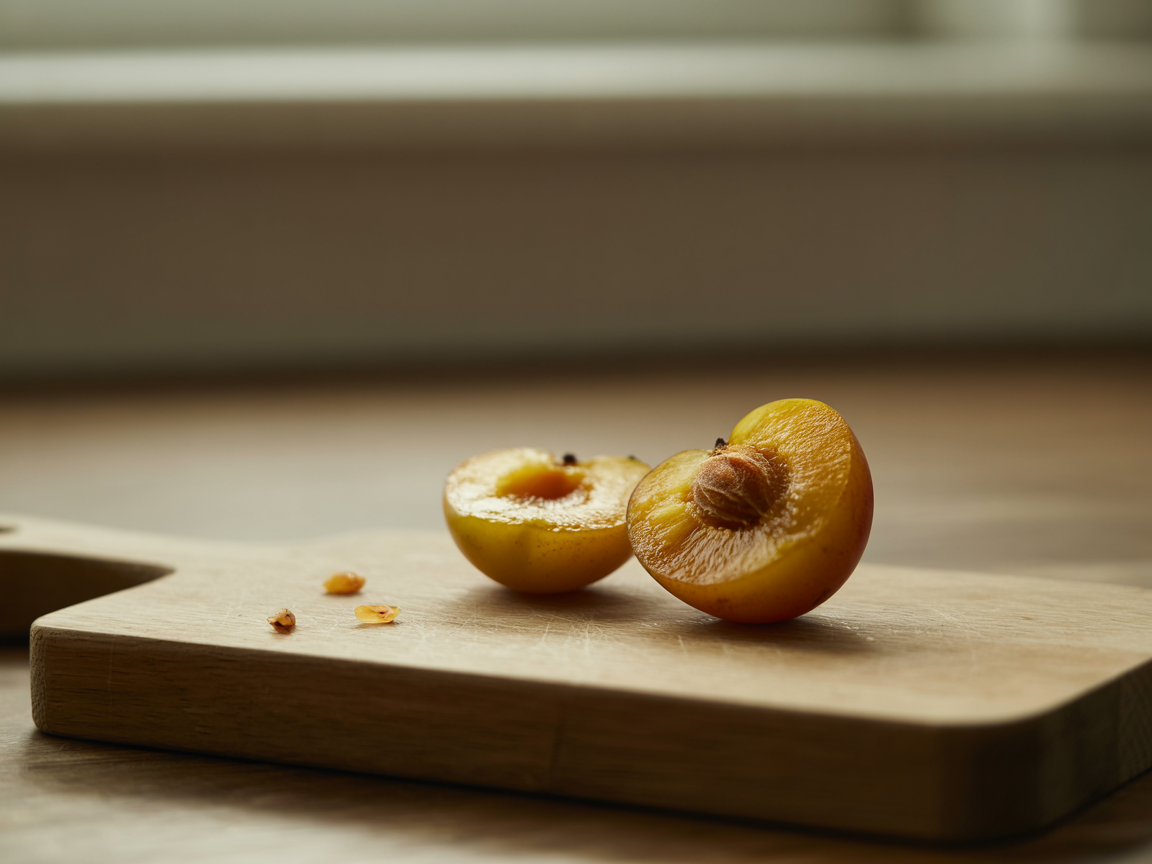
Plums are smooth-skinned stone fruits with flesh ranging from golden-yellow to deep ruby, wrapping a hard central pit. They hit peak season from May through October, with dozens of varieties offering everything from candy-sweet to pleasantly tart. Fresh off the tree they’re a perfect snack; cooked down, they transform into silky sauces, jams, and fillings.
Nutrition
≈ 6 Calories and 0g fat per tablespoon.
Plums are impressively light in calories while delivering a modest hit of dietary fiber that supports healthy digestion. Their deep red, purple, and blue pigments come from anthocyanins, potent antioxidants linked to reduced inflammation and better cardiovascular health. Plums are also a reliable source of vitamin C and vitamin K, plus small amounts of potassium and copper. The natural sorbitol content — well-known in their dried form as prunes — gives fresh plums a gentle digestive nudge even before the fiber kicks in. Nutrition per 100g via Spoonacular.
Culinary uses & pairings
Fresh plums shine straight out of hand, sliced onto yogurt, tossed into green salads with arugula and goat cheese, or layered onto a cheese board alongside aged cheddar and walnuts. Their balanced sweet-tart flavor makes them ideal for galettes, crostatas, and upside-down cakes where the heat concentrates their natural sugars into jammy, caramelized pockets.
On the savory side, plums break down beautifully into sauces and glazes for duck, pork tenderloin, and lamb chops. They’re a key ingredient in Chinese plum sauce and the Georgian condiment tkemali, and they pickle wonderfully with star anise and rice vinegar for a condiment that cuts through rich meats. Roasting plum halves at 400 °F (205 °C) with a little honey and thyme unlocks a deeply complex, jammy topping for grilled chicken or pork ribs.
Pairs well with
Substitutions
Buying & storage
Look for plums that yield just slightly to gentle thumb pressure — rock-hard fruit won’t have developed its full sugar, while mushy spots signal overripeness. Skin color is variety-dependent and not a reliable ripeness indicator, so trust the squeeze. The fruit should feel heavy for its size and carry a light floral scent near the stem end. Avoid plums with wrinkled skin, sticky patches, or large bruises. A faint whitish bloom on the skin is a natural protective coating called epicuticular wax — it’s completely harmless and actually a sign the fruit hasn’t been over-handled.
Varieties
- Black Beauty / Black Amber: Deep purple-black skin with amber flesh; very sweet and great for fresh eating.
- Santa Rosa: A classic California variety developed by Luther Burbank, with reddish-purple skin and yellow-red flesh; excellent balance of sweet and tart, superb for jam.
- Italian Prune Plum (Empress): Freestone, egg-shaped, and lower in moisture; the go-to choice for drying into prunes and for Eastern European baked goods like plum cake.
- Greengage: Small, green-skinned, and intensely sweet with a honey-like flavor; a favorite for preserves and eating fresh.
- Damson: Small, dark blue-purple, and very astringent raw; they transform into deeply flavored jam, gin infusions, and fruit cheeses when cooked with sugar.
- Pluot: A hybrid of plum and apricot (roughly 75% plum genetics); extremely sweet with smooth skin and complex flavor, great for fresh eating.
Recipes using plum
1 recipes across our recipe sites use plum. A few favorites:
Cooking with plum tonight?
Find plum recipes that match your diet — keto, high-protein, vegan, under 30 minutes — and build a shopping list in one tap.
History & origin
Plums have one of the longest cultivation records of any fruit — archaeobotanical evidence suggests humans were gathering and cultivating plums in the Caucasus and western Asia more than 5,000 years ago. The European plum (Prunus domestica) likely arose from a natural cross between blackthorn (Prunus spinosa) and cherry plum (Prunus cerasifera) somewhere near the Caspian Sea, while the Japanese plum (Prunus salicina) was cultivated in China for at least 3,000 years before spreading to Japan and then to California in the late 1800s, where Luther Burbank played a key role in introducing and breeding new varieties. Romans carried European plums westward through their empire, and by the medieval period plum orchards were standard across England, France, and Germany. Today China, Romania, Serbia, and the United States are among the world’s leading producers.
How it’s made
Plums grow on deciduous trees that bloom in early spring, often before the last frost — a vulnerability growers manage by planting on slopes or using wind machines to circulate warmer air. The fruit develops over roughly 90 to 150 days depending on the variety, progressing from a hard green stage through a rapid cell-expansion phase where sugars accumulate and acids mellow. Most commercial plums in the US are harvested by hand or mechanical shakers when they reach a target firmness (measured by a penetrometer) that allows them to survive packing and shipping without bruising. Freestone varieties, where the flesh pulls cleanly away from the pit, are generally prized for fresh markets, while clingstone types (where flesh clings to the pit) are often destined for canning or processing into juice and concentrate.
Good to know
- Dried plums were long marketed primarily as ‘prunes’ in the US, but the California Prune Board successfully petitioned the FDA in 2000 to allow the label ‘dried plums’ as an alternative name to broaden their appeal.
- The white waxy coating you see on fresh plums is called bloom and is produced by the fruit itself as a natural barrier against moisture loss and bacteria.
- China grows more plums than any other country, accounting for roughly half of global production.
- The plum blossom (méihuā, from Prunus mume) is a national symbol of China, representing perseverance and hope; in Japan the same blossom (ume) is also deeply celebrated and associated with the arrival of spring.
- A single medium plum contains roughly 30 calories, making it one of the most diet-friendly sweet fruits available.