Turmeric Powder
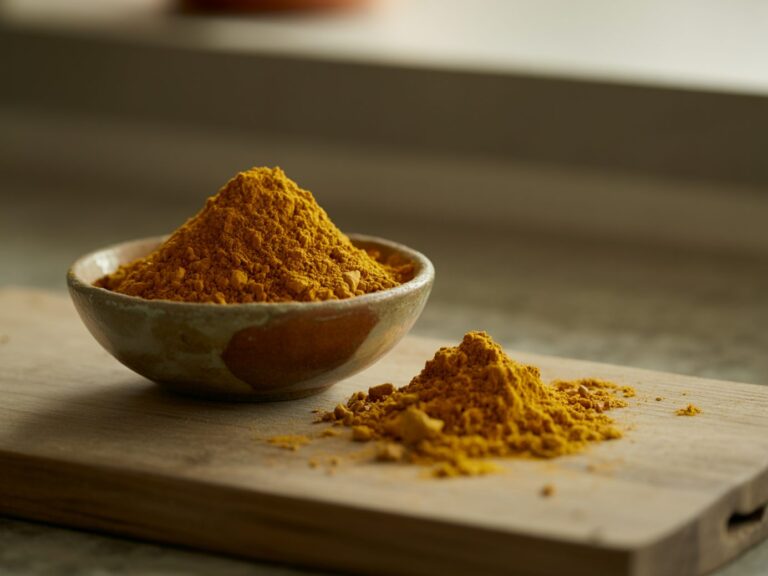
Turmeric powder brings earthy warmth and a gorgeous golden hue to everything it touches.
In a nutshell
Turmeric powder is the dried, ground rhizome of a tropical plant related to ginger, best known for its vivid yellow-orange color and mildly earthy, slightly bitter flavor. It’s a cornerstone of South Asian cooking and has become a beloved pantry staple for US home cooks. A small pinch goes a long way — both in color and taste.
Nutrition
≈ 25 Calories and 0.7g fat per tablespoon.
Turmeric is surprisingly high in dietary fiber for a spice, which contributes to its modest caloric density. The real nutritional story, though, is curcumin, the polyphenol compound responsible for turmeric’s golden color and its widely studied anti-inflammatory and antioxidant properties. Research suggests curcumin may support joint health and immune function, though absorption is significantly boosted when paired with black pepper (thanks to piperine) or a source of fat — making turmeric’s culinary companions as important as the spice itself. It also provides manganese and iron in meaningful amounts relative to typical serving sizes. Nutrition per 100 g.
Culinary uses & pairings
Turmeric powder is most at home in curries, dals, and spiced rice dishes, where it builds a warm, golden base alongside cumin, coriander, and ginger. Stir it into soups, lentil stews, scrambled eggs, or roasted vegetables to add color and gentle earthiness without overwhelming other flavors. Even a quarter teaspoon can transform the look of a dish.
Beyond savory cooking, turmeric has found a second life in golden milk lattes, smoothies, and wellness tonics. It works beautifully in spice blends like curry powder and baharat, and adventurous bakers have used it to tint cakes, energy balls, and homemade noodles a striking yellow. Because it stains easily, a little intentionality goes a long way when using it with light-colored ingredients or cookware.
Pairs well with
Substitutions
Buying & storage
Look for turmeric powder with a deep, saturated orange-yellow color — a dull or pale powder is a sign it’s old or low quality. Opt for brands that list curcumin content if you’re buying for health purposes, as this varies significantly by origin and processing. Indian-grown turmeric, particularly from Alleppey or Erode, is prized for high curcumin levels. Buy in small quantities from stores with high turnover, and choose airtight packaging when possible.
Grades and Origins
- Alleppey Turmeric: From Kerala, India; prized for high curcumin content (around 5–6%) and deep color. The top choice for both cooking and wellness use.
- Erode (Madras) Turmeric: From Tamil Nadu, India; slightly lower curcumin content but excellent bright yellow color, commonly found in US grocery stores.
- Javanese Turmeric: Grown in Indonesia; milder flavor and lighter color, often used in commercial food coloring applications.
- Hawaiian Turmeric: Domestically grown, small-batch variety with a fresher, more aromatic profile; increasingly available at farmers markets.
Recipes using turmeric powder
70 recipes across our recipe sites use turmeric powder. A few favorites:
Cooking with turmeric powder tonight?
Find turmeric powder recipes that match your diet — keto, high-protein, vegan, under 30 minutes — and build a shopping list in one tap.
History & origin
Turmeric has been cultivated in South Asia for at least 4,000 years, with roots in Vedic culture where it held sacred and medicinal significance long before it became a culinary staple. It spread along ancient spice trade routes to the Middle East, Africa, and eventually Europe, where medieval herbalists called it ‘Indian saffron.’ Ayurvedic and Traditional Chinese Medicine incorporated turmeric into healing practices for centuries, treating everything from digestive complaints to skin conditions. Its arrival in US kitchens accelerated in the early 2000s alongside growing interest in South Asian cuisine, and the wellness boom of the 2010s pushed it into mainstream grocery culture as golden milk and turmeric supplements became household names.
How it’s made
Turmeric powder starts with the rhizomes — the knobby underground stems — of the Curcuma longa plant, a tropical perennial in the ginger family. After harvest, typically nine to ten months after planting, the rhizomes are boiled or steamed for several hours to gelatinize the starch and ensure even color distribution, then sun-dried for one to two weeks until the moisture content drops to a safe level for milling. The dried rhizomes are then ground into a fine powder using industrial mills; the color of the finished powder depends on the curcumin content of the variety and growing conditions. No additives are needed — the vivid hue is entirely natural.
Good to know
- Turmeric is one of the most powerful natural dyes known — it has been used as a textile and fabric dye for centuries across South and Southeast Asia and will permanently stain most fabrics and plastic containers.
- The compound curcumin makes up only about 2–8% of turmeric by weight, yet it’s responsible for most of its color and the bulk of its studied health properties.
- Black pepper dramatically increases curcumin absorption — piperine, its active compound, can boost bioavailability by up to 2,000% according to some studies.
- The United States is one of the largest importers of turmeric in the world, sourcing most of it from India, which produces roughly 80% of the global supply.
- Turmeric is sometimes called ‘the golden spice’ or ‘poor man’s saffron’ because it achieves a similar yellow color in food at a fraction of the cost.