Buckwheat
Buckwheat is a nutty, earthy pseudo-grain that brings hearty depth to both sweet and savory cooking.
In a nutshell
Despite its name, buckwheat isn’t wheat at all — it’s the seed of a flowering plant related to rhubarb and sorrel. It’s naturally gluten-free, cooks quickly, and delivers a bold, roasty flavor that sets it apart from most other grains. Home cooks reach for it in everything from fluffy pancakes to earthy salads and hearty bowls.
Nutrition
≈ 46 Calories and 0.5g fat per tablespoon.
Buckwheat punches well above its weight nutritionally. It contains all essential amino acids — particularly lysine, which is low in many grains — though it’s more accurately described as a high-quality plant protein than a strictly complete one by every measure. Its roughly 10 grams of dietary fiber per 100 grams (cooked groats deliver considerably less, around 2–3 g per 100 g, but dry groats clock in near that figure) supports digestive health and helps you feel full. Buckwheat is one of the best food sources of rutin, a flavonoid antioxidant linked to cardiovascular support and reduced inflammation. It also provides meaningful amounts of magnesium, manganese, copper, and phosphorus, which matter for bone health, energy metabolism, and nerve function. Because it ranks relatively low on the glycemic index compared to refined grains, it’s often recommended for people managing blood sugar levels. Nutrition per 100 g.
Culinary uses & pairings
In the kitchen, buckwheat shines as buckwheat groats — the whole hulled seeds — which can be simmered like rice for a nutty side dish or stirred into soups and grain bowls. Toasted groats, sold as kasha, have a deeper, more intense flavor and are a classic in Eastern European cooking, often cooked with onions and served alongside braised meats. Buckwheat flour is the star of Japanese soba noodles, French galettes Bretonnes (savory crêpes), and the beloved American buckwheat pancake, where its slight bitterness balances beautifully with maple syrup.
Buckwheat flour works well blended with other flours in muffins, quick breads, and waffles, adding a rich, dark color and complex flavor. Because it contains no gluten, it can’t be used as a 1-to-1 swap for all-purpose flour in yeast-leavened breads without structural support from another flour or a binder. Cold buckwheat groats tossed with roasted vegetables, fresh herbs, and a tangy vinaigrette make a satisfying make-ahead salad that only improves in the fridge overnight.
Pairs well with
Substitutions
Buying & storage
Look for raw (untoasted) buckwheat groats if you want versatility — you can toast them yourself to your preferred level of flavor. Kasha (pre-toasted groats) is a time-saver but has a more specific, intense taste. For buckwheat flour, seek out bags that specify 100% buckwheat with no wheat fillers if you need it to be gluten-free, and check the milling date when possible — the natural oils in buckwheat flour can go rancid faster than refined flours. Whole groats should look plump, pale green to tan, and smell faintly earthy; avoid any with a musty or sour odor.
Types
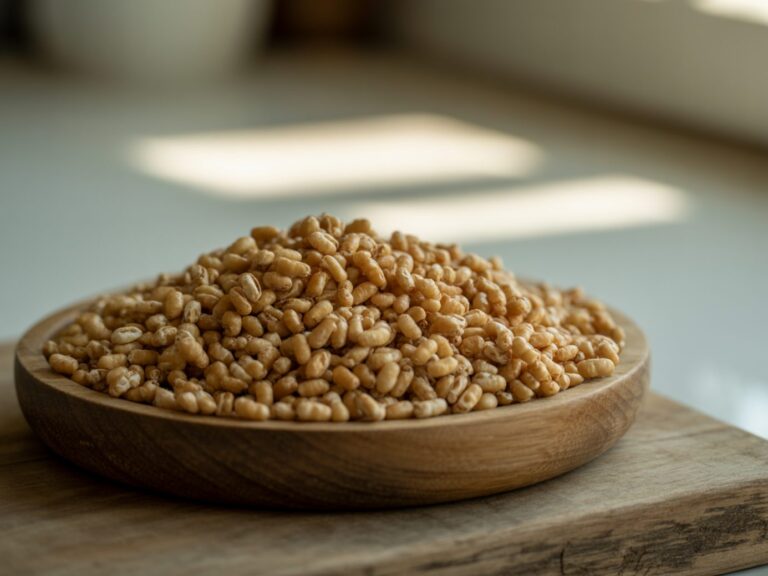
- Raw Buckwheat Groats: Hulled, untoasted seeds with a pale green-tan color and mild, slightly grassy flavor. The most versatile form — cook them, sprout them, or mill them into flour.
- Kasha (Toasted Groats): Groats that have been dry-roasted to a deep brown, developing a bold, nutty, almost smoky flavor. A staple in Russian and Eastern European cuisines.
- Buckwheat Flour: Stone-ground from whole groats; ranges from light (partially sifted) to dark (whole-grain) and is the base for soba noodles, galettes, and pancakes.
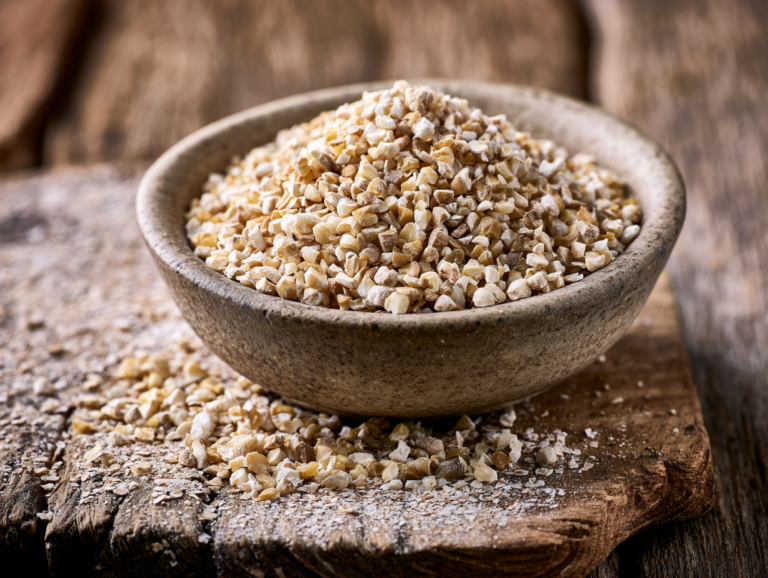
- Buckwheat Grits: Coarsely cracked groats that cook faster than whole groats; great for hot breakfast cereal with a porridge-like texture.
- Soba Noodles: Thin Japanese noodles made from buckwheat flour, sometimes blended with wheat. Served hot in broth or chilled with a dipping sauce.
Recipes using buckwheat
1 recipes across our recipe sites use buckwheat. A few favorites:
Cooking with buckwheat tonight?
Find buckwheat recipes that match your diet — keto, high-protein, vegan, under 30 minutes — and build a shopping list in one tap.
History & origin
Buckwheat has been cultivated for at least 6,000 years, with the earliest evidence of domestication pointing to southwestern China and Southeast Asia, from where it spread along trade routes into Central Asia, Russia, and eventually Europe by the Middle Ages. It became a dietary staple across cold, high-altitude regions precisely because it thrives in poor, rocky soil and matures in as little as 10 to 12 weeks — conditions that defeat most other crops. Russian kasha, Japanese soba, French galettes, and Appalachian buckwheat pancakes all evolved independently as cultures found delicious ways to use this resilient plant. In the United States, buckwheat was widely grown throughout the 18th and 19th centuries before industrialized wheat farming pushed it to the margins. Today it’s enjoying a strong revival, driven by interest in gluten-free eating, ancient grains, and whole-food cooking.
How it’s made
Buckwheat is the seed of Fagopyrum esculentum, a broadleaf flowering plant — not a grass — which is why it’s called a pseudo-cereal rather than a true grain. The plant produces small, triangular seeds encased in a tough dark hull. After harvest, the hulls are removed by milling, leaving the pale, pyramid-shaped groat underneath. To make kasha, groats are dry-toasted in a rotating drum or pan until golden brown. For buckwheat flour, groats are stone-ground or roller-milled; the darker the flour, the more of the outer bran layer is included. Because buckwheat grows without requiring heavy fertilizer or pesticide inputs and can improve soil structure, it’s a popular crop in sustainable and organic farming systems.
Good to know
- Buckwheat is not related to wheat in any way — it’s botanically closer to rhubarb, sorrel, and dock.
- The plant flowers prolifically and is a prized honey source; buckwheat honey is one of the darkest, most robustly flavored honeys available in the US.
- Japan produces some of the world’s most revered buckwheat noodles (soba), and skilled soba masters train for years to hand-roll noodles to precise thickness.
- Buckwheat contains rutin, a bioflavonoid studied for its ability to strengthen capillary walls — it’s one of the richest dietary sources of this compound.
- A buckwheat crop can go from seed to harvest in as few as 70 to 90 days, making it one of the fastest-maturing pseudo-cereal crops grown in the US.