Emmer
Emmer is an ancient wheat with a nutty, earthy depth that brings heirloom character to modern home cooking.
In a nutshell
Emmer is one of the world’s oldest cultivated wheats, prized for its chewy texture and rich, nutty flavor. It’s higher in fiber than modern wheat and holds its shape beautifully after cooking. Home cooks love it as a hearty swap for farro or barley in soups, salads, and pilafs.
Nutrition
≈ 48 Calories and 0.2g fat per tablespoon.
Emmer is a standout source of dietary fiber, delivering more fiber per serving than refined all-purpose flour, which supports digestive health and helps sustain satiety. Its protein content is respectable for a grain, providing a meaningful contribution to daily needs without being as high-gluten as modern bread wheat. The fat profile is modest and skewed toward beneficial polyunsaturated and monounsaturated fats, while sodium is naturally very low, making it a heart-friendly base grain. Emmer also supplies B vitamins, iron, magnesium, and zinc — micronutrients that can be harder to find in refined grains — making it a genuinely more nutritious choice than white rice or conventional pasta. Nutrition per 100g via Spoonacular.
Culinary uses & pairings
Emmer shines as a whole-grain base for grain bowls, soups, and stews, where its firm, pleasantly chewy kernel absorbs broth without turning mushy. Simmer it like barley in vegetable or chicken soup, toss it warm with roasted root vegetables and a bright vinaigrette, or use it as the anchor of a hearty winter salad with bitter greens and aged cheese.
Ground into emmer flour, it adds a wheaty, slightly sweet depth to rustic breads, flatbreads, pancakes, and pasta. Because its gluten is less extensible than modern wheat gluten, it works best when blended with a portion of bread flour for yeast breads, or used on its own for denser, artisan-style loaves and fresh pasta with a toothsome bite.
Pairs well with
Substitutions
Buying & storage
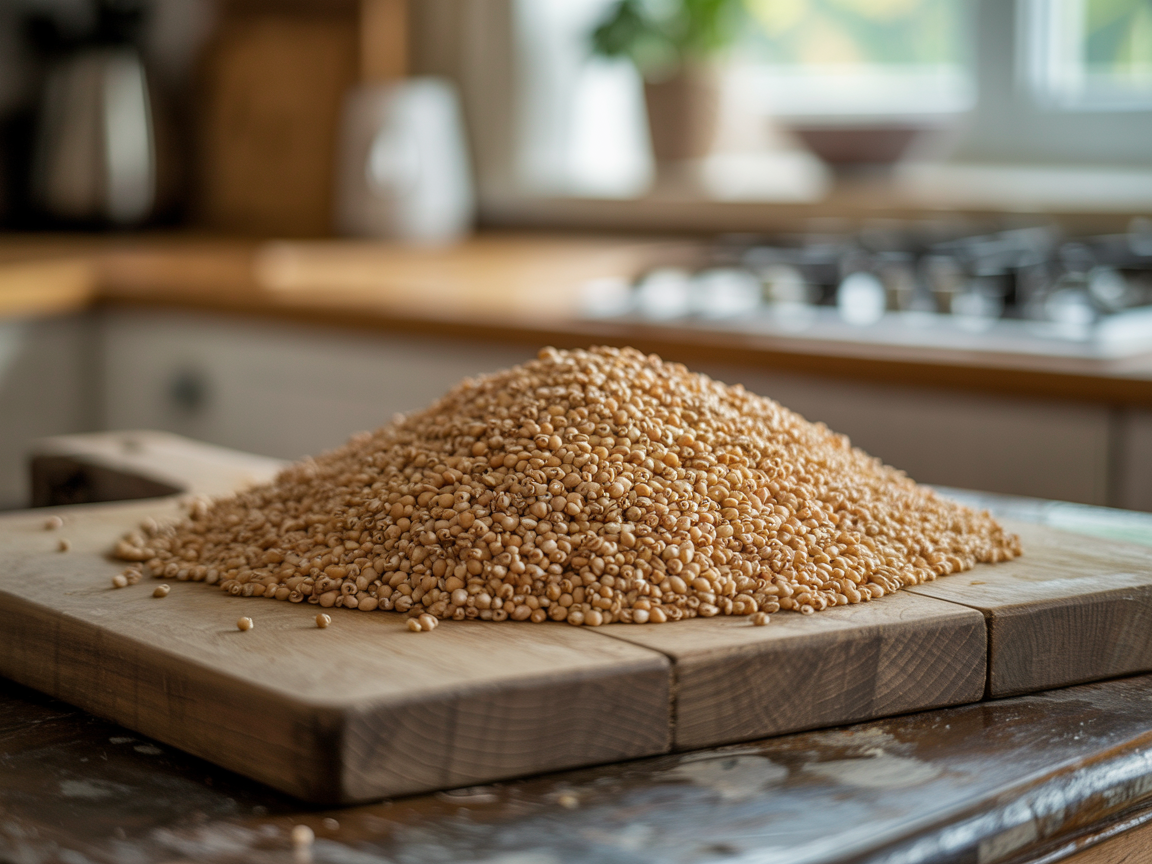
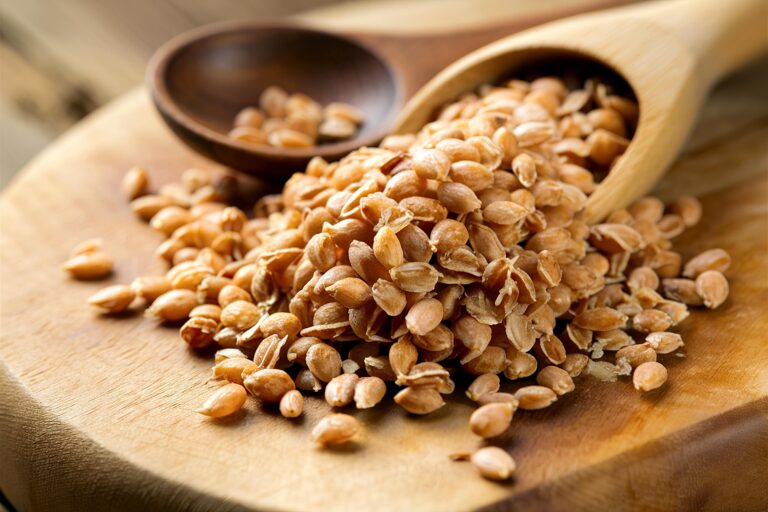
Look for emmer sold as whole emmer berries at natural food stores, farmers markets, or online grain mills. Whole, un-pearled berries retain the most fiber and nutrients; semi-pearled cooks faster and is a practical everyday choice. Note that in Italian labeling, emmer is sometimes called “farro medio,” but the term “semi-pearled emmer” specifically refers to the degree of processing, not a variety. Check the package date — ancient grains sold in small-batch bags from specialty mills are often fresher than supermarket shelf stock. If you spot stone-ground emmer flour, sniff it: it should smell faintly sweet and nutty, never musty or stale.
Types
- Whole (un-pearled) emmer berries: The bran and germ are fully intact, giving maximum fiber and nutrients; requires soaking and a cook time of 60 to 90 minutes.
- Semi-pearled emmer: Some bran is removed, cutting cook time to roughly 25 to 40 minutes while retaining good nutrition; a common form sold in US stores.
- Pearled emmer: Fully polished kernel that cooks in under 20 minutes; softest texture but lowest in fiber — treat it like pearled barley.
- Emmer flour: Stone-ground from whole emmer berries; used in breads, pasta, and baked goods for a nutty, slightly sweet whole-grain character.
Recipes
We do not have recipes featuring Emmer in our collection just yet — but you can discover thousands of recipes, filtered to your diet and your pantry, over at Tucker Finder.
Cooking with emmer tonight?
Find emmer recipes that match your diet — keto, high-protein, vegan, under 30 minutes — and build a shopping list in one tap.
History & origin
Emmer (Triticum dicoccum) is one of the first grains ever domesticated by humans, with origins tracing back to the Fertile Crescent around 10,000 BCE. It was a dietary cornerstone of ancient Egyptian, Roman, and Greek civilizations and was a staple grain consumed by workers and soldiers throughout those eras. After centuries of being displaced by higher-yielding modern wheats following the Green Revolution, emmer has staged a quiet comeback, championed by heritage grain farmers, artisan bakers, and nutritionists who value its complexity, resilience, and fiber content over easier-to-grow commodity varieties.
How it’s made
Emmer is a hulled wheat, meaning each grain is encased in a tough outer husk that must be threshed away after harvest — a more labor-intensive process than harvesting free-threshing modern wheat, which is part of why it fell out of commercial favor. Farmers typically grow emmer in low-input or organic systems because the plant is naturally hardy, drought-tolerant, and resistant to many fungal diseases, requiring little fertilizer or pesticide. After threshing, the berries are cleaned and either sold whole, lightly abraded to semi-pearled, or fully polished before packaging. Stone-milling into flour preserves the germ oils and produces a more flavorful, nutritionally rich product than roller-milling.
Good to know
- Emmer and einkorn are among the earliest wheats that archaeobotanists believe were domesticated at the dawn of agriculture, alongside other early cultivated grasses.
- The word “farro” in Italian can refer to three different ancient wheats: einkorn (farro piccolo), emmer (farro medio), and spelt (farro grande) — which is why Italian recipes calling for farro can taste surprisingly different depending on the source.
- Emmer’s gluten structure is genetically different from modern bread wheat gluten, which is why some people with non-celiac wheat sensitivity report tolerating it better — though it is absolutely not safe for those with celiac disease.
- Roman soldiers and laborers historically consumed emmer as a dietary staple; the Latin word for emmer, far, is considered a root of the Italian word “farina” (flour) and related terms in several European languages.
- Modern plant breeders are re-examining emmer’s genetics as a potential source of disease resistance genes that could be bred back into modern wheat to reduce pesticide dependency.