Mulberry
Mulberries are jewel-toned summer fruits that taste like a wilder, more complex cross between a blackberry and a raspberry.
In a nutshell
Mulberries are soft, deeply colored berries that grow on fast-spreading trees and ripen in a brief window each summer. They come in red, white, and black varieties, each with a slightly different flavor profile. Because they’re too fragile to ship well, finding them usually means growing your own or visiting a farmers’ market.
Nutrition
≈ 6 Calories and 0.1g fat per tablespoon.
Mulberries punch above their weight nutritionally for such a sweet-tasting fruit. They’re a solid source of vitamin C and provide a meaningful dose of iron — unusually high for a fruit — which matters especially for plant-based eaters. The deep purple-black pigment comes from anthocyanins, powerful antioxidants linked to heart and brain health. They also contain resveratrol, the same compound found in red wine, along with decent fiber relative to their modest calorie count, which helps support healthy digestion and steady blood sugar. Nutrition per 100g via Spoonacular.
Culinary uses & pairings
Fresh mulberries are wonderful eaten out of hand, tossed into yogurt or oatmeal, or folded into summer fruit salads. Their high juice content makes them exceptional for jams, jellies, and preserves — they gel readily and produce a gloriously dark, rich spread. They bake beautifully into cobblers, crisps, muffins, and galettes, though you’ll want to use them straight from the tree or freezer since they break down quickly.
On the savory side, mulberries make a stunning pan sauce or reduction for duck, pork, or lamb, where their natural tartness cuts through rich meat. Stir them into vinaigrettes, blend them into shrubs or switchels, or ferment them into a homemade wine or cordial. White mulberries, being milder and less tart, work especially well in delicate pastry cream fillings or atop fresh cheeses.
Pairs well with
Substitutions
Buying & storage
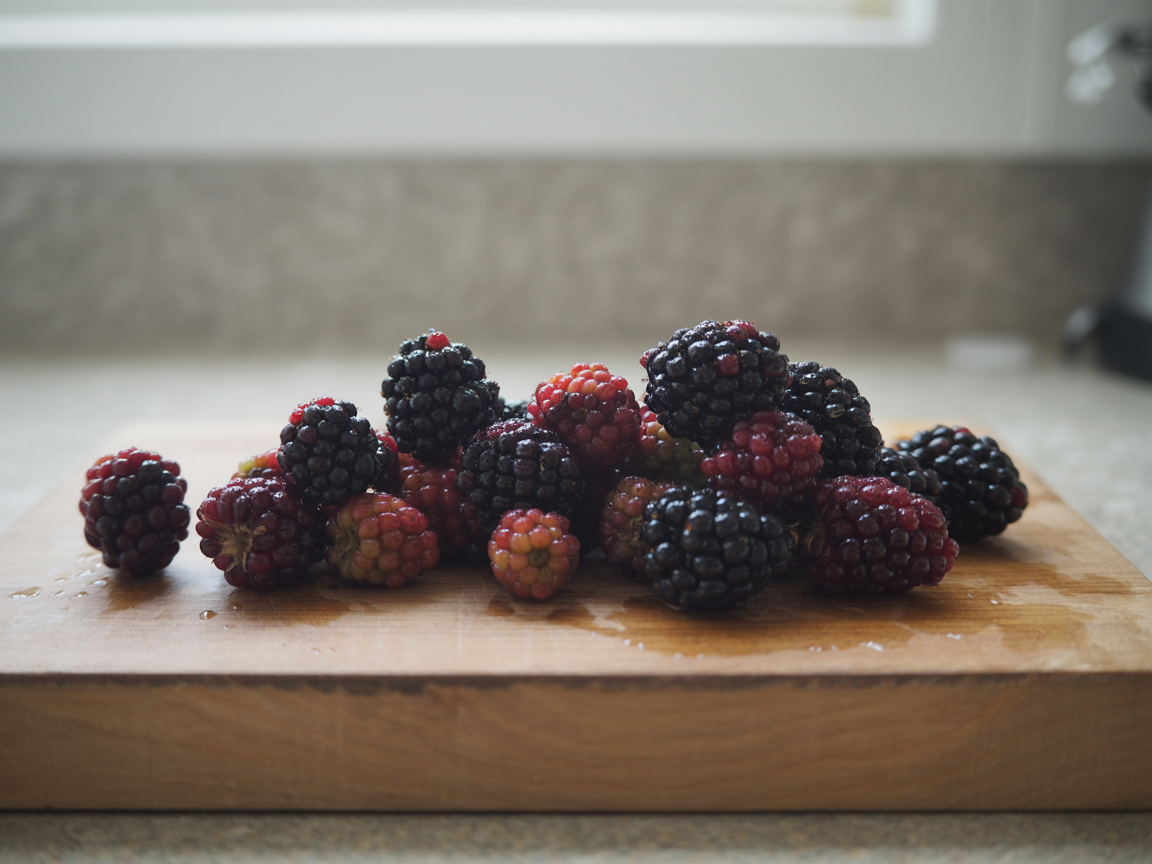
If you’re lucky enough to find mulberries at a farmers’ market or roadside stand, look for berries that are fully colored all the way through — deep purple-black for black mulberries, dark red for red varieties, or creamy white to pale lavender for white mulberries. Ripe mulberries should be plump, fragrant, and just barely firm; any that look shriveled, mushy, or dull have passed their prime. Because they stain everything they touch, markets often sell them in small containers or bags — check the bottom of the container for excess juice, which signals overripe fruit. Your very best bet is picking directly from a tree yourself, which guarantees peak ripeness.
Varieties
- Black Mulberry (Morus nigra): Native to western Asia, this is the most intensely flavored variety — deeply sweet with a pronounced tartness and rich, wine-dark juice. It’s the classic choice for jams and wine.
- Red Mulberry (Morus rubra): The only mulberry species native to North America. Flavor is similar to the black mulberry but often slightly less rich; trees are common in the eastern US and a favorite of backyard foragers.
- White Mulberry (Morus alba): Originally from China and introduced to the US for silkworm cultivation, white mulberries are milder, sweeter, and less tart than the other two. The ripe fruit can range from white to pale pink to lavender.
Cooking with mulberry tonight?
Find mulberry recipes that match your diet — keto, high-protein, vegan, under 30 minutes — and build a shopping list in one tap.
History & origin
Mulberries have been cultivated for thousands of years, with the white mulberry’s story inseparable from the history of silk production in China — the leaves of Morus alba are the primary food of the silkworm, and the tree has been farmed for at least 4,000 years. The fruit itself appears in ancient Greek and Roman writings, and mulberry trees were planted throughout medieval European monastery gardens for both their fruit and their dye. White mulberry trees arrived in the American colonies in the 17th century when entrepreneurs tried — and ultimately failed — to establish a domestic silk industry, but the trees naturalized and spread across the continent. Today mulberries remain a beloved backyard and wild-foraged fruit in the US, even if commercial production is minimal.
How it’s made
Mulberries grow on fast-maturing, highly productive deciduous trees that can reach 30 to 50 feet tall if left unpruned, though many home gardeners keep them smaller through annual pruning. The trees are remarkably adaptable, tolerating a wide range of soils and growing in USDA hardiness zones 4 through 9 depending on variety. Unlike most commercial fruits, mulberries don’t ripen all at once — they stagger over several weeks in late spring through midsummer. The traditional harvest method is to spread a tarp or old sheet under the tree and give the branches a gentle shake; ripe berries drop freely while unripe ones hold on. This fragility is exactly why commercial production is nearly nonexistent in the US — the berries simply can’t survive the handling and transit required for grocery store distribution.
Good to know
- A single mature mulberry tree can produce hundreds of pounds of fruit in a season, often more than a family can eat — which is why neighbors with mulberry trees are very popular in early summer.
- Mulberry juice is one of the most stubborn natural stains known to home laundry; ancient and medieval dyers used it as a textile dye for exactly this reason.
- The white mulberry tree was introduced to the American colonies in the early 17th century as part of efforts to establish a domestic silk industry; the silk industry never took off, but the trees naturalized and spread widely.
- The nursery rhyme ‘Here We Go Round the Mulberry Bush’ is thought by some historians to reference the practice of exercising around a mulberry tree planted in a prison yard in Wakefield, England.
- Mulberry leaves contain deoxynojirimycin (DNJ), a compound concentrated primarily in the leaves but present in smaller amounts in the fruit, that has been studied for its potential to slow carbohydrate absorption and moderate blood sugar response.