Cempedak
Cempedak is a tropical Southeast Asian fruit with a custardy, intensely sweet pulp that adventurous home cooks will absolutely love.
In a nutshell
Cempedak is a close cousin of jackfruit, grown across Southeast Asia and occasionally found at specialty Asian markets in the US. Its golden-orange flesh is softer, richer, and far more aromatic than jackfruit, tasting like a cross between banana, mango, and durian. You can eat it fresh, fry the pulp in batter, or use it in both sweet and savory preparations.
Nutrition
Cempedak delivers a meaningful hit of natural sugars and dietary fiber, making it satisfying and surprisingly filling for a fruit. It provides vitamin C for immune support and skin health, along with B vitamins—particularly B6 and folate—that support energy metabolism and cell function. The fruit also contains potassium, which supports heart health and helps regulate blood pressure, as well as smaller amounts of magnesium and iron. Its deep golden flesh signals the presence of carotenoids, antioxidant compounds linked to eye health and reduced inflammation.
Culinary uses & pairings
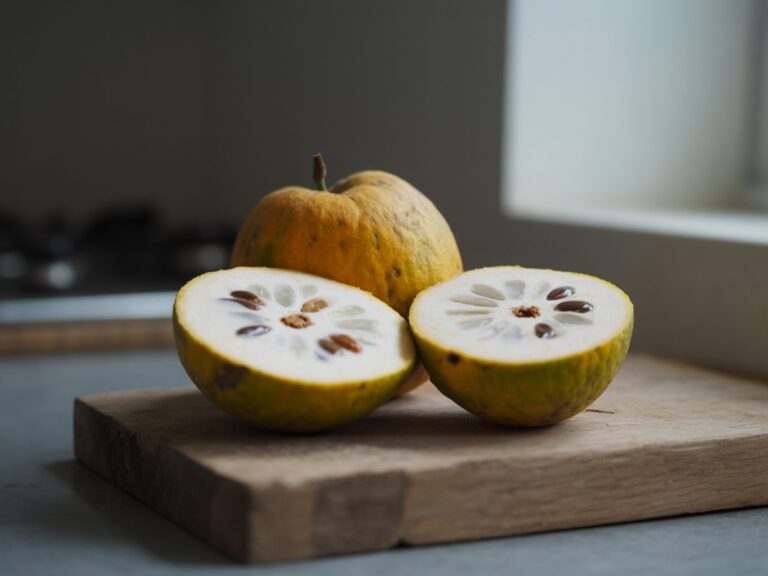
Fresh cempedak is eaten out of hand once the thick, sticky rind is cracked open—each lobe of flesh peels away from the fibrous core. The pulp is irresistibly sweet and almost pudding-like, so it works beautifully as a topping for sticky rice, blended into smoothies, or churned into ice cream or sorbet.
One of the most beloved preparations in Malaysia and Indonesia is cempedak goreng—whole lobes of flesh dipped in a thin batter and deep-fried until golden and crisp. The contrast of the crunchy shell and the molten, jammy interior is extraordinary. The seeds are also edible and can be boiled or roasted, adding a starchy, nutty element to meals.
Pairs well with
Substitutions
Buying & storage
In the US, cempedak is most likely to turn up at Southeast Asian specialty grocery stores or large Asian supermarkets in cities with significant Malaysian or Indonesian communities, usually sold whole or—more commonly—frozen or canned. When buying fresh, look for a fruit that yields slightly to gentle pressure and has a strong, sweet, distinctly fragrant aroma; a very hard fruit needs more ripening time at room temperature. The rind should be yellowish-green to yellow-brown without large soft or moldy spots. Frozen pulp is a reliable alternative and is far more widely available; choose packs with no sign of freezer burn or ice crystals.
Varieties
- Artocarpus integer (common cempedak): The standard species found across Malaysia, Indonesia, and Thailand; golden-orange flesh, strong aroma, and a relatively thin rind.
- Cempedak Biji Kecil: A cultivar prized for its unusually small seeds, which means more edible flesh per fruit.
- Wild cempedak (Artocarpus integer var.): Smaller-fruited wild forms found in forest settings have a more intense aroma; they are rarely exported but used locally in traditional cooking. Note that marang is a distinct species (Artocarpus odoratissimus), not a cempedak variant.
Recipes
We do not have recipes featuring Cempedak in our collection just yet — but you can discover thousands of recipes, filtered to your diet and your pantry, over at Tucker Finder.
Cooking with cempedak tonight?
Find cempedak recipes that match your diet — keto, high-protein, vegan, under 30 minutes — and build a shopping list in one tap.
History & origin
Cempedak has been cultivated and foraged across the Malay Archipelago—modern-day Malaysia, Indonesia, Brunei, and southern Thailand—for centuries, with a long presence in the region predating detailed written records. It holds a cherished place in Malay and Javanese food culture, featuring prominently in village markets and traditional festive cooking. Unlike its relative jackfruit, cempedak never became a global commodity crop, so it remained largely unknown outside its native range until broader interest in Southeast Asian cuisines began drawing attention to it. Today it is gaining a small but devoted following among tropical-fruit enthusiasts and specialty growers in Hawaii and South Florida.
How it’s made
Cempedak grows on a medium-to-large evergreen tree (Artocarpus integer) in the mulberry family (Moraceae), thriving in hot, humid lowland climates with well-drained, fertile soil. The tree is cauliflorous, meaning the fruits develop directly on the trunk and main branches rather than at the tips of the canopy, which allows heavy fruits to be supported without breaking smaller limbs. Trees grown from seed can take several years to bear fruit, while grafted specimens generally fruit sooner. The compound fruits develop over several months and are harvested when the rind turns from green to yellowish-brown and the characteristic sweet, strong aroma becomes evident. After harvest, the fruits ripen quickly and must be handled and distributed promptly, which is one reason fresh cempedak rarely travels far from its growing region.
Good to know
- Cempedak belongs to the same genus (Artocarpus) as jackfruit, breadfruit, and marang, making it part of one of the most food-important tree genera in the tropics.
- The sap and rind of cempedak are extremely sticky with latex; cooks traditionally rub their hands and knife blades with cooking oil before cutting one open to prevent the latex from bonding to skin and tools.
- In Malaysia, the fried preparation cempedak goreng is a beloved roadside snack sold by hawkers, often enjoyed warm straight from the wok.
- The seeds can be boiled or roasted, meaning almost no part of the fruit goes to waste.
- Cempedak fruit can weigh anywhere from about 1 pound to over 6 pounds (roughly 0.5 to 3 kg), and a single tree can produce many fruits in one season.