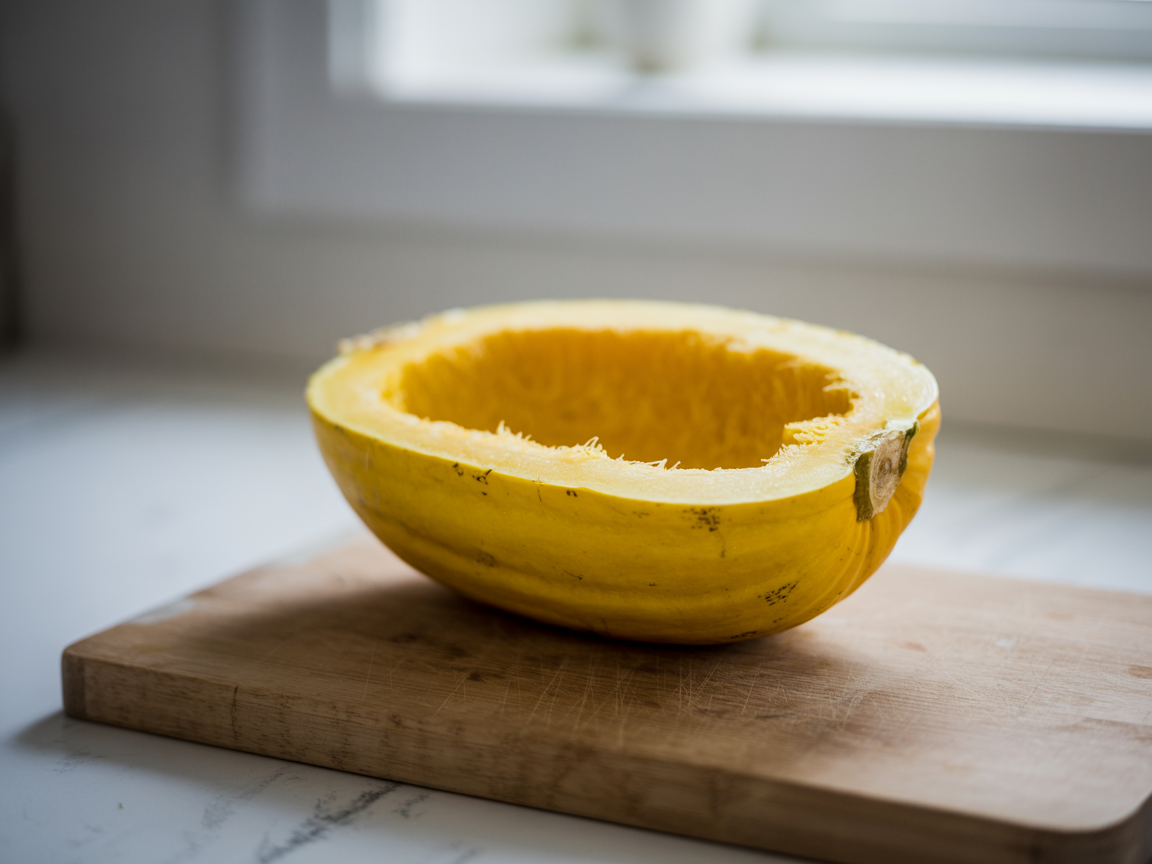
Eggplant
Eggplant’s silky, meaty texture makes it one of the most satisfying vegetables for cooks who want bold flavor without the meat.
In a nutshell
Eggplant is a deep-purple, mild-flavored nightshade vegetable prized for its ability to absorb sauces, spices, and fats like a sponge. Raw it’s firm and slightly bitter, but heat transforms it into something wonderfully creamy and rich. It’s a cornerstone of cuisines from the Mediterranean to East Asia.
Nutrition
≈ 3 Calories and 0g fat per tablespoon.
Eggplant is remarkably low in calories—mostly water and fiber—making it a smart choice for adding bulk to a meal without adding much energy. That fiber content supports digestive health and helps you feel full, which is notable for such a light vegetable. The skin contains nasunin, a potent anthocyanin antioxidant that gives eggplant its signature deep purple color and has been studied for its role in protecting cells from oxidative stress. Eggplant also provides small amounts of manganese, potassium, and folate, contributing quietly to everyday nutritional needs without stealing the spotlight. Nutrition per 100g via Spoonacular.
Culinary uses & pairings
Eggplant shines when given high heat. Roasting or grilling whole until the skin chars and collapses is the backbone of dishes like baba ganoush and Indian baingan bharta—the smoky, silky flesh that results is unlike anything else. Cubed and salted first to draw out moisture, it sautés beautifully for ratatouille, caponata, or a quick weeknight stir-fry. Sliced into planks, it can stand in for pasta sheets in lasagna or be layered into Greek moussaka.
Because eggplant is so porous, it soaks up olive oil, tahini, miso, and spiced sauces with enthusiasm—a quality that makes it deeply satisfying but also means it can drink up oil quickly in a hot pan. A light salting and pressing before cooking reduces bitterness in older specimens and helps control oil absorption. It holds its shape well enough for curries, stews, and braises, yet melts down obligingly into dips and spreads.
Pairs well with
Substitutions
Buying & storage
Choose eggplants that feel heavy for their size with taut, glossy skin and a bright green stem—dull skin or a dry brown stem signals age and likely bitterness inside. Give it a gentle press; it should yield slightly and spring back. Avoid specimens with soft spots, wrinkled patches, or any discoloration on the skin. Smaller eggplants tend to be sweeter and have fewer seeds than large ones, so don’t automatically reach for the biggest one in the bin.
Varieties
- Globe (American): The large, deep-purple variety most common in US supermarkets; great for slicing, baking, and dipping preparations.
- Italian: Smaller and more slender than globe eggplant with thinner skin and fewer seeds; sweeter flavor and ideal for sautéing.
- Japanese: Long, narrow, and vivid purple with very tender skin and mild, barely bitter flesh; cooks quickly and is perfect for grilling or miso glazing.
- Chinese: Similar in shape to Japanese but lighter lavender in color and slightly spongy; excellent in stir-fries with bold sauces.
- Graffiti (Sicilian): Striped purple-and-white globe type with a creamy interior and mild flavor; holds its color well when cooked and is beautiful on a platter.
- White: Ivory-skinned with a slightly denser, creamier texture and very mild, nutty flavor; lower bitterness than globe eggplant, though salting before cooking is still worthwhile for larger specimens.
Recipes using eggplant
93 recipes across our recipe sites use eggplant. A few favorites:
Cooking with eggplant tonight?
Find eggplant recipes that match your diet — keto, high-protein, vegan, under 30 minutes — and build a shopping list in one tap.
History & origin
Eggplant originated in South and Southeast Asia—likely in India—where it has been cultivated for thousands of years. It spread westward through Persia and into the Arab world, arriving in the Mediterranean by the Middle Ages, where it became essential to cuisines we now think of as quintessentially Italian and Greek. Early European encounters were suspicious; some believed the plant caused madness or fever, earning it the nickname ‘mad apple’ in parts of Europe. Spanish and Portuguese traders carried it to the Americas, though it didn’t catch on in the US in a serious way until the nineteenth century. Today it’s grown and eaten on virtually every continent and holds a place of honor in dozens of world cuisines.
How it’s made
Eggplant is a warm-season vegetable grown from transplants started indoors six to eight weeks before the last frost. It demands heat—soil temperatures need to be at least 60°F (16°C) before transplanting—and performs best in full sun with consistent moisture. Plants are staked as they grow and begin bearing fruit roughly 65 to 80 days after transplanting. Eggplant is harvested before it’s fully mature; a ripe-for-market fruit has glossy, firm skin and fully colored flesh but seeds that are still small and pale. Letting it stay on the vine too long produces large seeds and bitter flesh. In the US, Florida, California, and New Jersey are among the leading commercial producers.
Good to know
- Eggplant is botanically a berry—specifically the berry of the plant Solanum melongena, making it a close relative of the tomato and the potato.
- The name ‘eggplant’ comes from the small white or yellow varieties that look remarkably like hen’s eggs hanging from the plant.
- Eggplant flesh browns quickly when cut because it contains enzymes that react with oxygen; a squeeze of lemon juice or a quick soak in salted water slows the process.
- It is one of the lowest-calorie vegetables you can buy, yet its spongy structure gives dishes a heartiness that tricks the brain into feeling satisfied.
- In Japan, dreaming of eggplant on New Year’s night is considered a very good omen—it’s ranked among the luckiest of all dream symbols.