Lamb (Sheep)
Lamb brings rich, slightly sweet flavor to the table and rewards home cooks who give it even a little attention.
In a nutshell
Lamb is the meat of a young sheep, typically under one year old, prized for its tender texture and distinctive savory-sweet flavor. It is a staple across Mediterranean, Middle Eastern, and South Asian cuisines, and it fits beautifully into American kitchens too. Cuts range from quick-cooking chops and racks to slow-braised shanks and shoulders.
Nutrition
≈ 38 Calories and 3.2g fat per tablespoon.
Lamb is a protein-dense red meat, delivering a meaningful amount of complete protein with all essential amino acids in every serving. Its fat profile is notable: while saturated fat is present, a meaningful portion of the fat is monounsaturated, the same heart-friendly type found in olive oil. Lamb is an excellent natural source of heme iron, which the body absorbs far more efficiently than plant-based iron, making it especially valuable for those prone to iron deficiency. It also provides zinc for immune function, vitamin B12 for nerve health, and selenium, an antioxidant mineral. Grass-fed lamb tends to carry a slightly better omega-3 to omega-6 ratio than grain-finished animals, though both are nutritious choices. Nutrition per 100g via Spoonacular.
Culinary uses & pairings
Lamb chops and racks shine with high-heat cooking—sear them hard in a cast-iron pan or grill over direct flame to develop a deep crust while keeping the interior rosy pink. Leg of lamb is a showstopper when roasted whole, whether boneless and rolled with herb stuffing or bone-in studded with garlic and rosemary. A meat thermometer is your best friend here: pull lamb at 130–135°F (54–57°C) for medium-rare, which is widely considered its sweet spot.
Tougher, collagen-rich cuts like the shoulder and shank transform into something extraordinary with low, slow moist heat. Braised in red wine, tomatoes, or spiced broth for two to three hours, they become fall-off-the-bone tender with a silky sauce. Ground lamb is endlessly versatile—use it for kofta skewers, stuffed peppers, shepherd’s pie, or seasoned burger patties that are juicier and more flavorful than their beef counterparts.
Pairs well with
Substitutions
Buying & storage
Look for lamb with pinkish-red to deep red flesh and white, firm fat—fat that looks yellow or greasy can signal older or improperly stored meat. The USDA grades lamb as Prime, Choice, or Good; Choice is the most common in supermarkets and delivers great results for home cooking. Grass-fed and pasture-raised lamb tends to have a more pronounced, complex flavor that fans love, while grain-finished domestic lamb is milder and widely available. For the most delicate flavor, seek out American or Australian lamb under one year old; ‘spring lamb’ (three to five months old) is even more tender and mild when you can find it at specialty butchers.
Cuts
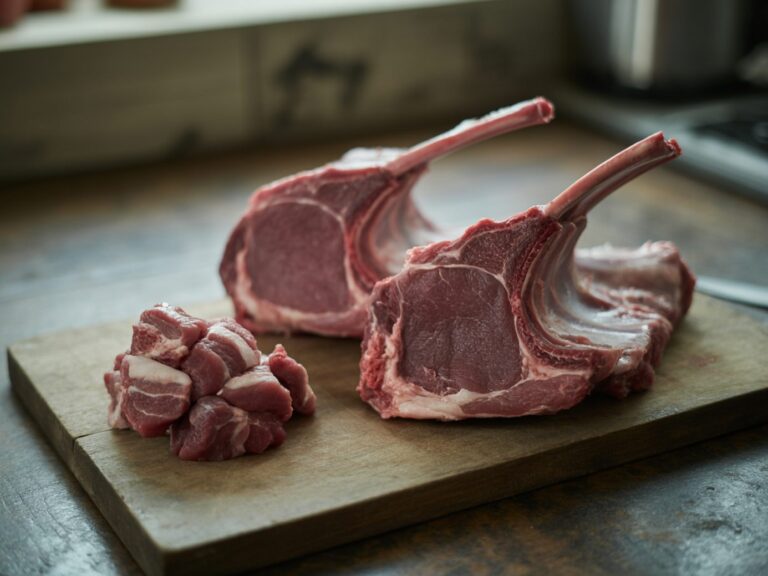
- Rack of Lamb: Eight rib chops left attached; elegant and quick-cooking, best roasted at high heat or grilled. Often Frenched for presentation.
- Leg of Lamb: The largest primal cut, sold bone-in or boneless. Bone-in roasts are juicier; boneless legs are easier to carve and ideal for stuffing and rolling.
- Lamb Shoulder: Well-marbled and full of connective tissue; ideal for slow roasting, braising, or pulling. More forgiving and economical than the leg.
- Lamb Shank: The lower leg, rich with collagen that melts into silky gelatin during a long braise. One shank makes a generous single serving.
- Loin Chops and Rib Chops: Quick-cooking individual cuts perfect for pan-searing or grilling. Loin chops resemble a tiny T-bone; rib chops are smaller and more tender.
- Ground Lamb: Versatile and widely available; typically made from shoulder trim. Excellent for kofta, burgers, meatballs, and pasta sauces.
Recipes using lamb
321 recipes across our recipe sites use lamb. A few favorites:
Cooking with lamb tonight?
Find lamb recipes that match your diet — keto, high-protein, vegan, under 30 minutes — and build a shopping list in one tap.
History & origin
Sheep were among the very first animals domesticated by humans, with archaeological evidence pointing to the Fertile Crescent region of the Middle East around 10,000 BCE. Lamb quickly became central to the cuisines and religious traditions of the ancient world—it held sacred meaning for Jewish Passover, Islamic Eid al-Adha, and early Christian Easter celebrations. The Romans spread sheep farming across Europe, and later waves of immigration carried beloved lamb recipes to the Americas and Australia. Today lamb is among the most widely eaten meats across the globe by number of consumers, even though beef dominates in the United States, where lamb is still considered a specialty or celebratory protein by many home cooks.
How it’s made
Lamb comes from young sheep slaughtered before 12 months of age, most often between 6 and 10 months, when the meat is at its most tender and the flavor is mildest. Animals raised primarily on their mother’s milk and pasture grass develop the clean, slightly sweet character that distinguishes quality lamb. After slaughter, carcasses are typically aged for a short period—often around 5 to 7 days—to allow enzymes to tenderize the muscle fibers, a process called wet aging in most commercial settings, though dry aging is used by some specialty producers. The carcass is then broken down into primals (leg, loin, rack, shoulder, shank, and breast) that are further cut into the retail portions you find at the butcher counter. Grass-fed and pasture-raised programs avoid routine antibiotic use and allow natural grazing behavior, which many cooks and nutritionists prefer.
Good to know
- A lamb is technically under 12 months old; once it passes that mark the meat is classified as yearling mutton and eventually full mutton, which is darker, stronger-flavored, and less common in American markets.
- The ‘gamey’ flavor many people associate with lamb is largely influenced by diet—grass-fed animals have higher levels of branched-chain fatty acids that create that distinctive aroma, while grain-finished lamb tastes noticeably milder.
- New Zealand and Australia together export more lamb than any other countries, yet the United States actually produces its own quality domestic lamb, particularly from states like Colorado, Wyoming, and California.
- Lamb fat has a higher melting point than chicken or pork fat, which is why cold leftover lamb can feel waxy—letting it return to room temperature before eating or reheating gently makes a big difference in texture.
- Serving mint jelly with lamb is a deeply American tradition; in Britain and the Middle East, fresh mint sauces and herb-forward accompaniments are preferred over the sweetened American jelly version.