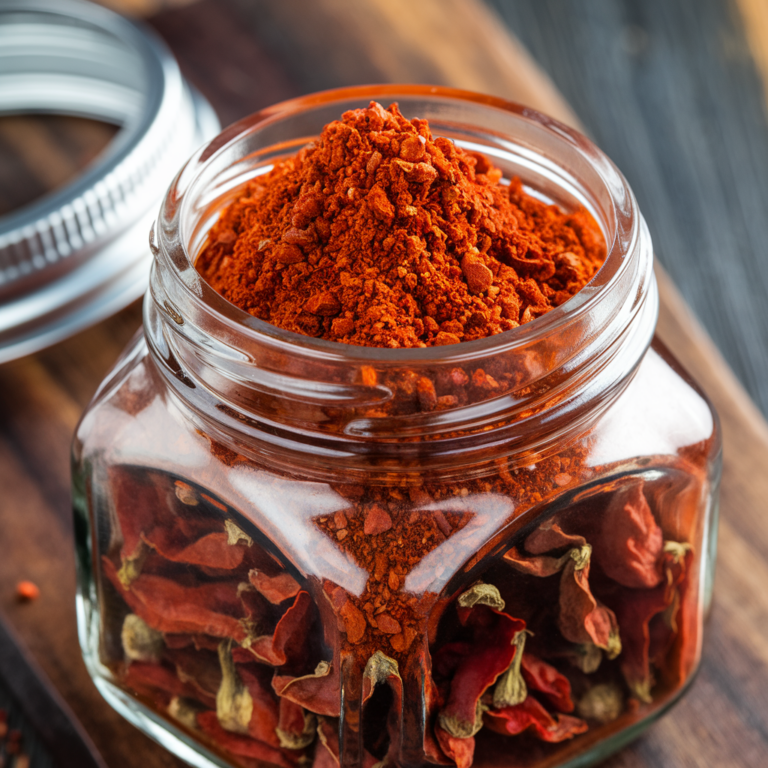
Chilli Powder
Chili powder brings smoky, earthy heat to everything from weeknight tacos to slow-simmered chili con carne.
In a nutshell
Chili powder is a blended spice mix built around dried ground chiles and rounded out with cumin, garlic, oregano, and sometimes paprika. It delivers mild-to-moderate heat with deep, earthy complexity rather than pure fire. One jar does heavy lifting across Tex-Mex cooking, barbecue rubs, and bold soups.
Nutrition
≈ 38 Calories and 1.9g fat per tablespoon.
Because chili powder is used by the teaspoon rather than the cup, its calorie and fat counts rarely matter in practice — but the nutrient profile is surprisingly rich. The dried chiles contribute capsaicin, the compound behind chili’s warmth, which research associates with metabolism support and anti-inflammatory effects. Chili powder is a meaningful source of vitamins A and E from the pepper base, along with iron and potassium. The concentrated nature of dried chiles contributes some dietary fiber, and many commercial blends contain added salt, so cooks watching sodium intake should factor that into seasoning decisions. Nutrition per 100g via Spoonacular.
Culinary uses & pairings
Chili powder is the backbone of Tex-Mex and Southwestern cooking. Stir it into ground beef for tacos, build a pot of chili con carne around it, or whisk it into enchilada sauce for instant depth. A tablespoon or two bloomed in hot oil at the start of cooking unlocks its fat-soluble flavor compounds and turns the base of any dish a rich brick red.
Beyond the obvious, chili powder shines in dry rubs for grilling and smoking — it clings well to ribs, brisket, and chicken thighs and caramelizes beautifully over high heat. Try it in roasted vegetable seasoning, stirred into mayo for a smoky aioli, dusted over popcorn, or mixed into brownie batter for a subtle heat-chocolate contrast.
Pairs well with
Substitutions
Buying & storage
Look for chili powder with a deep brick-red to dark brown color — a pale, orangey powder has lost most of its potency. Check the ingredient list: a good blend leads with dried chiles (ancho, pasilla, or New Mexico varieties) followed by cumin, garlic, and oregano, with salt listed toward the end rather than first. Bulk bins at spice shops often offer fresher turnover than dusty supermarket jars. Smell before you buy if possible; it should hit you with an immediate warm, earthy aroma rather than a faint or musty whiff.
Types
- Standard American chili powder: The most common supermarket style — a blend of dried chiles, cumin, garlic, oregano, and salt calibrated for mild, family-friendly heat.
- Tex-Mex chili powder: Heavier on cumin and often includes a touch of coriander; the classic choice for chili con carne and fajita seasoning.
- Hot chili powder: Same base blend with added cayenne or chile de árbol bumping the heat level significantly — check the label for heat-level guidance.
- New Mexico chili powder: Made primarily from dried New Mexico chiles; bright red color, earthy and slightly sweet flavor, and used heavily in red chile sauces and posole.
- Ancho chili powder: A single-varietal powder (no blended spices) ground from dried poblano peppers; mild, chocolatey, and rich — often used alongside standard chili powder for extra depth.
Recipes using chilli powder
35 recipes across our recipe sites use chilli powder. A few favorites:
Cooking with chilli powder tonight?
Find chilli powder recipes that match your diet — keto, high-protein, vegan, under 30 minutes — and build a shopping list in one tap.
History & origin
Dried chiles have been ground and used as seasoning in Mesoamerica for thousands of years, long before European contact. The blended chili powder familiar to American cooks today is a distinctly Texan invention, most often credited to a German-Texan spice merchant named William Gebhardt, who began selling a commercial blend around 1894 to make Tex-Mex cooking more accessible to home cooks who couldn’t easily source individual dried chiles. His product helped popularize chili powder as a pantry staple and contributed to the growth of the canned chili industry across the United States in the 20th century.
How it’s made
Chili powder starts with dried chile peppers — most commonly ancho, pasilla, or New Mexico varieties — that are ground into a fine powder. Spice producers blend this chile base with ground cumin, garlic powder, dried oregano, and sometimes paprika, onion powder, or coriander in proprietary ratios. Salt is typically added as both a flavor enhancer and a flow agent. The blend is milled to a uniform texture, tested for color and pungency, and then packaged. Home cooks can make a fresher, fully customizable version by toasting and grinding whole dried chiles and mixing in freshly ground spices.
Good to know
- Despite the name, American chili powder is a blend — what’s sold in Mexico as ‘chile en polvo’ is usually pure single-variety ground chile with no added spices.
- Capsaicin, the heat compound in chili powder, binds to TRPV1 receptors in your mouth and triggers a sensation of warmth — no actual temperature change happens.
- The 1893 Chicago World’s Fair is often cited as a moment that helped spread awareness of chili con carne nationally, when a San Antonio chili stand introduced the dish to a wider American audience.
- Chili powder’s red-orange color comes from carotenoid pigments in dried chiles, the same family of compounds that color carrots and tomatoes.
- A single teaspoon of chili powder can contain the ground remnants of multiple whole dried chile pods, explaining why even a small amount delivers significant flavor.