Cabbage
Cabbage is the humble, hardworking leafy vegetable that earns its place in every home cook’s kitchen year-round.
In a nutshell
Cabbage is a cool-weather cruciferous vegetable with tightly packed leaves ranging from pale green to deep purple. It’s remarkably versatile — equally at home raw in a crisp coleslaw or slowly braised until silky and sweet. It’s also one of the most budget-friendly vegetables you’ll find at any grocery store.
Nutrition
≈ 3 Calories and 0g fat per tablespoon.
Cabbage is a nutritional overachiever hiding behind a very modest calorie count — a full cup of shredded raw cabbage delivers around 22 calories. It’s an excellent source of vitamin C, which supports immune function, and a solid source of vitamin K, important for bone health and blood clotting. The fiber content supports digestive health and helps you feel satisfied, while the naturally low sodium makes it a smart choice for anyone watching salt intake. Cabbage also contains glucosinolates, sulfur-based compounds that research associates with reduced inflammation and potential cancer-protective effects. Red and purple varieties bring the added bonus of anthocyanins, the same antioxidant pigments found in blueberries. Nutrition per 100g via Spoonacular.
Culinary uses & pairings
Raw cabbage shines in coleslaw, salads, and slaws where its satisfying crunch is the whole point. Thinly shredded green or red cabbage makes an excellent taco topping, burger garnish, or base for Asian-style salads dressed with sesame oil and rice vinegar. Leaves can also be used whole as sturdy wraps or cups for fillings like ground pork or chicken.
When cooked, cabbage transforms dramatically — braising or slow-cooking mellows its sharpness into something almost sweet and tender. It’s indispensable in dishes like corned beef and cabbage, German braised red cabbage, Eastern European stuffed cabbage rolls (gołąbki), Irish colcannon, and stir-fries. Fermenting cabbage with salt produces sauerkraut or Korean kimchi, extending its life for months while adding probiotic benefits.
Pairs well with
Substitutions
Buying & storage
Choose a head that feels heavy for its size — density signals freshness and moisture content. The outer leaves should be crisp and tightly bound, free of brown edges, soft spots, or cracks. A fresh cut at the stem end should look moist and white, not dried out or gray. Smaller heads tend to be sweeter and more tender than very large ones. Pre-shredded bagged cabbage is convenient but loses vitamin C quickly once cut, so buy it only if you plan to use it within a day or two.
Varieties
- Green Cabbage: The most common variety; firm, pale, and mild with a slightly peppery bite. The go-to for coleslaw, braising, and stuffed cabbage rolls.
- Red (Purple) Cabbage: Denser and slightly more peppery than green; holds its color better when a splash of vinegar is added during cooking. Excellent raw in slaws or braised with apples.
- Savoy Cabbage: Crinkled, ruffled leaves that are more tender and delicate than standard green cabbage. Wonderful in soups and quick braises; leaves make beautiful wraps.
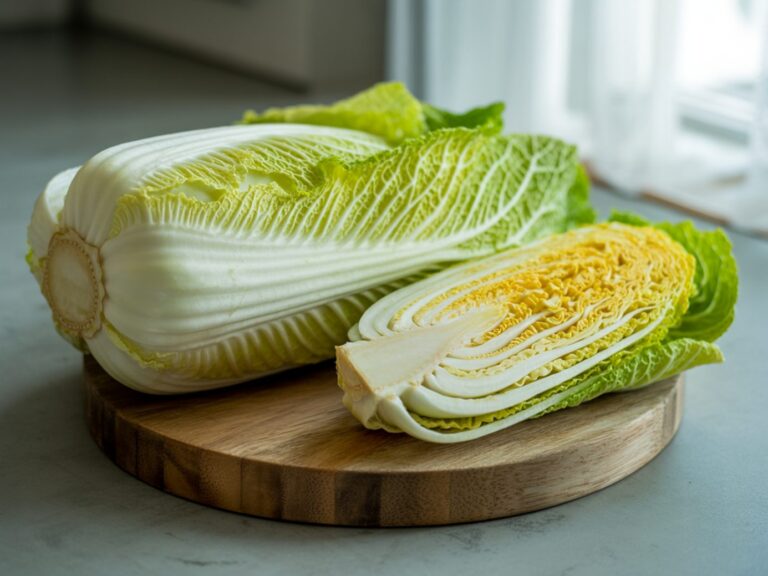
- Napa Cabbage: Oblong, pale, and very mild with tender, wavy leaves. The classic choice for kimchi, Asian slaws, and quick stir-fries.
- January King: A heritage variety with stunning purple-tinged outer leaves; nutty and sweet after frost exposure. Increasingly found at farmers’ markets in fall and winter.
Recipes using cabbage
270 recipes across our recipe sites use cabbage. A few favorites:
Cooking with cabbage tonight?
Find cabbage recipes that match your diet — keto, high-protein, vegan, under 30 minutes — and build a shopping list in one tap.
History & origin
Cabbage has been feeding people for well over 4,000 years, with origins traced to wild coastal plants in Europe and the Mediterranean. Ancient Greeks and Romans prized it as both food and folk medicine, believing it could cure everything from hangovers to gout. It spread across Europe during the Middle Ages, becoming a dietary staple in colder northern climates where it could be stored through harsh winters — raw in root cellars or preserved as sauerkraut. European settlers brought it to North America, and it quickly established itself as a garden essential from New England to Appalachia. Today it’s one of the most widely grown vegetables in the world.
How it’s made
Cabbage is a cool-season biennial grown as an annual in home gardens and on commercial farms. Seeds are started indoors four to six weeks before the last frost date, then transplanted outdoors where the plant forms a tight, leafy head — technically a terminal bud — over the course of 70 to 120 days depending on variety. It thrives in full sun with consistent moisture and actually becomes sweeter after a light frost, which converts starches to sugars. Commercial crops are typically harvested by machine, while home gardeners cut heads at the base once they feel firm and solid. Cabbage is sold fresh, pre-shredded, canned, and fermented as sauerkraut or kimchi.
Good to know
- Cabbage is more than 90% water by weight, which is part of why it stays crisp so long in the fridge.
- Adding a splash of vinegar or lemon juice when cooking red cabbage helps preserve its red-purple color — the acid stabilizes the anthocyanin pigments that would otherwise shift toward blue-purple in a neutral or alkaline environment.
- Sauerkraut was historically carried on long sea voyages — Captain James Cook famously stocked it on his voyages — as a source of vitamin C to help ward off scurvy, since fermentation helps preserve the vitamin C in cabbage.
- The word ‘cabbage’ comes from the Old North French caboche, meaning ‘head’ — a fitting name for a vegetable that is literally a giant leafy head.
- One pound (about 450g) of raw cabbage yields roughly four cups of shredded cabbage, making it one of the best volume-to-cost values in the produce section.