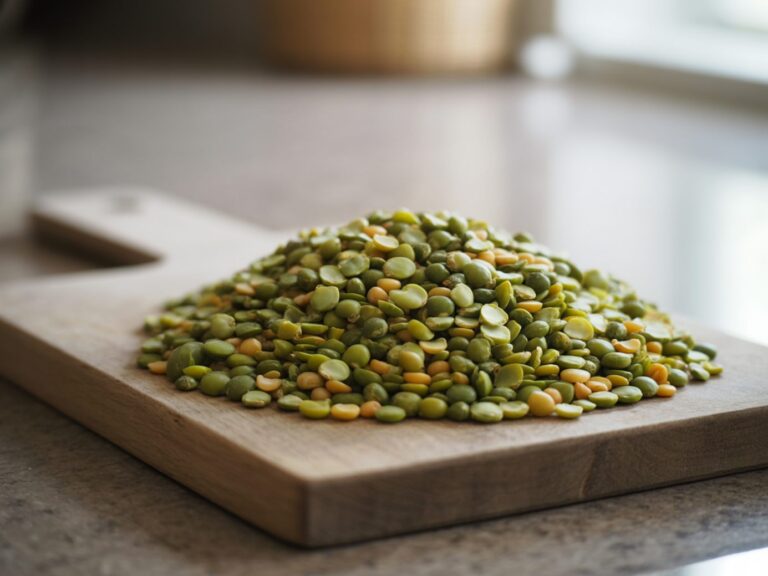
Edamame (Young Soybeans)
Edamame brings a sweet, grassy pop of protein to your table straight from the pod.
In a nutshell
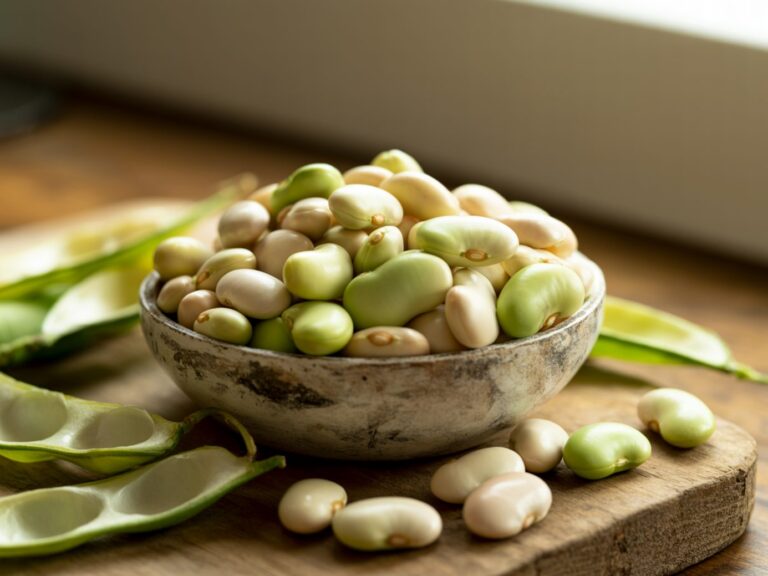
Edamame are young green soybeans harvested before they harden, giving them a tender texture and mild, buttery flavor. They’re one of the rare plant foods that supply a complete protein—all nine essential amino acids—in a single serving. Steamed in their pods and finished with salt, they’re one of the easiest and most satisfying snacks in any kitchen.
Nutrition
≈ 12 Calories and 0.5g fat per tablespoon.
Edamame punches well above its weight nutritionally. It delivers roughly 12 grams of protein per 100 grams (shelled, cooked), rivaling many meat-based snacks, and because that protein is complete, you don’t need to pair it with another food to cover your amino acid bases. A solid dose of dietary fiber—around 5 grams per 100 grams—supports digestive health and helps you feel full longer. Edamame contains a moderate amount of fat, but what’s present trends toward the heart-friendly unsaturated kind. It’s also a noteworthy source of folate, important for cell development, along with vitamin K, manganese, and iron. The naturally occurring isoflavones in soy have been studied for potential roles in heart health and hormone balance, though research is ongoing. Nutrition per 100g via Spoonacular.
Culinary uses & pairings
The simplest and most beloved preparation is to steam or boil edamame in the pod for 4 to 6 minutes, toss with flaky sea salt, and serve warm as a snack—guests squeeze the beans straight into their mouths. Shelled edamame stirs beautifully into grain bowls, fried rice, and pasta, adding color and heft without overpowering other flavors.
Beyond whole beans, edamame blends into a vivid green hummus-style dip with lemon juice, garlic, tahini, and a drizzle of olive oil. It can be tossed into slaws and noodle salads, folded into veggie burgers, or puréed into a silky soup. In Japanese cooking, edamame is also mashed into a sweet zunda paste used to dress mochi or fill rice balls.
Pairs well with
Substitutions
Buying & storage
Fresh edamame in the pod occasionally appears at farmers markets and Asian grocery stores in late summer, but frozen edamame—both in-pod and shelled—is the most reliable and practical choice for US home cooks year-round. Look for bags with no ice crystals or clumping, which signal thawing and refreezing. Shelled frozen edamame is a true convenience food that goes straight from the freezer into boiling water or a sauté pan in minutes. If you find fresh pods, choose ones that are bright green, plump, and fuzzy with no yellowing or wilting.
Varieties
- Standard green edamame: The everyday variety found in virtually every grocery freezer aisle; mild, grassy, and slightly sweet.
- Chamame: A Japanese variety with a darker, speckled pod and a richer, nuttier flavor that’s prized at specialty markets.
- Black bean edamame (kuromame edamame): Young black soybeans harvested at the edamame stage; earthier and slightly more robust than green types. Note that kuromame traditionally refers to mature dried black soybeans used in Japanese New Year cooking, so look for packaging specifying the fresh or frozen immature stage.
Recipes
We do not have recipes featuring Edamame (Young Soybeans) in our collection just yet — but you can discover thousands of recipes, filtered to your diet and your pantry, over at Tucker Finder.
Cooking with edamame tonight?
Find edamame recipes that match your diet — keto, high-protein, vegan, under 30 minutes — and build a shopping list in one tap.
History & origin
Soybeans have been cultivated in East Asia for over 3,000 years, with China and Japan developing a culture of eating them at every stage of ripeness. The practice of eating immature soybeans as edamame—literally meaning ‘stem bean’ or ‘branch bean’ in Japanese, referring to how they were once sold still attached to the stalk—is documented in Japan from at least the 13th century. Edamame arrived in the United States in the early 20th century primarily as an agricultural crop, but it wasn’t until Japanese cuisine gained popularity in the latter half of the 20th century that Americans started eating it as food. Today it’s a fixture on appetizer menus and in home freezers across the country.
How it’s made
Edamame is simply the fresh, immature stage of the soybean plant (Glycine max). Farmers plant soybean seeds in warm soil after the last frost and harvest the pods roughly 35 to 50 days before full maturity, when the beans are plump and the pods are still green. Timing is critical—waiting too long yields starchy, tough mature soybeans. After harvest, the pods are quickly blanched or flash-frozen within hours to lock in color, sweetness, and nutrients. Commercial frozen edamame is typically blanched in steam or hot water, rapidly chilled, and individually quick-frozen before packaging.
Good to know
- The word edamame (枝豆) translates literally as ‘branch bean’ or ‘stem bean’ because vendors once sold whole branches with pods still attached.
- Edamame is one of very few plant foods that qualifies as a complete protein, supplying all nine essential amino acids on its own.
- Niigata Prefecture in Japan is especially celebrated for its edamame culture, where dozens of regional heirloom varieties are grown and enjoyed as a seasonal specialty.
- A single cup of shelled edamame delivers more protein than a large egg and more fiber than many whole-grain breads.
- The same soybean plant that produces edamame, when left to dry fully on the stalk, eventually becomes the mature soybean used to make tofu, miso, soy sauce, and soybean oil.