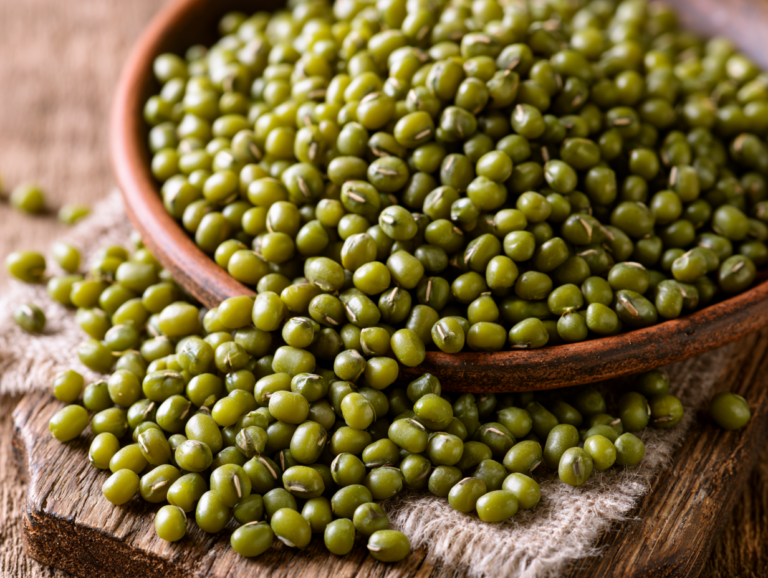
Tepary Beans
Tepary beans are a drought-hardy Southwestern gem that bring rich, nutty flavor and serious protein to your table.
In a nutshell
Tepary beans are small, ancient legumes native to the Sonoran Desert, prized by Indigenous peoples of the American Southwest and Mexico for thousands of years. They pack more protein per serving than most common beans and thrive where other crops fail. Their flavor is earthy and slightly sweet, with a creamy texture when fully cooked.
Nutrition
≈ 45 Calories and 0.1g fat per tablespoon.
Tepary beans are a protein powerhouse, delivering roughly 23–24 grams of protein per 100 grams dry weight — notably higher than pinto or black beans. They’re extremely low in fat, and the bulk of their calories come from complex carbohydrates and protein, an ideal combination for sustained energy. They’re also a meaningful source of iron, calcium, and magnesium, and research has highlighted their potential benefits for blood-sugar regulation, making them particularly noteworthy for people managing or at risk for type 2 diabetes. Nutrition per 100 g.
Culinary uses & pairings
Tepary beans shine in long-cooked dishes where their firm texture holds up beautifully. Simmer them in a seasoned broth with garlic, cumin, and dried chiles for a deeply satisfying pot of beans, or fold them into hearty soups and stews alongside winter squash and hominy. Their slightly sweet, nutty flavor makes them a standout in traditional Southwestern and Sonoran-style cooking.
Beyond the pot, cooked tepary beans mash into smooth, flavorful dips and spreads — think a rustic take on refried beans or a bold hummus-style purée. They also hold their shape well enough for warm grain bowls, bean salads, and tacos, making them a versatile workhorse bean for everyday home cooking.
Pairs well with
Substitutions
Buying & storage
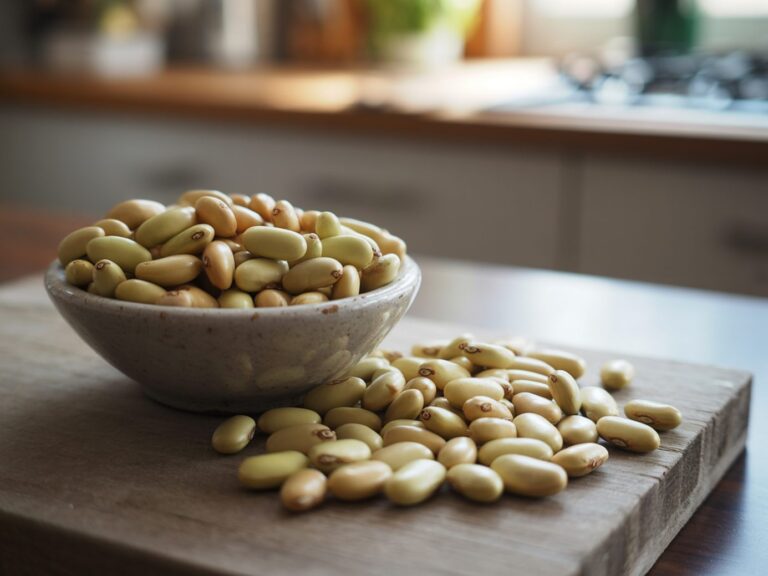
Look for tepary beans at specialty grocery stores, natural food co-ops, and online retailers focused on heritage or Indigenous foods. They’re rarely on mainstream supermarket shelves, so mail-order is often your best bet. Dried teparies come in several colors — white, brown, tan, and speckled — and all are worth trying. Choose bags with no cracked or shriveled beans, and check for a recent harvest date when possible; very old dried beans can take much longer to cook and may never fully soften.
Varieties
- White Tepary: The most widely cultivated variety; mild, slightly sweet flavor and a creamy texture that works beautifully in soups and dips.
- Brown Tepary: Nuttier and earthier than white teparies; holds its shape well in stews and salads.
- Tan (Buff) Tepary: A common heirloom variety with a balanced earthy-sweet flavor; popular in traditional Tohono O’odham cooking.
- Speckled Tepary: Striking appearance with mottled markings; flavor is similar to brown teparies with a slightly firmer bite.
Recipes
We do not have recipes featuring tepary beans in our collection just yet — but you can discover thousands of recipes, filtered to your diet and your pantry, over at Tucker Finder.
Find your next recipe
Discover thousands of recipes — matched to your diet, your pantry, and your schedule — and build a shopping list in one tap.
History & origin
Tepary beans (Phaseolus acutifolius) have been cultivated in the Sonoran Desert for at least 5,000 years, making them one of the oldest domesticated crops in North America. They were a dietary cornerstone for Indigenous peoples including the Tohono O’odham, Akimel O’odham, and various Pueblo communities, who developed sophisticated dry-farming techniques to grow them in some of the harshest conditions on the continent. Spanish colonization disrupted traditional foodways, and tepary beans faded from wider agriculture for centuries. A revival began in the late 20th century, driven by Indigenous food sovereignty movements, ethnobotanists, and chefs rediscovering their exceptional nutritional and culinary value.
How it’s made
Tepary beans are a warm-season annual legume grown from seed, typically planted to take advantage of summer monsoon rains in the Sonoran Desert — traditionally around July. They’re extraordinarily drought-tolerant, able to produce a crop on as little as 8 to 10 inches of rainfall per season, thanks to a deep root system and the ability to set pods quickly before drought conditions worsen. Plants mature in roughly 60 to 90 days, producing small pods with 2 to 6 beans each. After harvest, the dry pods are threshed and the beans are dried fully before storage. Because teparies are grown without irrigation in traditional settings, they’re considered one of the most sustainable and climate-resilient crops in North American agriculture.
Good to know
- Tepary beans are exceptionally heat-tolerant, able to set pods under high desert temperatures that would cause most other legumes to drop their flowers and fail to produce.
- The name ‘tepary’ is thought to derive from the O’odham phrase ‘t’pawi,’ meaning ‘it’s a bean.’
- Research has shown tepary beans have a lower glycemic index than many common beans, making them a subject of study for diabetes prevention in communities with high risk.
- Traditional Tohono O’odham farmers plant teparies by reading the monsoon — no rain gauge needed, just generations of ecological knowledge.
- Tepary beans are exceptionally high in protein compared to most common beans, including pintos and black beans, on a dry-weight basis.