Spaghetti Squash
Spaghetti squash is the veggie that magically transforms into noodle-like strands — a fun, low-carb swap for pasta night.
In a nutshell
Spaghetti squash is a mild-flavored winter squash whose cooked flesh pulls apart into long, spaghetti-like strands. It’s incredibly popular as a low-calorie, low-carb alternative to pasta. Roast it, scrape it, and top it just like you would a bowl of noodles.
Nutrition
≈ 3 Calories and 0.1g fat per tablespoon.
Spaghetti squash is quite low in calories — about 31 per 100 grams cooked — making it one of the lighter vegetables you can put on your plate. Its carbohydrate count is modest, and a meaningful portion of those carbs come from dietary fiber, which supports healthy digestion and helps you feel satisfied. The fat content is negligible. It delivers vitamin C, vitamin B6, and manganese, along with useful amounts of potassium and niacin. Because it’s naturally low in sodium, it’s a great fit for anyone watching their salt intake. Nutrition per 100g via Spoonacular.
Culinary uses & pairings
The most iconic use is as a pasta stand-in: halve the squash, roast it cut-side down at 400°F (200°C) until tender, then use a fork to scrape the flesh into long strands. Pile those strands into bowls and top with marinara, meat sauce, pesto, or brown butter and sage for a satisfying, lighter meal. The strands hold up surprisingly well under hearty, chunky sauces.
Beyond the noodle trick, spaghetti squash works beautifully in casseroles and fritters. Mix the cooked strands with eggs, cheese, and herbs, then pan-fry them into crispy little cakes. You can also stuff the roasted shell with a filling of sausage, vegetables, and cheese for an impressive single-serving presentation straight from the oven.
Pairs well with
Substitutions
Buying & storage
Look for squash that feels heavy for its size and has a uniformly pale yellow or golden skin — avoid any with soft spots, cracks, or large green patches, which signal it was picked too early. The stem should be dry and corky rather than moist or moldy. Most spaghetti squash in US grocery stores weigh between 2 and 5 pounds (about 0.9 to 2.3 kg); a medium squash around 3 pounds (1.4 kg) feeds two to three people generously. You’ll find them at supermarkets from late summer through winter, and at farmers markets starting in early fall.
Varieties
- Small Wonder: A compact variety weighing just 1 to 2 pounds (0.5 to 0.9 kg), perfect for a single serving roasted whole.
- Orangetti: Has a bright orange skin and flesh with a slightly sweeter flavor and a nice boost of beta-carotene.
- Hasta la Pasta: A high-yielding home garden variety with a classic mild flavor and reliably long, easy-to-scrape strands.
- Tivoli: An All-America Selections winner; produces medium-sized fruit on compact bush vines with tender, fine strands.
Recipes using spaghetti squash
18 recipes across our recipe sites use spaghetti squash. A few favorites:
Cooking with spaghetti squash tonight?
Find spaghetti squash recipes that match your diet — keto, high-protein, vegan, under 30 minutes — and build a shopping list in one tap.
History & origin
Spaghetti squash is native to the Americas, where squash of all kinds have been cultivated for thousands of years by Indigenous peoples. The specific variety we recognize today was popularized in early 20th-century Japan, where it was known as “vegetable spaghetti” and widely grown. It reached North America through seed catalogs by the mid-20th century and gained genuine mainstream popularity in the United States during the low-carb diet movements of the 1970s and 1980s. Today it’s a supermarket staple and a go-to ingredient in countless healthy-eating kitchens across the country.
How it’s made
Spaghetti squash is a warm-season annual vine in the Cucurbita pepo species, the same family as zucchini and acorn squash. It’s direct-seeded or transplanted into well-drained soil after the last frost, and the vines sprawl broadly, so home gardeners often give each plant 4 to 6 feet (1.2 to 1.8 m) of space. The fruit develops over the summer and is harvested in late summer through fall once the skin turns fully yellow and hardens — a fingernail should not easily puncture it. The signature stringy flesh is simply the squash’s natural fibrous structure: when raw, the flesh is firm and solid, but heat causes the cell walls to separate, allowing those distinctive long, noodle-like strands to pull free with a fork.
Good to know
- A single medium spaghetti squash can yield about 4 to 5 cups of cooked strands — roughly the same volume as a standard serving of pasta for two, but with a fraction of the calories.
- Despite its spaghetti nickname, the strands actually run around the squash circumference, not lengthwise — so cutting it crosswise (rather than pole to pole) produces the longest noodles.
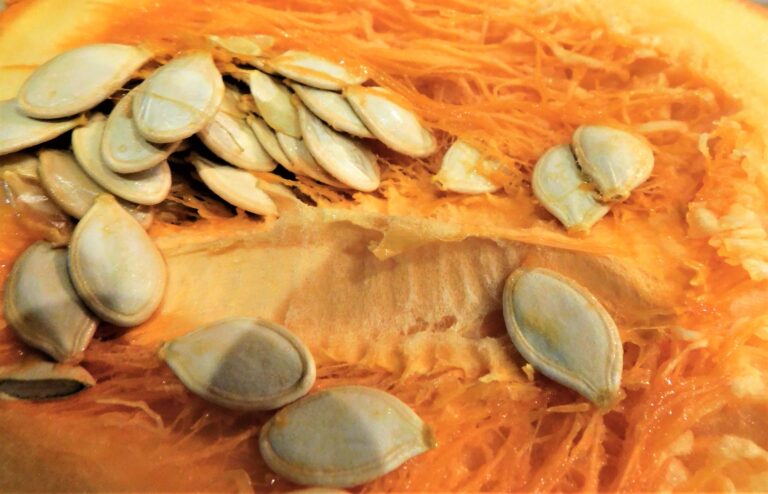
- The seeds are edible: rinse them, toss with oil and salt, and roast at 325°F (165°C) for a crunchy snack just like pumpkin seeds.
- Spaghetti squash belongs to the same species — Cucurbita pepo — as acorn squash, delicata squash, and most jack-o’-lantern pumpkins.
- Spaghetti squash remained a relative novelty in the American mainstream until the 1970s and 1980s, when low-carb and health-conscious eating trends brought it widespread attention and broader supermarket availability.