Bok Choy
Bok choy brings crisp stems and tender greens to your wok in minutes — a true weeknight hero.
In a nutshell
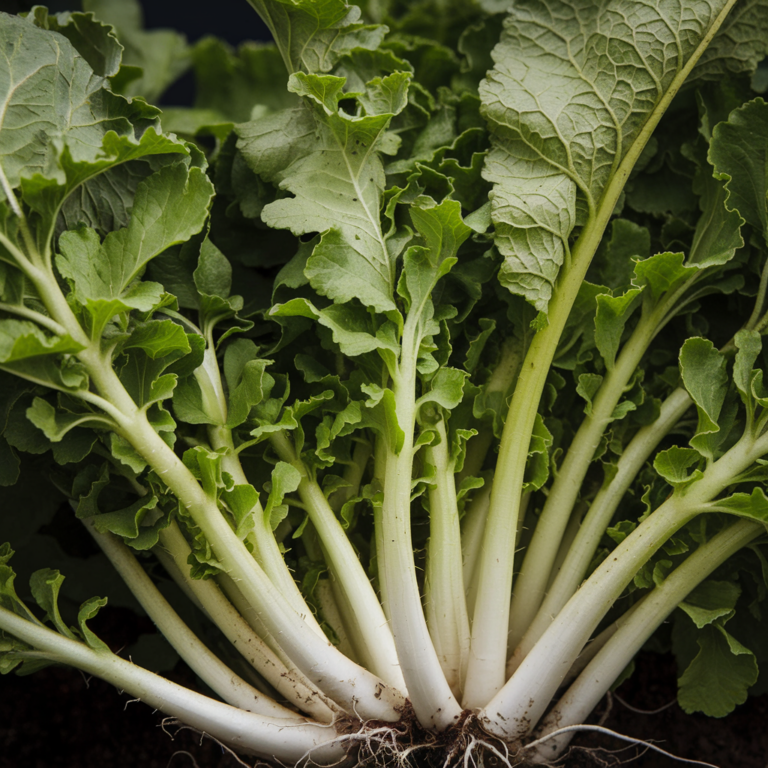
Bok choy is a mild, versatile Chinese cabbage with juicy white stalks and dark leafy tops. It cooks fast, holds up in broth, and soaks up bold sauces beautifully. At just 13 calories per 100g, it’s one of the most nutrient-dense vegetables you can toss in a pan.
Nutrition
≈ 2 Calories and 0g fat per tablespoon.
Bok choy punches well above its weight nutritionally for such a low-calorie vegetable. It’s an excellent source of vitamin C and vitamin K, which support immune function and bone health respectively, and delivers a meaningful hit of vitamin A from its dark green leaves. It also contributes calcium and folate — nutrients not always easy to find in non-dairy, non-legume vegetables. As a cruciferous vegetable, it contains glucosinolates, compounds studied for their potential protective properties. The fat content is negligible, and the modest fiber helps support digestion, making it a smart choice for nearly any eating style. Nutrition per 100g via Spoonacular.
Culinary uses & pairings
Bok choy is a stir-fry staple — halve baby bok choy lengthwise or chop full-sized heads and toss them into a screaming-hot wok with garlic, ginger, and a splash of soy sauce. The stalks stay crisp while the leaves wilt just enough. It’s also wonderful in soups and ramen, added in the last few minutes so it stays tender but not mushy.
Beyond Asian-inspired cooking, bok choy works surprisingly well roasted or grilled. Halve it, brush with sesame oil or a miso glaze, and roast at 425°F (220°C) until the edges caramelize and the leaves crisp slightly. You can also shave raw baby bok choy thin and use it in slaws and salads, where its mild brassica bite and crunch shine without any heat at all.
Pairs well with
Substitutions
Buying & storage
Look for bok choy with firm, bright white stalks that snap cleanly and show no sliminess or browning at the cut end. The leaves should be deep green, glossy, and free of yellowing or wilting — yellowed leaves signal age. Baby bok choy, typically 4 to 6 inches long, tends to be sweeter and more tender than full-sized heads, making it ideal for halving and roasting or serving whole in broth. Full-sized heads are perfectly fine for stir-fries and soups where you’ll be chopping anyway. Either way, smaller and heavier for their size is a good sign of freshness.
Varieties
- Baby Bok Choy: Harvested young at 4 to 6 inches; sweeter, more tender, and ideal for halving and roasting or serving whole in soups.
- Standard (Full-Sized) Bok Choy: Grows up to 12 inches tall with broader stalks and larger leaves; best chopped for stir-fries, braises, or big-batch soups.
- Shanghai Bok Choy: Recognizable by its pale jade-green stalks rather than white ones; slightly sweeter with a more uniform texture throughout.
- Tatsoi: A close relative with dark, spoon-shaped leaves that grow in a rosette; more peppery in flavor and often used raw in salads.
Recipes using bok choy
16 recipes across our recipe sites use bok choy. A few favorites:
Cooking with bok choy tonight?
Find bok choy recipes that match your diet — keto, high-protein, vegan, under 30 minutes — and build a shopping list in one tap.
History & origin
Bok choy — from the Cantonese meaning roughly ‘white vegetable’ — has been cultivated in China for over 1,500 years, with written records tracing it back to around the 5th century. It spread throughout Southeast Asia as a staple of everyday cooking and arrived in the United States in the 19th century with Chinese immigrant communities, particularly during the Gold Rush era. For decades it remained largely confined to Chinatown markets, but the boom in Asian-American restaurants and the rise of farmers’ markets in the late 20th century brought it firmly into mainstream US grocery stores, where it’s now widely available year-round.
How it’s made
Bok choy is a cool-season biennial grown as an annual, thriving in temperatures between 45°F and 75°F (7°C and 24°C). It’s direct-seeded or transplanted into well-drained, fertile soil and matures quickly — baby varieties are ready in as little as 30 days, while full-sized heads take 45 to 60 days. Hot weather triggers bolting (premature flowering), which turns the leaves bitter, so most commercial production happens in spring and fall. In the US, it’s grown extensively in California and the mid-Atlantic states. The plant is harvested by cutting the entire head at the base, and it’s typically sold fresh rather than processed.
Good to know
- Bok choy belongs to the Brassica rapa species, making it more closely related to turnips and napa cabbage than to regular head cabbage (Brassica oleracea).
- The stalks and leaves cook at different speeds — experienced cooks add the stalks to the wok first and the leaves in the final 60 seconds.
- It’s one of the better non-dairy plant sources of calcium among vegetables, and unlike some leafy greens its calcium is well-absorbed because it’s low in oxalates.
- China produces the vast majority of the world’s bok choy, but it’s now grown on every inhabited continent.
- When bok choy bolts and flowers, the yellow blooms are edible and have a mild, slightly peppery flavor popular in some Asian cuisines.