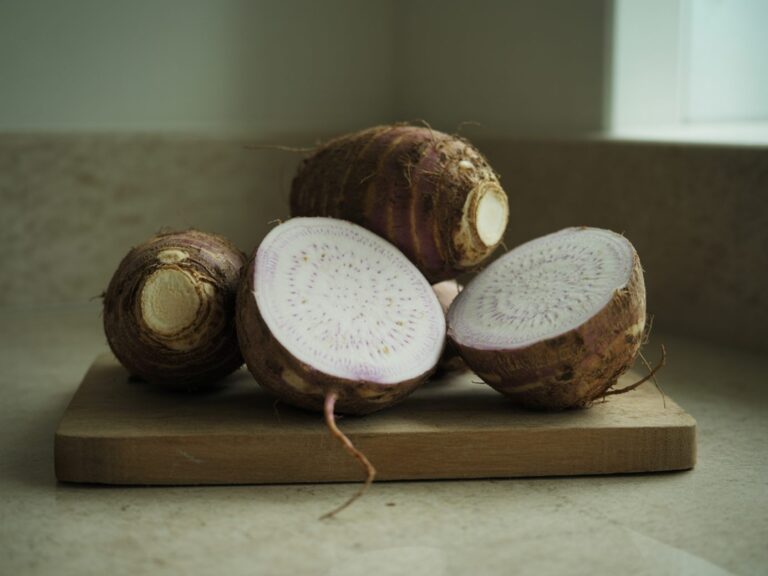
Ginger Root
Fresh ginger root brings a warm, spicy-sweet kick that transforms everything from stir-fries to cocktails.
In a nutshell
Ginger root is a knobby, fragrant rhizome with a bold, peppery heat and bright citrusy undertone. It’s one of the most versatile ingredients in a home cook’s pantry, moving effortlessly between savory and sweet dishes. Fresh, dried, and pickled forms each bring something different to the table.
Nutrition
≈ 11 Calories and 0.1g fat per tablespoon.
Ginger is remarkably low in fat and delivers a modest amount of fiber alongside its carbohydrates, making it a flavorful addition without meaningfully adding to your calorie count. Its real nutritional story lies in its bioactive compounds: gingerols (abundant in fresh ginger) and shogaols (more concentrated when dried) are the compounds responsible for its pungent heat and have been widely studied for anti-nausea, anti-inflammatory, and antioxidant properties. Many home cooks reach for ginger tea at the first sign of an upset stomach or nausea from travel or pregnancy, a use backed by solid research. It also contains small amounts of manganese and magnesium that contribute to everyday mineral intake. Nutrition per 100g via Spoonacular.
Culinary uses & pairings
In savory cooking, ginger is indispensable across Asian, South Asian, Caribbean, and Middle Eastern cuisines. Mince or grate it into stir-fries, curries, soups, and marinades for meat and seafood — it tenderizes proteins while adding depth. A tablespoon of fresh grated ginger stirred into a peanut noodle sauce or Thai coconut curry base is the kind of move that makes a dish unforgettable. It also pairs brilliantly with garlic as a flavor foundation; the two are almost inseparable in Indian cooking.
In baking and drinks, ground dried ginger stars in gingerbread, spice cakes, cookies, and pumpkin pie. Fresh ginger is equally at home in sweet territory: steep it into simple syrup for cocktails and lemonades, blend it into smoothies, or simmer thin slices in cream for a ginger-infused panna cotta. Candied ginger chopped into scones or chocolate bark adds chewy bursts of heat and sweetness that guests always ask about.
Pairs well with
Substitutions
Buying & storage
Look for ginger with smooth, taut skin and a firm, dense feel — soft spots, wrinkles, or mold are signs it’s past its prime. Younger, smaller rhizomes tend to have thinner skin and a milder, juicier flavor, while larger, more mature roots are more fibrous and intensely pungent. At Asian grocery stores you’ll often find the freshest ginger at the best price, but supermarket produce sections work fine. Avoid pre-peeled ginger stored in water if you can; it loses aromatic complexity quickly.
Types
- Fresh ginger root: The most common form in US supermarkets; bright, juicy, and versatile for both savory and sweet applications.
- Ground dried ginger: A pantry staple with a warmer, spicier profile dominated by shogaols; the go-to for baking.
- Baby (young) ginger: Harvested early, with pink-tipped shoots, very thin skin, and a milder, less fibrous texture; excellent pickled or thinly sliced raw.
- Pickled ginger (gari): Thinly sliced and cured in sweet vinegar brine; the classic sushi accompaniment and a bright palate cleanser.
- Candied (crystallized) ginger: Cooked in sugar syrup and coated with coarse sugar; a confection and baking ingredient that balances heat with sweetness.
- Ginger paste: Blended fresh ginger, often with a touch of oil or vinegar; a convenient shortcut for weeknight cooking.
Recipes using ginger root
8 recipes across our recipe sites use ginger root. A few favorites:
Cooking with ginger root tonight?
Find ginger root recipes that match your diet — keto, high-protein, vegan, under 30 minutes — and build a shopping list in one tap.
History & origin
Ginger has one of the longest culinary and medicinal histories of any spice, with roots going back at least 5,000 years in South Asia and China, where it featured in Ayurvedic and traditional Chinese medicine long before it became a food flavoring. Arab traders carried it to the Mediterranean, and by medieval Europe it was among the most prized and expensive spices available, second only to pepper. European colonizers later spread its cultivation to the Caribbean and West Africa, where it became deeply woven into local cuisines. Today India remains the world’s largest producer, and ginger is a foundational flavor on nearly every continent.
How it’s made
Ginger is a rhizome — an underground stem rather than a true root — that spreads horizontally through the soil as it grows. Farmers plant small sections of rhizome (called seed pieces) in well-drained, fertile soil in warm, humid climates and harvest the plant after roughly 8 to 10 months, when the above-ground shoots die back. Young ginger is harvested earlier, around 5 to 6 months, for its tender texture. After harvest, roots are washed and either sold fresh, or dried and ground into powder; some are processed into paste, preserved in syrup for candied ginger, or sliced and pickled. The drying process converts a portion of the primary pungent compound, gingerol, into the more intense shogaol, which is why dried ginger tastes noticeably hotter and earthier than fresh.
Good to know
- Freezing a whole knob of ginger and grating it straight from the freezer is a practical trick that yields finer gratings and fewer stringy fibers.
- The heat in ginger comes from gingerols, which are chemically related to capsaicin in chili peppers and piperine in black pepper — they all activate similar heat and pain receptors (TRPV1) in your mouth.
- Ginger is one of the few natural remedies with solid clinical evidence behind it: multiple studies support its effectiveness against nausea from motion sickness, pregnancy, and chemotherapy.
- In medieval Europe, gingerbread was elaborately spiced and decorated and was given as a gift at fairs and festivals, sometimes gilded with gold leaf.
- Young ginger turns naturally pink when pickled in vinegar due to its anthocyanin content; the pink color of commercial pickled ginger made from mature roots is typically achieved with food coloring such as red shiso or artificial dyes.