Turnip
Turnips are the unsung workhorses of the root cellar — humble, sweet-peppery, and endlessly versatile in the home kitchen.
In a nutshell
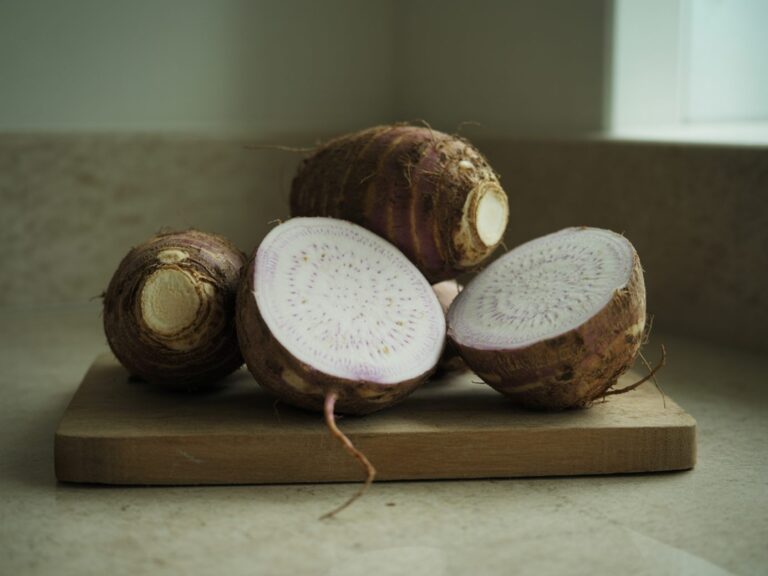
The turnip is a cool-weather root vegetable with cream-colored flesh and a purple-tinged white skin. Raw, it has a crisp, mildly spicy bite; cooked, it turns tender and gently sweet. It’s one of the most budget-friendly vegetables in the produce aisle and holds its own in everything from hearty stews to light slaws.
Nutrition
≈ 4 Calories and 0g fat per tablespoon.
Turnips are a genuinely low-calorie vegetable — nearly all of their modest carbohydrate content comes paired with a solid hit of dietary fiber, which supports digestive health and helps you feel full. They’re a good source of vitamin C, which aids immune function and collagen production, along with potassium for heart and muscle health. The natural glucosinolates that give turnips their faint peppery sharpness are the same sulfur compounds found in other cruciferous vegetables and are the subject of ongoing research into their potential health benefits. With virtually no fat and a very modest sodium level, turnips fit comfortably into heart-healthy, low-calorie, and diabetic-friendly eating patterns. Nutrition per 100g via Spoonacular.
Culinary uses & pairings
Raw turnips shine when sliced paper-thin or cut into matchsticks for slaws, crudité platters, or quick-pickled sides. Their crunch holds up well and the slightly sharp flavor mellows beautifully when dressed with an acidic vinaigrette. Young, small turnips need little more than a rinse — the skin is tender enough to leave on.
Heat transforms turnips dramatically. Roasting at 400°F (205°C) caramelizes their natural sugars into nutty, golden-edged wedges perfect as a side dish. They absorb braising liquid well, making them ideal in pot roasts, lamb stews, and French pot-au-feu. Mashed alone or blended half-and-half with potatoes, they produce a lighter, more nuanced mash with a subtle bite that many cooks actually prefer.
Pairs well with
Substitutions
Buying & storage
Look for turnips that feel heavy for their size with smooth, firm skin free of soft spots, cracks, or shriveling. Smaller turnips — roughly the size of a golf ball to a tennis ball — tend to be sweeter and less fibrous than large ones, which can turn woody and bitter. The purple-and-white coloring should be vivid; dull or yellowing skin is a sign the turnip is past its prime. If the greens are still attached, they should look fresh and bright — bonus points, because turnip greens are edible and nutritious on their own.
Varieties
- Purple Top White Globe: The classic supermarket turnip — cream flesh, purple shoulder, mild and versatile.
- Tokyo (Japanese) Turnip: Small, snow-white, and very sweet; often eaten raw or just barely cooked.
- Golden Ball: Yellow-fleshed and notably sweet with less bitterness than white varieties.
- Hakurei: A specialty salad turnip prized for its crisp texture and delicate, almost fruity flavor.
- Scarlet Queen: Red-skinned with white flesh; mild and attractive sliced thin in salads or pickles.
Recipes using turnip
4 recipes across our recipe sites use turnip. A few favorites:
Cooking with turnip tonight?
Find turnip recipes that match your diet — keto, high-protein, vegan, under 30 minutes — and build a shopping list in one tap.
History & origin
Turnips have been cultivated for at least 4,000 years, with origins traced to Central Asia and the eastern Mediterranean. They were a dietary staple of ancient Greeks and Romans — so common they were sometimes tossed at unpopular public figures — and spread across Europe as a critical food for both peasants and livestock through the Middle Ages. In colonial America, turnips were among the first vegetables planted by European settlers because they grew fast, stored well through winter, and required little fuss. Their reputation dipped in the 20th century as potatoes rose to dominance, but turnips have enjoyed a steady revival among cooks who appreciate their economy, nutrition, and depth of flavor.
How it’s made
Turnips are a cool-season biennial grown as an annual. Seeds are sown directly in the ground in early spring or late summer, since the roots develop best when daytime temperatures stay between 50°F and 65°F (10°C and 18°C) — heat makes them woody and bitter. The edible portion is a swollen hypocotyl (the transition zone between stem and root) rather than a true root, which is why the characteristic purple coloring appears only on the part exposed to sunlight. Most commercial turnips are ready to harvest in 30 to 60 days. They’re typically harvested by machine for large-scale production or by hand-pulling for farmers’ markets and home gardens.
Good to know
- Turnip greens are actually more nutritious than the root itself, being especially rich in vitamins K, A, and C.
- In Scotland and parts of Ireland, lanterns for Halloween were traditionally carved from turnips long before pumpkins became the standard in North America.
- The word ‘turnip’ is thought to combine ‘turn’ (referring to its round, lathe-turned shape) with ‘neep,’ an old word for the plant.
- In the American South, turnip greens cooked with pork are a deeply rooted culinary tradition dating back hundreds of years.
- A turnip can go from seed to table-ready root in as little as five weeks, making it one of the fastest-maturing root vegetables.