Romaine Lettuce
Crisp, sturdy romaine is the backbone of a great Caesar and so much more.
In a nutshell
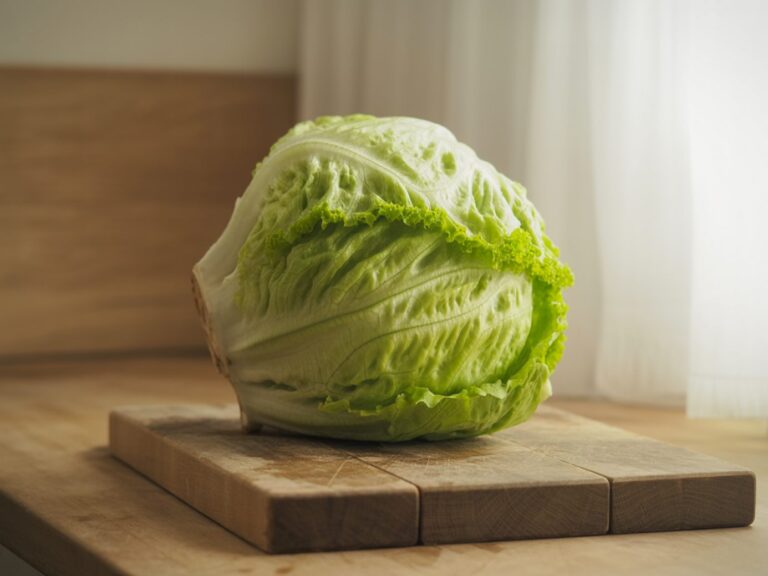
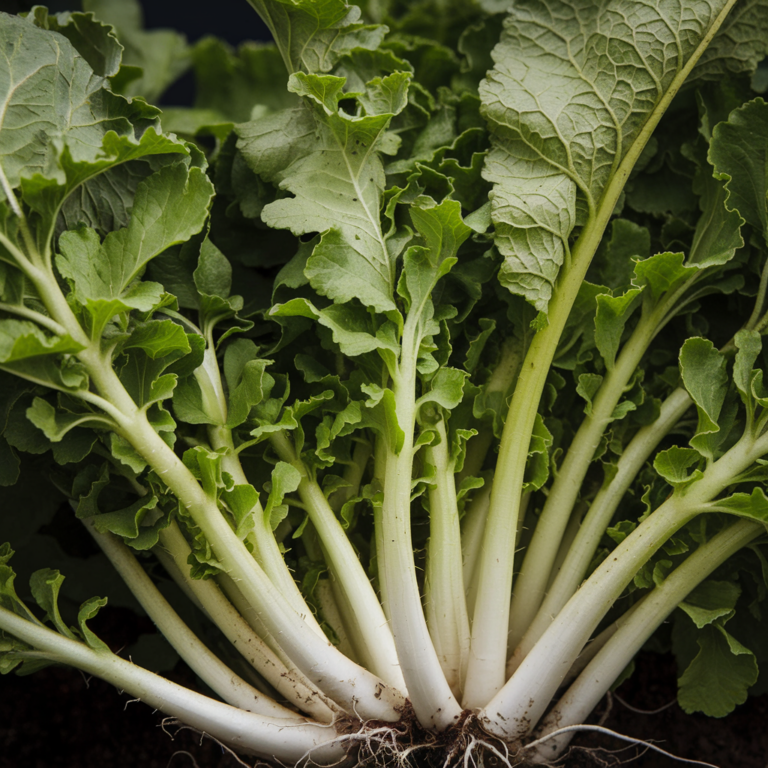
Romaine lettuce is a tall, upright head lettuce prized for its satisfying crunch and mildly sweet, slightly bitter flavor. Its thick ribs hold up beautifully to bold dressings and even a quick turn on the grill. It’s one of the most nutritious lettuces you can buy, packing meaningful vitamins into a nearly calorie-free package.
Nutrition
≈ 2 Calories and 0g fat per tablespoon.
Romaine punches well above its weight for a leafy green that’s almost entirely water. It’s a solid source of vitamin K, essential for healthy blood clotting, and delivers a useful hit of vitamin A in the form of beta-carotene, which supports eye and immune health. The modest fiber content — roughly 2 grams per 100g — contributes to digestive health, and the extremely low sodium makes it a smart choice for anyone watching salt intake. The small amount of polyunsaturated fat present includes the omega-3 fatty acid alpha-linolenic acid, which is noteworthy for a leafy vegetable. Nutrition per 100g via Spoonacular.
Culinary uses & pairings
Romaine is the non-negotiable heart of a classic Caesar salad, where its stiff, spoon-shaped leaves cradle creamy dressing without turning limp. Chop it into a sturdy chop salad, tear it into a wedge-style presentation, or leave whole inner leaves as crisp, edible cups for fillings like larb, taco meat, or hummus.
Don’t stop at raw applications — romaine responds surprisingly well to heat. Halve a head lengthwise, brush with olive oil, and grill over high heat for 2 to 3 minutes per side until the edges char and the heart softens slightly. It also braises beautifully in a shallow pan of chicken broth with garlic and lemon, a classic French preparation that transforms it into an elegant side dish.
Pairs well with
Substitutions
Buying & storage
Look for heads with tightly packed, deeply green outer leaves and pale, almost white-yellow inner hearts — that contrast signals freshness. The ribs should snap crisply rather than bend, and the cut base should look moist and pale, not browned or dried out. Avoid any heads with slimy leaves, rust-colored spots, or a strong odor. Pre-bagged romaine hearts are a convenient option and are typically triple-washed, but whole heads are often fresher and more economical.
Varieties
- Standard Romaine: The full-size head found in most grocery stores, with long dark-green outer leaves and a crunchy pale heart. The workhorse variety for Caesar salads and grilling.
- Little Gem: A compact, palm-sized romaine-type variety with exceptionally sweet flavor and tight heads. Popular in restaurant salads and as individual serving cups.
- Red Romaine: Identical in texture to green romaine but with burgundy-tinged leaf edges, adding visual contrast to salads. Flavor is slightly earthier.
- Romaine Hearts: The trimmed inner portion of a full romaine head, sold in multi-packs. More convenient and milder in flavor, with maximum crunch and minimal bitterness.
Recipes using romaine lettuce
10 recipes across our recipe sites use romaine lettuce. A few favorites:
Cooking with romaine lettuce tonight?
Find romaine lettuce recipes that match your diet — keto, high-protein, vegan, under 30 minutes — and build a shopping list in one tap.
History & origin
Romaine takes its name from Rome, though its origins trace back much further to the eastern Mediterranean — ancient records suggest it was cultivated in Egypt thousands of years ago, and it was a valued crop throughout the ancient Greek and Roman worlds. The Romans spread it widely across their empire, which is likely how it came to be associated with the city. It arrived in Western Europe during the Middle Ages and eventually reached the Americas with European settlers. Today it’s one of the most widely consumed lettuces in the United States, largely thanks to the enduring popularity of the Caesar salad, which was itself invented in Tijuana, Mexico in 1924.
How it’s made
Romaine is a cool-season crop grown from seed, either directly sown in the ground or started as transplants. It thrives in temperatures between 45°F and 75°F (7°C and 24°C) and tends to bolt — sending up a flower stalk and turning bitter — when heat spikes above 80°F (27°C). Most commercial romaine in the US is grown in California’s Salinas Valley and Yuma, Arizona, with growing regions alternating seasonally to ensure year-round supply. The crop is direct-seeded in rows, irrigated, and harvested by hand or machine roughly 70 to 75 days after planting. After harvest, heads are rapidly cooled with cold water or forced air to halt respiration and extend shelf life before being packed and shipped.
Good to know
- Romaine is sometimes called cos lettuce in the UK and Australia, a name that may derive from the Greek island of Cos, one of its proposed ancient origins.
- The iconic Caesar salad was invented in 1924 by Caesar Cardini, an Italian immigrant, at his restaurant in Tijuana — and romaine was chosen specifically because its stiff leaves could be picked up with the fingers and eaten whole.
- Romaine’s thick midrib contains most of the leaf’s water and crunch; some cooks slice it out and eat it separately as a crisp vegetable snack.
- Unlike softer lettuces, romaine can survive light frost, making it one of the hardier salad greens for home gardeners in shoulder seasons.
- Romaine is one of the better lettuce sources of vitamin K, with a good-sized serving contributing meaningfully toward the daily recommended intake.