Mustard Greens
Mustard greens bring a bold, peppery punch that transforms everyday cooking into something memorable.
In a nutshell
Mustard greens are the leafy tops of the mustard plant, beloved across Southern, Asian, and African cooking traditions. They taste sharper and more assertive than spinach or kale, with a wasabi-like heat that mellows beautifully when cooked. They’re incredibly nutritious and cook down quickly, making them one of the most efficient greens you can keep in the kitchen.
Nutrition
≈ 4 Calories and 0.1g fat per tablespoon.
Mustard greens are a nutritional powerhouse hiding in a very low calorie package. They’re an exceptional source of vitamins K, C, and A, supporting bone health, immune function, and skin integrity. The greens deliver a meaningful dose of folate, important for cell repair and especially valuable during pregnancy. They also contain glucosinolates, the sulfur compounds that give them their signature heat and that researchers associate with antioxidant and anti-inflammatory activity. Fat content is negligible, and sodium is naturally very low, making them a smart choice for heart-conscious eaters. Nutrition per 100g via Spoonacular.
Culinary uses & pairings
In Southern US cooking, mustard greens are most famously braised low and slow with smoked pork, ham hocks, or turkey legs, which tames their sharpness into a rich, silky side dish. The pot likker — the deeply flavored braising liquid — is treasured on its own, sopped up with cornbread. They also shine in soups and bean dishes, where their assertiveness balances starchy or mild ingredients.
In Asian cuisines, mustard greens are frequently stir-fried with garlic and ginger, pickled into tangy condiments like Chinese suancai or Indian achar, or simmered in coconut-based curries. At home, raw young mustard greens work wonderfully in salads and slaws where their bite adds contrast, and they can be blended into pestos for a spicy, verdant sauce.
Pairs well with
Substitutions
Buying & storage
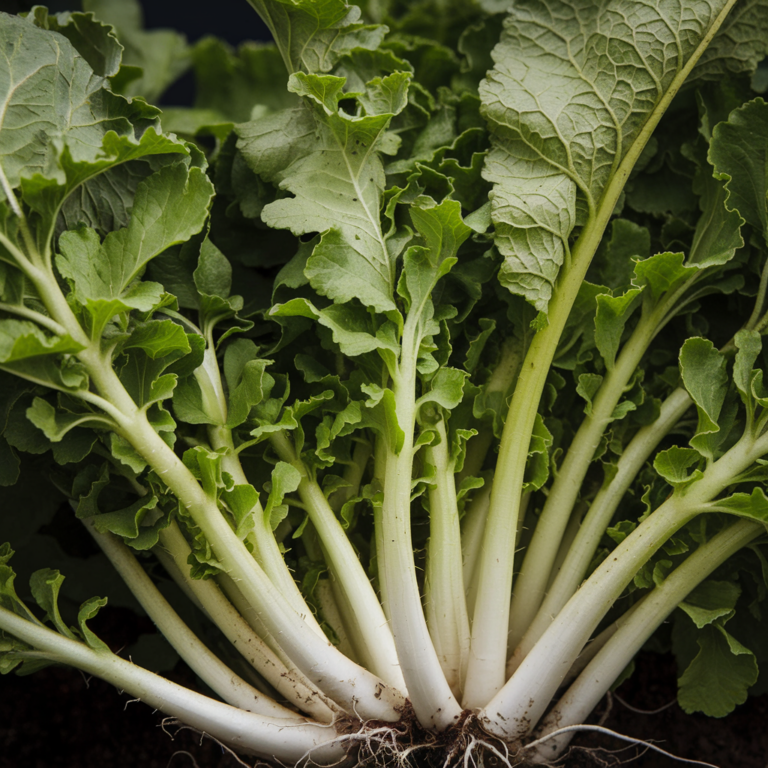
Look for bunches with deep green, crisp leaves that show no yellowing, wilting, or slimy spots. Smaller, younger leaves tend to be more tender and milder in flavor, while larger, more mature leaves will be tougher and spicier — choose based on how you plan to cook them. Avoid bunches with thick, woody stems that take up most of the weight. If you have access to a farmers market, locally grown mustard greens in cooler months are noticeably more vibrant and flavorful than those shipped long distances.
Varieties
- Curly Mustard: The most common supermarket type, with ruffled edges and a bold, sharp flavor that intensifies with leaf size.
- Flat-Leaf Mustard: Broader, smoother leaves with a slightly milder heat; popular in Asian cooking and easier to wash and prep.
- Red Giant Mustard: Striking purple-red leaves with a strong, wasabi-forward bite; excellent raw in salads for color and heat.
- Mizuna: A Japanese variety with feathery, delicate leaves and gentle mustardy flavor; best used raw or barely wilted.
- Tatsoi: A compact Asian variety with spoon-shaped leaves and mild mustard flavor; holds up well in stir-fries and soups.
Cooking with mustard greens tonight?
Find mustard greens recipes that match your diet — keto, high-protein, vegan, under 30 minutes — and build a shopping list in one tap.
History & origin
Mustard greens originated in the Himalayan foothills of India and have been cultivated for thousands of years, making them one of humanity’s oldest leafy vegetables. They spread through Asia and the Mediterranean world in antiquity, becoming staples in Chinese, Japanese, Indian, and African cuisines. In the United States, their story is deeply tied to the African American culinary tradition of the South, where enslaved people and their descendants embraced mustard greens as a nutritious, flavorful staple that could be grown in home gardens and cooked into sustaining, delicious meals. That tradition produced the iconic slow-braised pot greens that remain central to Southern cooking today.
How it’s made
Mustard greens grow from seeds of the Brassica juncea plant, a fast-maturing cool-season crop that performs best in temperatures between 45°F and 75°F (7°C to 24°C). Farmers and home gardeners direct-sow seeds in early spring or fall, and the leaves are typically ready to harvest in 40 to 50 days. The plant bolts — sending up a flowering stalk and turning bitter — quickly in summer heat, so timing the growing season to cooler weather is key. Leaves are harvested by cutting individual outer leaves to encourage continued growth, or the whole plant is cut at the base. Commercial production is concentrated in the South and in California, and the greens are typically sold as fresh bundles.
Good to know
- The same plant that produces mustard greens also yields the seeds used to make prepared mustard and mustard oil.
- Mustard greens are a cruciferous vegetable, making them a botanical relative of broccoli, cabbage, and Brussels sprouts.
- The peppery heat in raw mustard greens comes from sinigrin, a glucosinolate that breaks down into pungent compounds when the leaf cells are damaged by chewing or cutting.
- Cooking mustard greens with an acidic ingredient like vinegar or lemon juice can help balance their bitterness, though acid generally causes green vegetables to lose their bright color rather than preserve it.
- In India, mustard greens are the key ingredient in sarson da saag, a beloved winter dish from Punjab traditionally served with makki di roti (cornmeal flatbread) and a pat of butter.