Collard Greens
Collard greens are a soul-food staple that brings hearty, nutrient-dense goodness to any pot or pan.
In a nutshell
Collard greens are large, sturdy leafy greens with a mild, earthy flavor that mellows beautifully with long, slow cooking. They’re a cornerstone of Southern cuisine but just as at home in quick stir-fries or raw wraps. Low in calories and packed with nutrients, they’re one of the most nutritious vegetables you can put on your plate.
Nutrition
≈ 4 Calories and 0.1g fat per tablespoon.
Collard greens deliver an impressive nutritional punch for just 32 calories per 100 grams. They’re an outstanding source of vitamin K, which plays a critical role in bone health and blood clotting, along with generous amounts of vitamin A and vitamin C for immune support and skin health. With 4 grams of fiber per 100 grams, they support digestive health and help you feel satisfied. The roughly 3 grams of plant-based protein is notable for a leafy green, and the fat content is minimal. Collards also contain calcium and folate, making them particularly valuable for bone strength and healthy cell production. Their naturally low sodium content makes them heart-friendly before you even start cooking. Nutrition per 100 g.
Culinary uses & pairings
Collard greens are the backbone of Southern-style braised greens, cooked low and slow with smoked meat, onion, garlic, and a splash of apple cider vinegar until deeply tender and flavorful. They also shine in soups, stews, bean dishes, and Portuguese caldo verde. Because the leaves are so sturdy, they hold up to long cooking times without turning to mush, which makes them ideal for big-batch meal prep.
Raw or lightly blanched collard leaves make excellent low-carb wraps in place of tortillas or bread, sturdy enough to hold hearty fillings without tearing. Finely sliced into thin ribbons, they can be massaged with olive oil and lemon juice for a raw salad that softens into something almost silky. They’re also terrific sautéed quickly over high heat with garlic, red pepper flakes, and a drizzle of olive oil for a fast weeknight side.
Pairs well with
Substitutions
Buying & storage
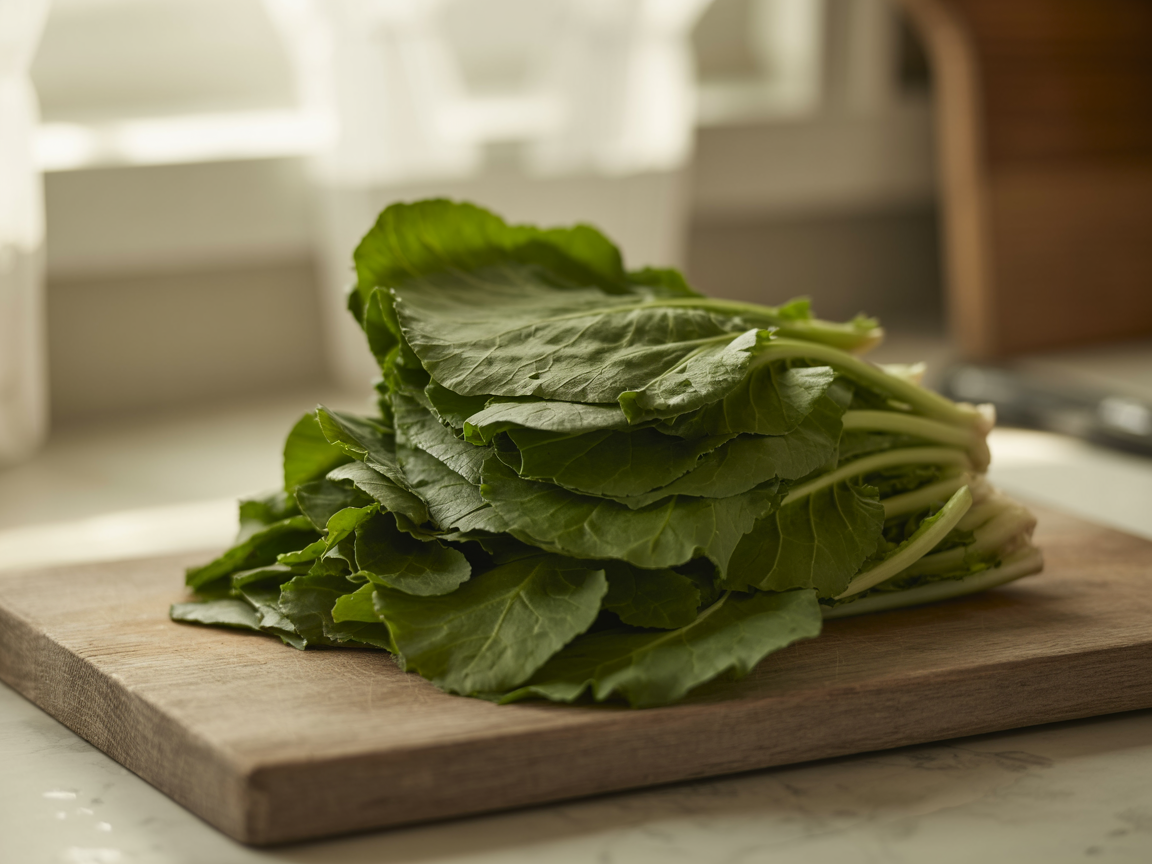
Look for collard greens with large, flat, deep-green leaves that feel firm and slightly waxy to the touch. Avoid bunches with yellowing edges, limp or slimy leaves, or any signs of insect damage. Smaller, younger leaves tend to be more tender and less bitter, while larger leaves have a bolder flavor that’s perfect for long braises. Fresh bunches should have sturdy, moist stems — if the stems are dried out or shriveled, the greens are past their prime. Frozen collard greens are a perfectly good pantry option and are already trimmed and chopped, making them a convenient shortcut for soups and braises.
Varieties
- Georgia Southern: The most widely grown variety in the US; large, blue-green leaves with a classic mild flavor ideal for braising.
- Vates: A compact, slow-to-bolt variety with dark green, crinkled leaves; popular in home gardens for its cold hardiness.
- Champion: Produces extra-large, smooth leaves with a robust flavor; a great choice for cooking down in large batches.
- Flash: A faster-maturing hybrid with tender leaves that work well both raw and cooked; popular at farmers markets.
Recipes using collard greens
6 recipes across our recipe sites use collard greens. A few favorites:
Cooking with collard greens tonight?
Find collard greens recipes that match your diet — keto, high-protein, vegan, under 30 minutes — and build a shopping list in one tap.
History & origin
Collard greens have been cultivated for thousands of years, with roots tracing back to the eastern Mediterranean and ancient Greece. They arrived in North America with European settlers in the early colonial period and were quickly embraced by enslaved African Americans in the South, who transformed them into one of the defining dishes of African American culinary tradition. Slow-braised collards cooked with whatever smoked or cured pork scraps were available became a resourceful and deeply flavorful staple. Over generations, the dish evolved into a symbol of Southern identity and cultural pride, served at Sunday dinners, holidays, and celebrations across the region. Today collard greens enjoy a much broader following as interest in plant-forward eating and traditional Southern cooking has surged nationwide.
How it’s made
Collard greens are a cool-season crop that grows best in fall and early spring when temperatures stay between 45°F and 75°F (7°C and 24°C). They’re planted from seed or transplant directly in the ground and prefer fertile, well-drained soil with consistent moisture. The plants grow into tall, upright stalks with broad, smooth leaves that are harvested by picking individual outer leaves as they mature, allowing the plant to keep producing. A light frost actually improves their flavor by converting some of the plant’s starches to sugars, which is why fall-harvested collards are often the sweetest. Most commercial collards are harvested by hand and sold as fresh bunches or processed and frozen shortly after harvest to preserve their nutrients.
Good to know
- A single cup of cooked collard greens contains more calcium than a half-cup of milk, making them one of the best plant-based calcium sources available.
- The pot liquor — the savory, nutrient-rich liquid left behind after braising collards — is considered a delicacy in the South and is often sopped up with cornbread.
- Collard greens are one of the oldest members of the Brassica family and are closely related to wild cabbage, the ancestor of broccoli, kale, and Brussels sprouts.
- In many Southern households, eating collard greens on New Year’s Day is a cherished tradition believed to bring financial prosperity in the year ahead.
- Collards are exceptionally cold-hardy and can survive temperatures as low as 20°F (-7°C), making them one of the few fresh greens available through winter in mild climates.