Dandelion Greens
Dandelion greens turn a backyard “weed” into one of the most nutritious leafy greens in your kitchen.
In a nutshell
Dandelion greens are the deeply toothed, slightly bitter leaves of the common dandelion plant. They’ve been eaten in Europe and Asia for centuries and are now a beloved farmers’ market find across the US. Raw or cooked, they bring bold flavor and serious nutrition to everyday meals.
Nutrition
≈ 6 Calories and 0.1g fat per tablespoon.
Dandelion greens punch well above their weight nutritionally for a leafy green with only 45 calories per 100 grams. They’re an outstanding source of vitamins A, C, and K, supporting eye health, immune function, and bone strength respectively. The greens also deliver a meaningful hit of calcium and iron—nutrients home cooks often struggle to get from plant sources. Their modest 3.5 grams of fiber supports digestive health, and traditional herbalism has long pointed to dandelion’s potential as a mild diuretic and liver tonic, properties that modern research is beginning to explore. The low fat content is mostly beneficial polyunsaturated fatty acids, making these greens a genuinely lean, nutrient-dense choice. Nutrition per 100g via Spoonacular.
Culinary uses & pairings
Raw dandelion greens add a pleasantly bitter, peppery bite to salads—think of them as a more assertive cousin to arugula. Young spring leaves are the most tender and least bitter, making them ideal for tossing with a bold vinaigrette, crumbled bacon, shaved Parmesan, or a warm shallot dressing that softens their edge. They also hold up beautifully in grain bowls and slaws where a little bitterness is welcome.
Heat mellows the bitterness considerably, which is why sautéing in olive oil with garlic is the classic preparation in Italian-American home cooking. Wilted dandelion greens make a wonderful side dish alongside roasted meats or white beans. They braise well too—cook them low and slow in broth or wine until silky. Blanching them briefly before cooking tames bitterness further if you or your family prefer a gentler flavor.
Pairs well with
Substitutions
Buying & storage
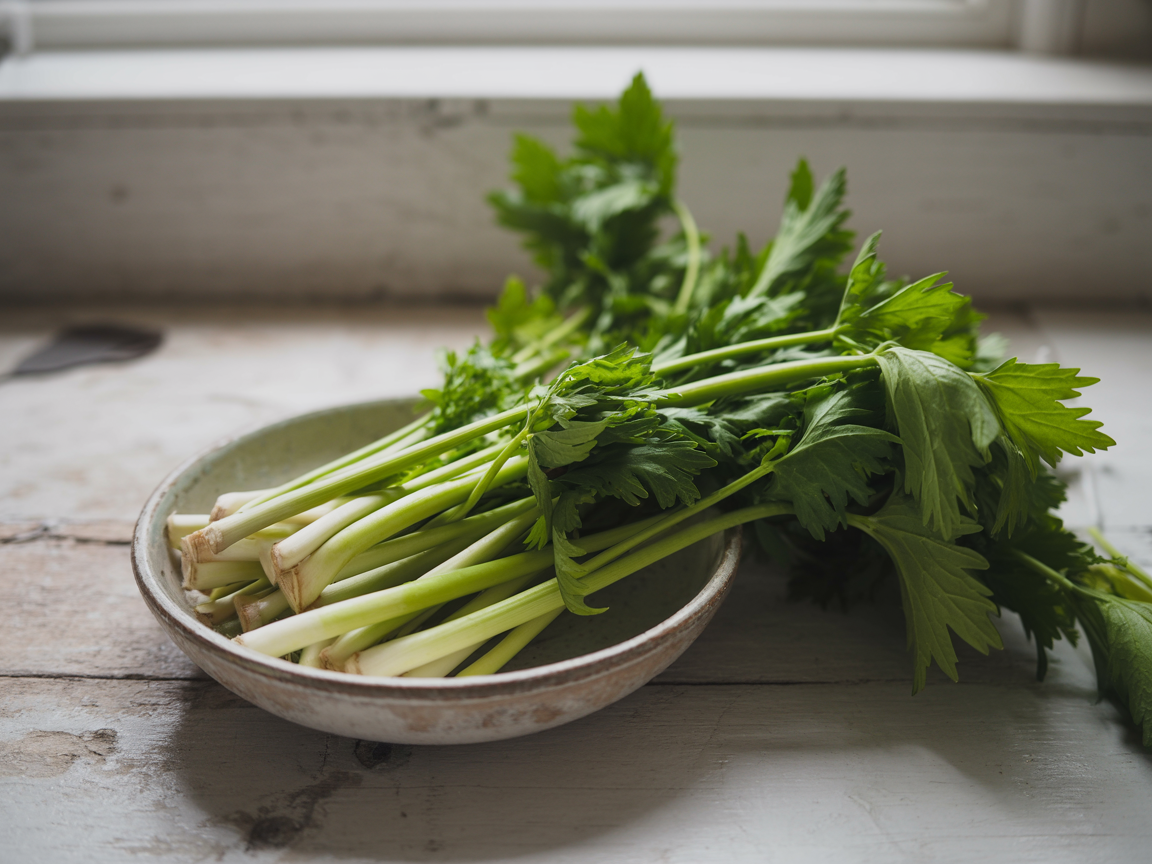
Look for dandelion greens with crisp, deeply toothed dark green leaves and no yellowing, sliminess, or limp stems—signs of age. Farmers’ market bunches in early spring are typically the most tender and least aggressively bitter. Grocery store bunches tend to be larger-leafed and bolder in flavor, which is fine for cooked dishes. Avoid bunches with very thick, woody stems, which indicate overgrown plants. If you’re foraging from your own yard, harvest young leaves before the plant flowers and make absolutely sure no pesticides or herbicides have been applied.
Types
- Wild dandelion (Taraxacum officinale): The classic foraged green; leaves are deeply notched and intensely bitter, especially as the season progresses.
- Cultivated broad-leaf dandelion: Bred for larger, slightly less bitter leaves; commonly found in grocery stores and farmers’ markets across the US.
- Italian dandelion (Catalogna chicory): Technically a chicory rather than a true dandelion, but sold under the same name; milder and excellent sautéed with garlic and olive oil.
Cooking with dandelion greens tonight?
Find dandelion greens recipes that match your diet — keto, high-protein, vegan, under 30 minutes — and build a shopping list in one tap.
History & origin
Dandelion greens have been eaten and valued medicinally for at least a thousand years across Europe, the Middle East, and China. European settlers introduced the plant to North America, and Native Americans quickly incorporated it into their diets and healing practices. In medieval Europe, dandelion was a staple spring green eaten to ‘purify the blood’ after a long winter of preserved foods. Italian, French, and German immigrant communities brought their love of dandelion cooking to the United States, where the plant naturalized enthusiastically. For most of the 20th century dandelion was dismissed as a lawn pest in America, but the farm-to-table movement revived appreciation for it as a serious culinary green starting in the 1990s.
How it’s made
Dandelion greens require no cultivation to exist—the plant grows prolifically in temperate climates across North America without any human intervention. Commercially, cultivated varieties are grown in fields or greenhouses, direct-seeded in early spring or fall, and harvested by cutting leaves before the plant bolts and flowers. Spring harvests yield the youngest, most tender, and least bitter leaves because cool temperatures slow the production of bitter compounds called sesquiterpene lactones. As temperatures rise and the plant flowers, bitterness intensifies. For foraging, leaves are simply snipped from the base of the plant, ideally in the cool morning hours when freshness is at its peak.
Good to know
- Every part of the dandelion is edible—roots, leaves, and flowers all appear in cooking and herbal medicine.
- The name ‘dandelion’ comes from the French dent de lion, meaning ‘lion’s tooth,’ a reference to the jagged shape of the leaves.
- Dandelion greens are an exceptionally rich source of beta-carotene, delivering more per 100 grams than many other common vegetables.
- The plant is one of the first food sources available to bees in early spring, making it an important pollinator plant.
- Dandelion root has been roasted and used as a caffeine-free coffee substitute for centuries.