Yam
Yams are starchy, earthy tubers that bring hearty substance and subtle sweetness to everything from weeknight sides to festive feasts.
In a nutshell
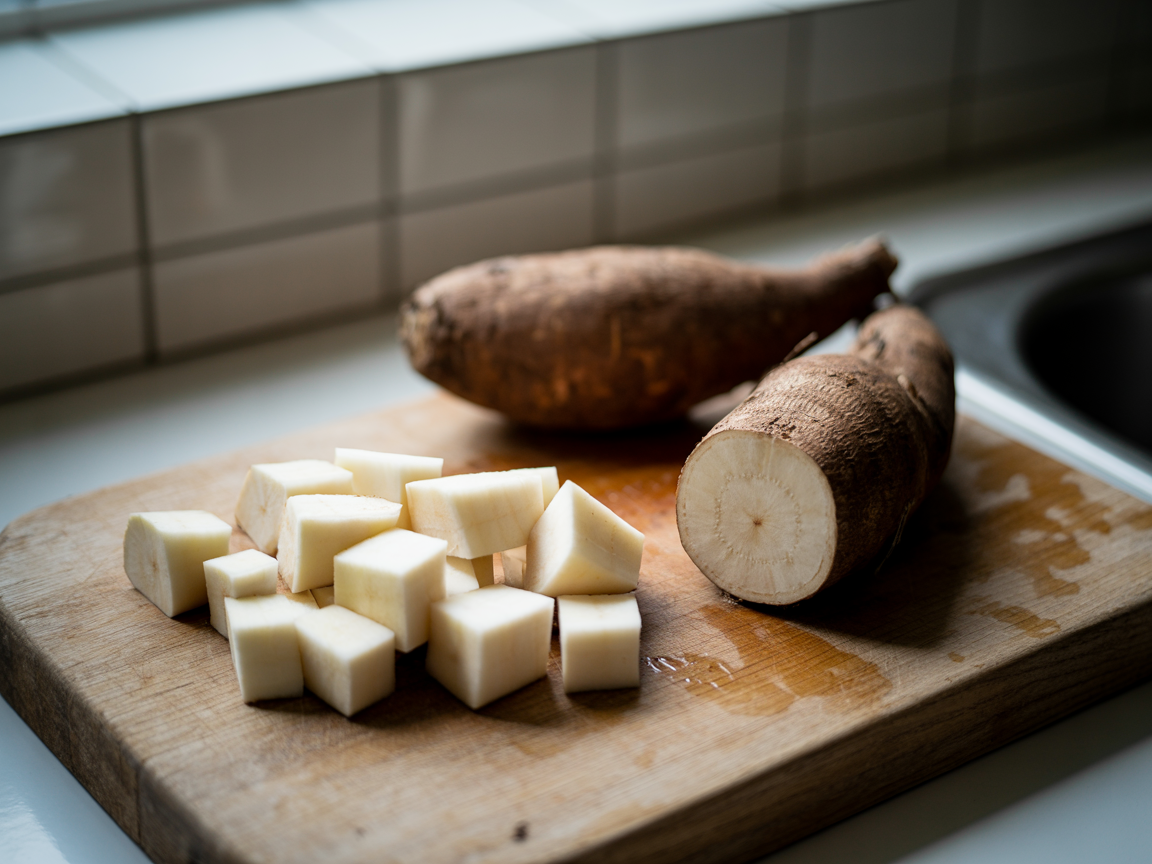
True yams are large, rough-skinned tubers native to Africa and Asia — distinct from the orange sweet potatoes most Americans call ‘yams’ at the grocery store. They have a drier, starchier flesh and a more neutral, earthy flavor than sweet potatoes. In the US, authentic yams are most often found at African, Caribbean, and Latin American markets.
Nutrition
≈ 16 Calories and 0g fat per tablespoon.
Yams are a solid source of complex carbohydrates and dietary fiber, making them genuinely filling and supportive of steady energy levels. They deliver a meaningful dose of potassium and vitamin C, along with vitamin B6, which plays a role in brain health and metabolism. Their resistant starch content feeds beneficial gut bacteria, and their relatively low fat profile means nearly all their calories come from slow-burning carbohydrates — useful for anyone watching fat intake without sacrificing satiety. Nutrition per 100 g.
Culinary uses & pairings
Yams shine in boiled, roasted, and mashed preparations. Boiling chunks until tender and then finishing them with butter, oil, or spiced sauces is the most common approach across West African and Caribbean cuisines. They hold their shape well in stews and braises — think Nigerian egusi soup or Jamaican boiled food — because their dense starch doesn’t break down as readily as a sweet potato would.
In West African cooking, pounded yam is a beloved staple: boiled yam is beaten in a mortar until it becomes a smooth, elastic dough served alongside rich soups and stews. Yam can also be sliced thin and fried into chips, cubed and roasted with olive oil and herbs, or incorporated into fritters and porridges. Its neutral earthiness makes it a versatile canvas for bold spices and savory sauces.
Pairs well with
Substitutions
Buying & storage
Look for yams that feel firm and heavy for their size, with rough, bark-like skin free of soft spots, mold, or large cuts. True yams are typically sold in large sections or whole at African, Caribbean, or Latin American grocery stores — you may find them cut into large pieces and wrapped in plastic, which is perfectly fine. Avoid pieces with slimy patches or an off smell. Smaller yams tend to be more tender; very large specimens can be fibrous at the core.
Varieties
- White Yam (Dioscorea rotundata): The most widely eaten yam in West Africa; firm white flesh, mild earthy flavor, and the classic choice for pounded yam.
- Yellow Yam (Dioscorea cayenensis): Slightly softer and moister with a faint golden flesh; popular in Caribbean cooking, especially Jamaican cuisine.
- Water Yam (Dioscorea alata): Also called winged yam or purple yam; has pale to lavender flesh and a slightly stickier texture, popular across Southeast Asia and the Caribbean. Ube (D. alata) is a distinct variety known for its vivid purple flesh.
- Chinese Yam (Dioscorea polystachya): Slender and white-fleshed with a mucilaginous texture; used raw or cooked in East Asian cuisines, sometimes grated into a sticky paste.
- Bitter Yam (Dioscorea dumetorum): Contains alkaloids and must be properly processed before eating; primarily a famine food or traditional medicine ingredient, rarely sold commercially.
Recipes using yam
3 recipes across our recipe sites use yam. A few favorites:
Cooking with yam tonight?
Find yam recipes that match your diet — keto, high-protein, vegan, under 30 minutes — and build a shopping list in one tap.
History & origin
Yams have been cultivated in West Africa and Asia for thousands of years, making them one of humanity’s oldest staple crops. In West and Central Africa they held deep cultural and ceremonial significance — the Igbo people of Nigeria, for instance, celebrate the New Yam Festival each harvest season as a communal thanksgiving. Enslaved Africans brought knowledge of yam cultivation to the Americas, and the tuber became foundational in Caribbean and Latin American foodways. The persistent confusion in the United States — where grocers began labeling orange-fleshed sweet potatoes as ‘yams’ in the 20th century to distinguish them from paler varieties — has muddied the culinary identity of the true yam ever since.
How it’s made
Yams are propagated vegetatively from sections of mature tubers rather than seeds. Farmers plant yam setts — small pieces of the tuber — in mounded or ridged soil at the start of the rainy season. The vining plant climbs supports as it grows, drawing energy into the developing underground tuber over roughly eight to ten months. Harvest is done by hand, carefully digging around the plant to pull the large tuber free without damage. After harvest, yams are cured in warm, humid conditions to toughen the skin before storage or sale, a step that significantly extends shelf life.
Good to know
- True yams can grow extraordinarily large — some specimens of Dioscorea alata have been recorded weighing over 100 pounds (45 kg).
- Nigeria is the world’s largest producer of yams, accounting for roughly 67–70% of global production.
- Yams contain diosgenin, a steroidal sapogenin that was historically used as a starting material in the laboratory synthesis of steroid hormones, including early synthetic progesterone for birth control pills.
- The word ‘yam’ is believed to derive from West African languages — possibly Wolof ‘nyami’ or similar terms meaning ‘to eat’ — and entered English through contact during the Atlantic slave trade.
- Unlike potatoes, yams are only distantly related to the nightshade family; they belong to the genus Dioscorea, a completely separate botanical lineage.