Chinese Cabbage (Napa)
Napa cabbage is the mild, juicy workhorse of Asian cooking that deserves a permanent spot in every American fridge.
In a nutshell
Napa cabbage (also called Chinese cabbage) is a pale-green, crinkly-leaved brassica with a sweeter, more delicate flavor than regular green cabbage. It’s incredibly versatile—equally at home raw in a salad, braised in a broth, or fermented into kimchi. At just 13 calories per 100 grams, it’s one of the most nutrient-dense, low-calorie vegetables you can toss in your cart.
Nutrition
≈ 2 Calories and 0g fat per tablespoon.
Napa cabbage punches well above its caloric weight when it comes to nutrition. It delivers a meaningful amount of vitamin C, supporting immune function and collagen synthesis, along with vitamin K, which plays a key role in bone health and blood clotting. It’s a good source of folate, important for cell repair and especially valuable during pregnancy. The vegetable also contains calcium and potassium, contributing to heart and bone health with virtually no fat. Its high water content (roughly 94%) keeps it naturally hydrating, and like other brassicas it provides glucosinolates—plant compounds studied for their potential antioxidant and anti-inflammatory properties. Nutrition per 100g via Spoonacular.
Culinary uses & pairings
Raw Napa cabbage shines in slaws and salads—its tender leaves wilt just enough when tossed with dressing but hold their pleasant crunch far longer than lettuce. Shred it fine for a sesame-ginger slaw, use whole leaves as low-carb wraps for ground pork or tofu fillings, or layer it into dumplings and spring rolls for moisture and texture.
When cooked, Napa cabbage becomes silky and subtly sweet. Stir-fry it over high heat with garlic and oyster sauce for a quick side dish, add thick wedges to hot pot or ramen broth, or braise it low and slow with ginger and soy sauce until it melts into tender ribbons. It’s the essential base vegetable for homemade kimchi and works beautifully in dumplings (gyoza, potstickers) mixed with pork, ginger, and scallions.
Pairs well with
Substitutions
Buying & storage
Look for heads that feel heavy and compact for their size, with pale-yellow to light-green leaves that are crisp and tightly packed near the base. The outer leaves should be free of browning, sliminess, or soft spots. Smaller heads (around 2 pounds / 900g) tend to be more tender and sweeter; very large heads can be slightly more fibrous. Avoid any with wilted, yellowing outer leaves or a strong sulfur smell, which signals age. Napa cabbage is widely available at most grocery stores year-round, with the best quality and price at Asian markets.
Varieties
- Barrel (Round) Type: Short, squat, and compact with tightly packed leaves—this is the most common variety found in US supermarkets. Very sweet and tender.
- Cylindrical (Michihili) Type: Tall, narrow heads with a more elongated shape and slightly firmer, more upright leaves. Well suited to kimchi and popular in both Chinese and Korean cooking.
- Loose-leaf Type: Less common in the US; leaves are more open and frilly, cooking down quickly and well-suited to soups and quick braises.
Recipes using chinese cabbage
4 recipes across our recipe sites use chinese cabbage. A few favorites:
Cooking with chinese cabbage tonight?
Find chinese cabbage recipes that match your diet — keto, high-protein, vegan, under 30 minutes — and build a shopping list in one tap.
History & origin
Napa cabbage has been cultivated in China for well over a thousand years, with records of its use dating back to at least the 5th century CE in the Yangtze River Delta region. The name ‘napa’ doesn’t come from California’s wine country—it derives from the Japanese word nappa, meaning leafy greens. The vegetable spread throughout East and Southeast Asia over centuries, becoming foundational to Korean cuisine (most famously as kimchi) and later arriving in the United States with waves of Chinese and Japanese immigrants in the 19th and 20th centuries. Today it’s a staple in mainstream American grocery stores, driven by the growing popularity of Asian-American cooking and fermented foods.
How it’s made
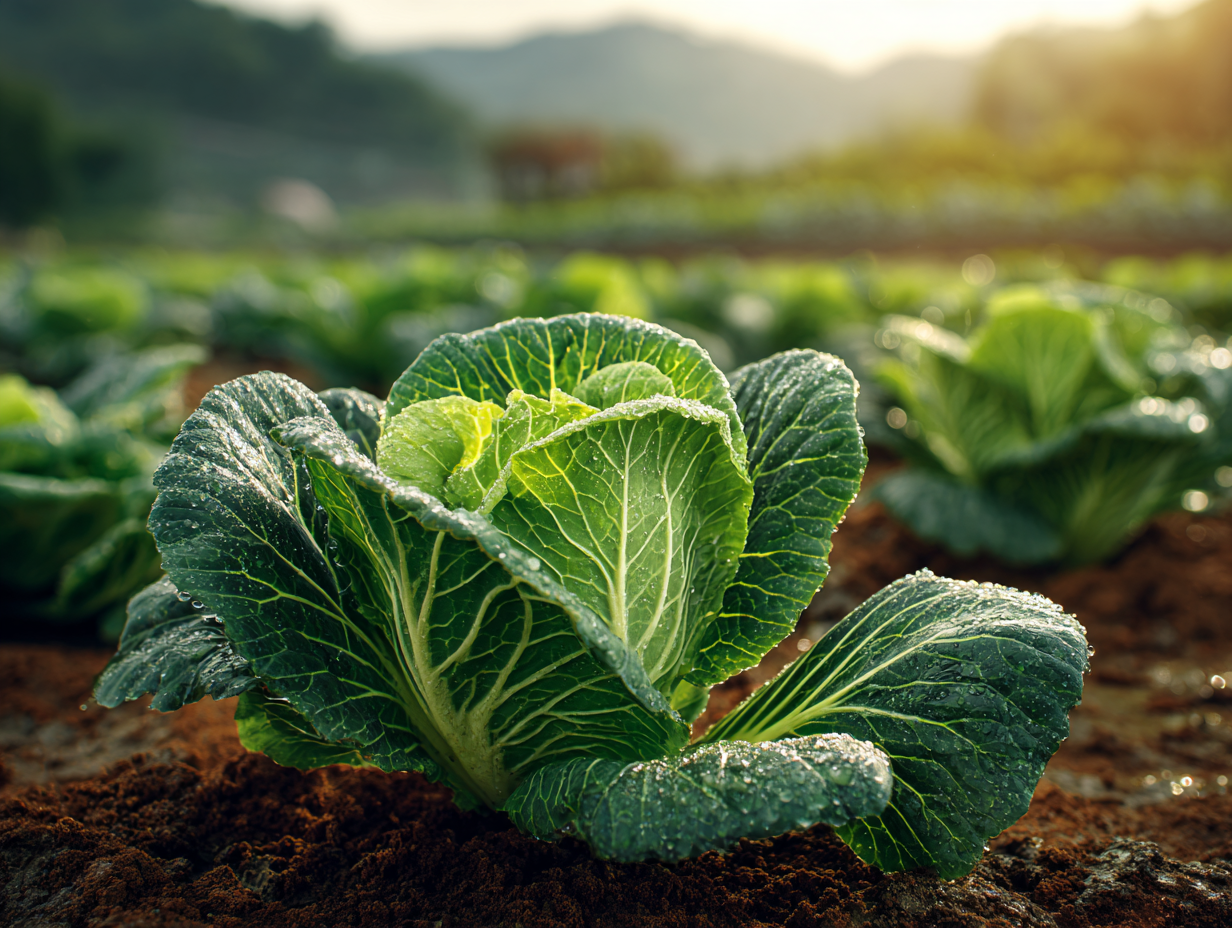
Napa cabbage is a cool-season biennial grown as an annual, thriving in temperatures between 45°F and 75°F (7°C and 24°C). Seeds are direct-sown or transplanted into well-drained, fertile soil with consistent moisture. The plants form dense, elongated or barrel-shaped heads over roughly 70 to 80 days. Because it bolts (goes to seed) quickly in heat, most commercial production occurs in spring and fall. Major growing regions in the US include California, while large volumes are also imported from Mexico. After harvest, heads are trimmed of outer leaves, graded by size, and distributed through cold-chain logistics to maintain crispness.
Good to know
- Napa cabbage is approximately 94% water by weight, making it naturally hydrating and one of the lowest-calorie vegetables you can eat by volume.
- A single large head of Napa cabbage—often 3 to 5 pounds (1.4 to 2.3 kg)—contains enough leaves to make a full batch of homemade kimchi that will ferment for weeks.
- Despite its common name, Napa cabbage is closely related to regular round green cabbage—both belong to the species Brassica rapa or the broader Brassica genus—but it has a notably different leaf structure, flavor, and texture, and is also closely related to bok choy.
- South Korea produces and consumes Napa cabbage at a staggering scale: the country uses millions of heads each fall for kimjang, the traditional communal kimchi-making season, which UNESCO recognized as an Intangible Cultural Heritage of Humanity in 2013.
- The glucosinolates in Napa cabbage—the same sulfur compounds responsible for the faint odor when it’s overcooked—break down into bioactive molecules like indoles and isothiocyanates that researchers continue to study for potential health benefits.