Mutton (Older Sheep)
Rich, deeply savory mutton rewards patient cooks with bold flavor that younger lamb simply can’t match.
In a nutshell
Mutton comes from sheep that are at least two years old, giving the meat a darker color, firmer texture, and a pronounced, almost gamey depth of flavor. Its leaner cuts benefit enormously from low-and-slow cooking methods that break down the connective tissue and mellow the intensity. Once a staple of American and British kitchens, it’s enjoying a well-deserved revival among adventurous home cooks.
Nutrition
Mutton is a solid source of complete protein, delivering all essential amino acids to support muscle maintenance and repair. It’s notably rich in iron (heme form), which the body absorbs more readily than plant-based iron, making it valuable for preventing iron-deficiency anemia. You’ll also find generous amounts of zinc for immune function, vitamin B12 for nervous system health, and niacin (B3) for energy metabolism. Because the animal is older, the fat profile tends toward a higher proportion of saturated and monounsaturated fats, along with conjugated linoleic acid (CLA), a naturally occurring fatty acid associated with various health benefits in research settings. The fat content varies considerably by cut, with leg and shoulder leaning leaner than the breast or rack. Nutrition per 100g via Spoonacular.
Culinary uses & pairings
Mutton truly shines in long, moist-heat cooking. A leg or shoulder braised in red wine, stock, and aromatics for three to four hours becomes fork-tender and deeply savory. It’s the backbone of classic dishes like Irish stew and South Asian staples such as rogan josh and nihari, where the bold flavor stands up to assertive spices like cardamom, cloves, and dried chilies. (Scottish haggis is traditionally made from sheep offal rather than whole mutton cuts.) Bone-in cuts are especially prized because the marrow enriches the braising liquid into a silky, unctuous sauce.
For grilling or roasting, marinating mutton overnight in an acidic base — yogurt, citrus juice, or vinegar — helps tenderize the muscle fibers and tempers the gamey edge. Chops and racks from younger mutton (around two years old) are the best candidates for dry-heat methods, cooked to an internal temperature of 145°F (63°C) with a rest before serving. Ground mutton makes exceptionally flavorful burgers, kofta, and shepherd’s pie when seasoned with cumin, coriander, and fresh herbs.
Pairs well with
Substitutions
Buying & storage
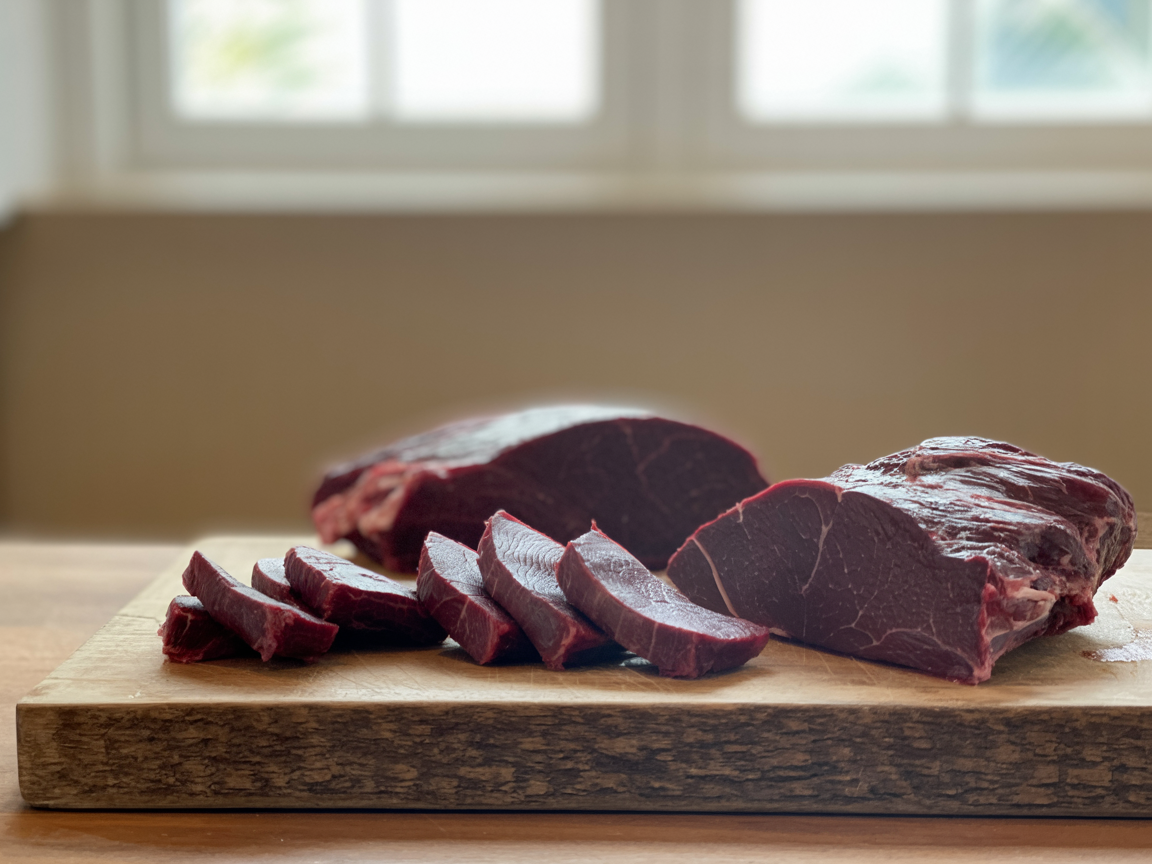
Look for mutton with deep red to burgundy-colored flesh — the darker hue compared to pink lamb is completely normal and a sign of proper age. The fat should be creamy white to ivory; yellower fat is fine and actually indicates a grass-fed diet. At a butcher counter, ask specifically for two- to four-year-old sheep for the best balance of flavor and tenderness; animals older than five years become progressively tougher. Bone-in cuts like the shoulder, leg, and shank are ideal for braising, while the rack or loin chops suit quicker cooking. If buying packaged mutton at a specialty grocer or halal market, check that the packaging is tightly sealed with no pooling liquid and that the sell-by date gives you at least two days of cooking window.
Types by Age and Cut
- Hogget (1–2 years): Sits between lamb and true mutton in flavor intensity; more tender and slightly milder, great for roasting or grilling as well as braising. The term ‘young mutton’ is informal; ‘hogget’ is the accepted industry designation for this age range.
- True Mutton (2–4 years): The sweet spot for most recipes — bold, complex flavor with connective tissue that melts beautifully into braises and curries.
- Old Mutton (5+ years): Very pronounced flavor and quite tough; requires very long cooking times and is best reserved for heavily spiced dishes or stock-making.
- Grass-fed Mutton: Tends toward a more pronounced, slightly mineral flavor with yellower fat and a higher omega-3 content compared to grain-finished animals.
- Halal-certified Mutton: The most widely available form of mutton in the US, found at halal butchers and international grocery stores; quality and age can vary, so always ask the butcher.
Recipes using mutton
1 recipes across our recipe sites use mutton. A few favorites:
Cooking with mutton tonight?
Find mutton recipes that match your diet — keto, high-protein, vegan, under 30 minutes — and build a shopping list in one tap.
History & origin
Mutton was once the everyday red meat of choice across the British Isles, colonial America, and much of the Middle East and South Asia. Colonial American households kept sheep primarily for wool, slaughtering older animals for the table as a matter of practicality, and mutton stew or roasted leg of mutton appeared regularly on nineteenth-century American menus. The shift away from mutton in the US accelerated after World War II, when the meat was associated with unappetizing wartime rations, and the industry pivoted hard toward tender young lamb. In South Asian, Middle Eastern, and North African cuisines, however, mutton never fell out of favor — it remains the preferred choice for landmark dishes from nihari to mechoui precisely because its assertive flavor pairs so well with complex spice blends. A growing farm-to-table movement and renewed interest in heritage breeds are now bringing mutton back to American dinner tables.
How it’s made
Mutton is simply the meat of a domestic sheep (Ovis aries) that has reached at least two years of age, as opposed to lamb, which is under one year. Sheep raised for mutton are typically kept for wool production first, then slaughtered after their fleece yield declines. Grass-fed flocks on pasture develop the most complex flavor, while grain-finished animals produce more marbled, milder meat. After slaughter, the carcass is often hung to age — dry-aging for one to three weeks in a cold room can intensify the flavor and allows enzymes to begin breaking down muscle fibers, improving tenderness, though this practice varies by producer. The carcass is then broken down into primal cuts (leg, shoulder, rack, loin, shank, breast) and sub-primals much like beef, though the carcass is considerably smaller, typically yielding 40 to 60 pounds (18 to 27 kg) of usable meat.
Good to know
- The word mutton entered English from the Old French moton, meaning sheep — the same root that gives us the term ‘mutton chop’ whiskers, named for the shape of the sideburns.
- Mutton is one of the most widely eaten meats on the planet when you account for South Asian, Middle Eastern, and African consumption, even though it’s relatively uncommon in mainstream US supermarkets.
- A traditional Kentucky Mutton BBQ tradition survives in Owensboro, Kentucky, where mutton is slow-smoked over hickory and served with a distinctive Worcestershire-based black dip sauce — a uniquely American mutton culture.
- Because older grass-fed sheep have been grazing longer, grass-fed mutton generally contains a higher proportion of omega-3 fatty acids than conventionally grain-finished young lamb, though the exact ratio varies by breed, pasture, and feeding duration.
- The Merino breed, prized worldwide for ultra-fine wool, also produces flavorful mutton because the animals are kept for several years before slaughter, developing full flavor in the meat.