Elk
Elk is a rich, deeply flavored wild game meat that rewards adventurous home cooks with lean, satisfying protein.
In a nutshell
Elk is one of North America’s leanest red meats, with a flavor that’s bolder than beef but milder than venison. It comes from free-ranging or ranch-raised animals and is prized for its tender texture when cooked low-and-slow or kept medium-rare on the grill. Home cooks are discovering it as a flavorful, nutrient-dense alternative to conventional beef.
Nutrition
≈ 15 Calories and 0.2g fat per tablespoon.
Elk is an outstanding source of high-quality protein, delivering around 23 grams per 100-gram serving while keeping total fat remarkably low at just 1.5 grams — less than skinless chicken breast. The fat profile leans toward heart-friendlier unsaturated fats, with saturated fat staying minimal. Elk also supplies meaningful amounts of iron, zinc, and B vitamins — especially B12 and niacin — which support energy metabolism, immune function, and red blood cell production. Because elk typically graze on wild grasses and forage, the meat tends to carry a better omega-3 to omega-6 ratio than grain-finished beef. Nutrition per 100g via Spoonacular.
Culinary uses & pairings
Elk shines in slow-cooked braises and stews, where tougher shoulder and shank cuts break down into fork-tender, deeply savory meals. It takes well to bold aromatics like juniper, rosemary, and red wine. Ground elk is a fantastic swap for ground beef in burgers, meatballs, and chili — just watch the heat, since the low fat content means it dries out faster than beef.
For steaks, roasts, and backstrap (the elk equivalent of a beef loin), keep cooking times short and aim for an internal temperature of 130–145°F (54–63°C). A quick sear in a cast-iron pan with butter and fresh thyme is all it really needs. Because the meat is so lean, marinating before grilling or roasting adds moisture and prevents the exterior from tightening up before the center is done.
Pairs well with
Substitutions
Buying & storage
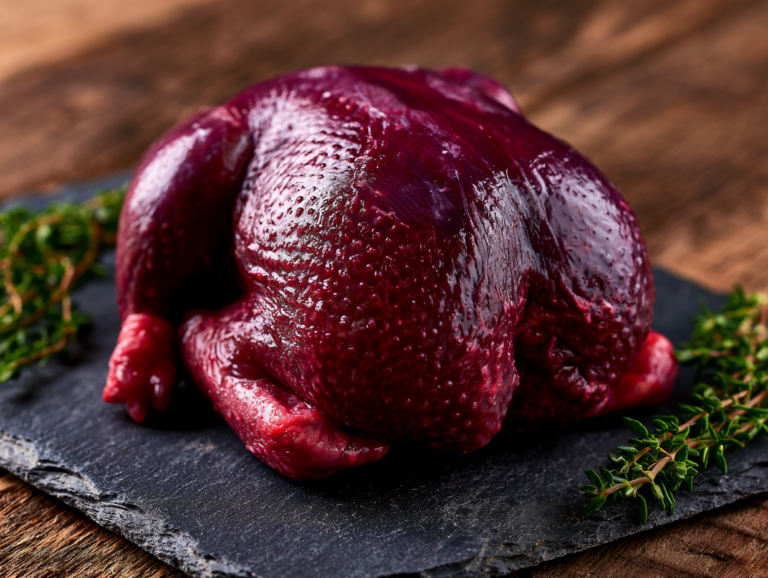
Look for elk at specialty butchers, farmers’ markets in hunting regions, or online from reputable game-meat purveyors who ship frozen. Fresh elk should be deep ruby-red to dark burgundy with a clean, slightly earthy scent — any grayness or sour smell is a red flag. Ranch-raised elk is more consistent in tenderness and milder in flavor than wild-harvested, while wild elk often has a richer, more complex taste that serious game-meat fans prefer. When buying frozen, look for tight, frost-free packaging with no ice crystals inside, which signal thaw-and-refreeze cycles.
Cuts
- Backstrap (loin): The prized tender loin running along the spine; best seared quickly to medium-rare and sliced thin.
- Tenderloin: Even more tender than backstrap and very small; treat it like beef filet mignon with minimal seasoning.
- Roasts (shoulder, rump): Ideal for slow roasting or braising; the connective tissue breaks down beautifully over low, slow heat.
- Steaks (round, sirloin): Leaner steaks that benefit from marinating; grill or pan-sear and rest well before slicing.
- Ground elk: Versatile and increasingly common; use it in burgers, tacos, or chili, but cook gently to avoid dryness.
- Osso buco / shank: Rich in collagen; braise low and slow for a deeply flavored dish similar to classic veal osso buco.
Recipes
We do not have recipes featuring Elk in our collection just yet — but you can discover thousands of recipes, filtered to your diet and your pantry, over at Tucker Finder.
Cooking with elk tonight?
Find elk recipes that match your diet — keto, high-protein, vegan, under 30 minutes — and build a shopping list in one tap.
History & origin
Elk — known scientifically as Cervus canadensis and called wapiti by many Native American peoples — has been a cornerstone of indigenous North American diets for thousands of years. Tribes from the Plains to the Pacific Northwest hunted elk for meat, used the hides for clothing and shelter, and crafted tools from the antlers and bones. European settlers quickly recognized elk as a vital food source during westward expansion, and market hunting in the 19th century pushed wild populations to the brink. Conservation efforts in the early 20th century restored herds dramatically, and today elk hunting is a carefully managed tradition across the American West. Commercial elk ranching began growing in the 1990s, bringing this once-frontier meat to dinner tables nationwide.
How it’s made
Wild elk is harvested during regulated hunting seasons, primarily in western states like Colorado, Wyoming, Montana, and Idaho, under licenses managed by state wildlife agencies. After harvest, the animal is field-dressed immediately to cool the carcass quickly and preserve meat quality, then typically aged at cool temperatures for several days to develop tenderness and flavor. Ranch-raised elk are farmed on open pastures — often on high-altitude Western rangeland — where they graze on native grasses and hay, which accounts for their lean muscle composition. The animals are processed at USDA-inspected facilities for commercial sale, with the carcass broken down into familiar primal cuts much like beef. Because elk produce far less fat marbling than grain-finished cattle, careful temperature control throughout butchering and aging is essential to the final quality.
Good to know
- A mature bull elk can weigh up to 1,100 pounds (499 kg) and yield several hundred pounds of usable meat — enough to fill a family’s freezer for a year.
- The word wapiti comes from the Shawnee and Cree languages and means ‘white rump,’ a reference to the elk’s distinctive pale hindquarters.
- Elk are the second-largest member of the deer family in North America, surpassed only by moose.
- Because of its very low fat content, elk registers as one of the lowest-calorie red meats available — a 3.5-ounce serving has fewer calories than the same amount of skinless chicken thigh.
- Rocky Mountain elk were reintroduced to areas like the Great Smoky Mountains and parts of the Midwest after being hunted to local extinction, and those herds are now thriving and huntable again.