Squirrel
Squirrel is a lean, flavorful wild game meat beloved by hunters and adventurous home cooks across the American South and Midwest.
In a nutshell
Squirrel is small wild game with firm, mildly sweet meat that tastes a bit like rabbit or dark-meat chicken. It’s most popular in rural Southern and Midwestern cooking, where it has fed families for generations. Low in fat and surprisingly rich in protein, it rewards low-and-slow cooking methods that tenderize its dense muscle.
Nutrition
Squirrel meat is exceptionally lean and high in protein, delivering more protein per ounce than many common meats while remaining very low in total fat and calories. It provides meaningful amounts of iron, zinc, and B vitamins—especially B12 and niacin—that support energy metabolism and immune function. Because the animal forages on nuts, seeds, and acorns, its small amount of fat carries a pleasant, slightly nutty character. It contains no carbohydrates and is naturally free of additives, making it one of the cleanest animal proteins available to hunters and foragers. Nutrition per 100g via Spoonacular.
Culinary uses & pairings
Squirrel is a classic braising and stewing meat. The iconic American dish Brunswick stew traditionally calls for squirrel simmered low and slow with corn, tomatoes, lima beans, and potatoes until the meat falls from the bone. Older animals especially benefit from a long braise in stock, cider, or cream gravy, which breaks down the firm muscle fibers into tender, pull-apart pieces. A slow cooker works beautifully here.
Young squirrels—typically taken in early fall—are tender enough to fry like chicken. Jointed pieces are soaked in buttermilk, dredged in seasoned flour, and fried in a cast-iron skillet until golden and crisp. Squirrel also works well in pot pies, tacos, and wild-game chili. Anywhere a recipe calls for rabbit or dark-meat chicken, squirrel can step in with excellent results.
Pairs well with
Substitutions
Buying & storage
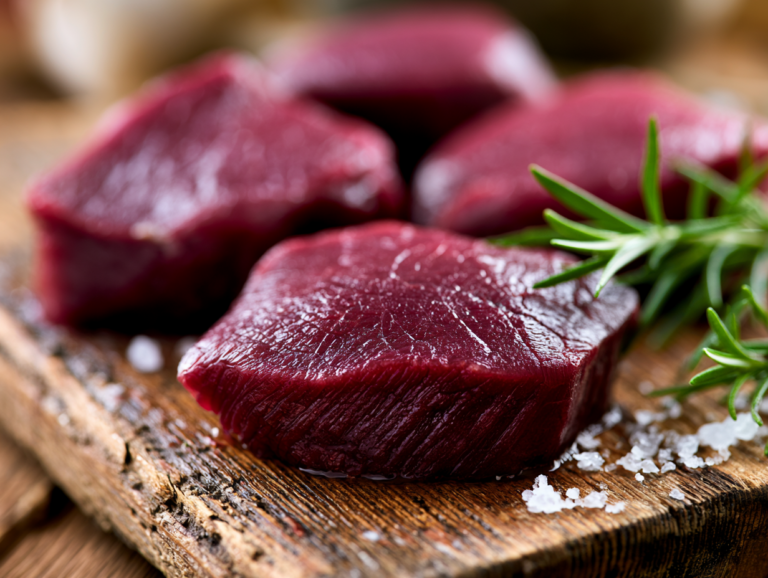
Most home cooks source squirrel through hunting or a hunter they know, since it is rarely sold commercially in the US. A few specialty butchers, farmers markets, and online wild-game suppliers occasionally carry it, and it’s worth calling ahead. Look for carcasses or jointed pieces with pale pinkish-gray flesh that smells clean and faintly gamey—never sour or off. Gray squirrels are the most common and yield the most meat; fox squirrels are larger but less common. If you are hunting your own, squirrels taken in early fall on a mast-heavy diet of acorns and hickory nuts will have the best-flavored meat.
Common Species
- Eastern Gray Squirrel: The most widely hunted species in the US; medium-sized with mild, slightly sweet meat and good yield.
- Fox Squirrel: Larger than the gray, offering more meat per animal; flavor is similar but can be slightly stronger in older animals.
- Western Gray Squirrel: Found along the Pacific Coast; similar in size and flavor to the Eastern gray and fully edible.
- Red Squirrel: Small and lean with a more pronounced gamey flavor; less commonly hunted for the table due to its modest size.
Cooking with squirrel tonight?
Find squirrel recipes that match your diet — keto, high-protein, vegan, under 30 minutes — and build a shopping list in one tap.
History & origin
Squirrel has been eaten in North America for thousands of years, first by Indigenous peoples who hunted them as a reliable, abundant protein source. European settlers quickly adopted the practice, and squirrel became a staple of frontier and rural diets across Appalachia, the Deep South, and the Midwest throughout the 18th and 19th centuries. Dishes like Brunswick stew—claimed by both Brunswick County, Virginia, and Brunswick, Georgia—originally featured squirrel as the primary meat before chicken became the modern standard. During the Great Depression, squirrel hunting surged again as families relied on wild game to stretch food budgets. Today it occupies a beloved niche in Southern food heritage and is experiencing a modest revival among hunters, foragers, and nose-to-tail cooking enthusiasts.
How it’s made
Squirrel is wild-harvested through hunting rather than farmed commercially in the United States. Hunters pursue them with small-caliber rifles or shotguns, typically during regulated fall and winter seasons set by state wildlife agencies. After harvesting, the animal is field-dressed promptly to preserve meat quality. Processing involves skinning—most hunters use a simple pull technique that removes the pelt quickly—followed by gutting and rinsing. The carcass is then jointed into the saddle, hindquarters, and forequarters, similar to butchering a rabbit. Some cooks soak the pieces in cold salted water or buttermilk for several hours before cooking to mellow any gamey notes and draw out residual blood.
Good to know
- A single gray squirrel typically yields about half a pound (225 g) of usable meat, so most recipes call for two to four animals.
- Squirrel hunting is legal in all 50 US states, and gray squirrels are one of the most abundant game animals in the country.
- Brunswick stew is traditionally associated with squirrel as its original primary meat, though no single verified 1828 founding recipe is universally accepted—both Brunswick County, Virginia, and Brunswick, Georgia, claim the dish’s origin.
- Squirrel brains were once considered a delicacy in parts of rural Kentucky, though public-health guidance now advises against consuming them.
- Because squirrels cache and eat large quantities of nuts, their meat can carry subtle nutty, sweet undertones not found in most other game meats.