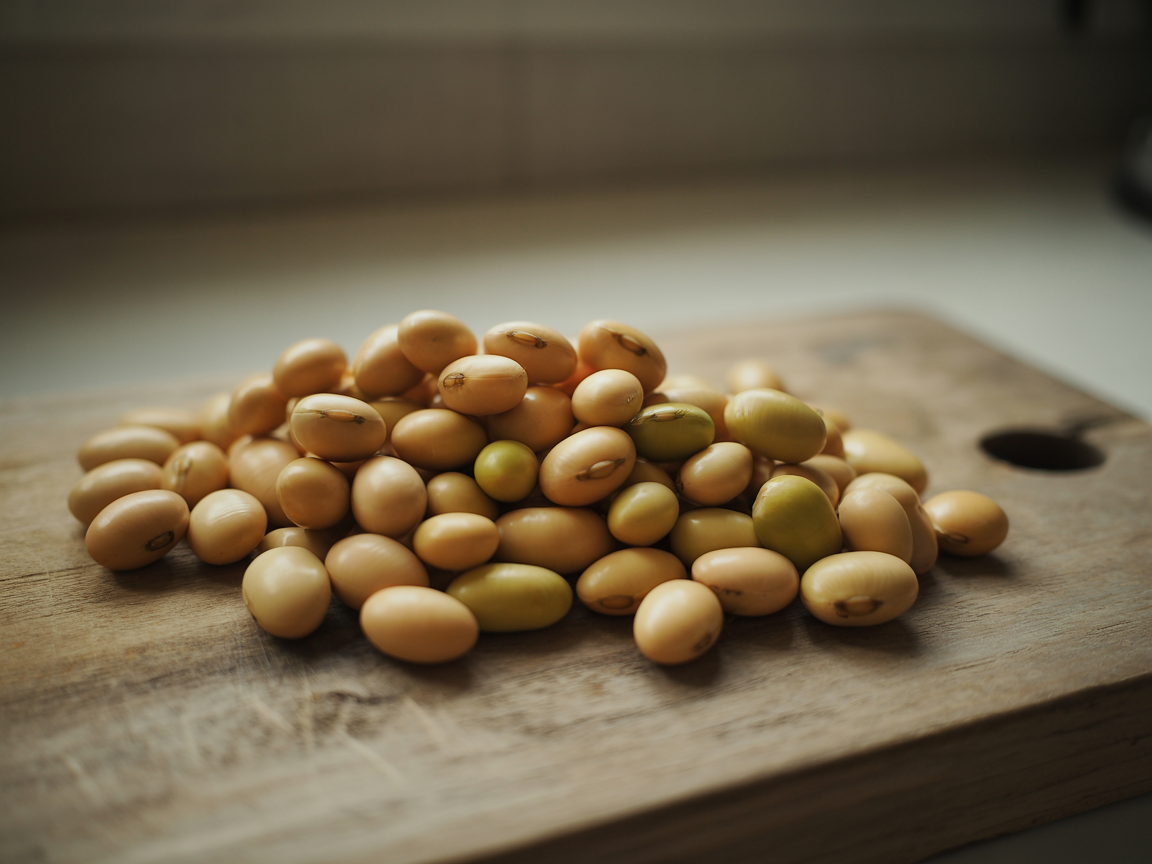
Navy Bean
The humble navy bean is a creamy, mild-flavored staple that anchors everything from hearty soups to classic baked beans.
In a nutshell
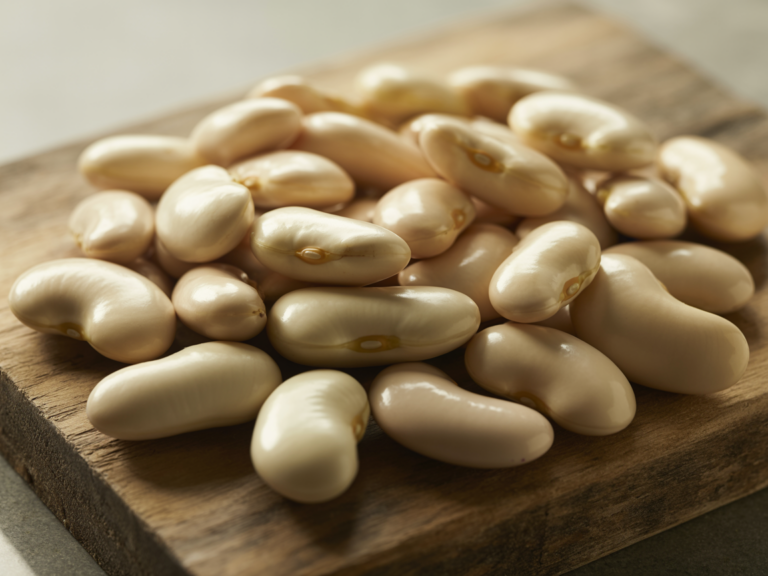
Navy beans are small, ivory-white dried legumes with a dense, creamy texture and a gently earthy flavor that absorbs seasonings beautifully. They’re one of America’s most beloved beans, famous for their role in Boston baked beans and Senate bean soup. Affordable, shelf-stable, and deeply nutritious, they’re a pantry workhorse for home cooks of every skill level.
Nutrition
≈ 19 Calories and 0.1g fat per tablespoon.
Navy beans punch well above their weight nutritionally. At just 140 calories per 100 grams, they deliver over 8 grams of protein alongside a remarkable 10.5 grams of dietary fiber — one of the highest fiber contents of any common bean — which supports digestive health and helps sustain steady energy levels. Nearly all of their fat is heart-friendly unsaturated fat, and they’re naturally low in sodium, making them an excellent choice for those watching blood pressure. They’re also a meaningful source of folate, iron, magnesium, and B vitamins, making them especially valuable in plant-forward diets where these nutrients can be harder to come by. Nutrition per 100 g.
Culinary uses & pairings
Navy beans are the undisputed star of Boston baked beans, slow-cooked low and slow with molasses, mustard, and salt pork or bacon until they’re impossibly tender and deeply savory. They’re equally at home in thick Senate-style bean soups, Tuscan-inspired white bean stews, and hearty minestrone, where their creamy texture thickens broth naturally as they cook down.
Beyond soups and braises, navy beans make a wonderfully smooth white bean dip — blended with olive oil, lemon, and garlic, they rival hummus in versatility. They also hold their shape well enough to toss into grain bowls, fold into veggie burgers, or layer into casseroles, and their mild flavor means they adapt happily to bold spice blends from smoky chipotle to herby gremolata.
Pairs well with
Substitutions
Buying & storage
When buying dried navy beans, look for bags with a clear harvest or pack date — beans older than two years can take forever to soften, no matter how long you cook them. Choose bags where the beans are uniformly ivory-white with no shriveled, cracked, or discolored pieces. Canned navy beans are a perfectly fine shortcut; check the label for low-sodium or no-salt-added versions if you want to control seasoning. Bulk bins at natural food stores are a great value, especially if the turnover is high and the beans look plump and fresh.
Recipes using navy bean
2 recipes across our recipe sites use navy bean. A few favorites:
Cooking with navy bean tonight?
Find navy bean recipes that match your diet — keto, high-protein, vegan, under 30 minutes — and build a shopping list in one tap.
History & origin
Navy beans got their name from the U.S. Navy, which relied on them heavily as a shipboard staple throughout the 19th century because dried beans were calorie-dense, packed easily, and kept for months at sea. Long before that, beans botanically related to the navy bean were a dietary cornerstone for Indigenous peoples across the Americas for thousands of years. European colonists quickly adopted them, and by the 1800s baked beans cooked low and slow with molasses had become a defining dish of New England — so synonymous with Boston that the city earned the nickname ‘Beantown.’ Senate bean soup, said to have appeared on the U.S. Senate cafeteria menu continuously since the early 1900s, further cemented the navy bean’s place in American culinary identity.
How it’s made
Navy beans are the dried, mature seeds of Phaseolus vulgaris, the common bean. Farmers sow them in warm, well-drained soil after the last frost, and the plants — low-growing bushes, typically — produce pods over the summer. At harvest, the plants are cut when the pods have dried on the vine, then threshed to separate the small white seeds. The beans are cleaned, sorted by size, and dried further to reduce moisture to a shelf-stable level before packaging. Canned navy beans go through an additional step: they’re soaked, blanched, sealed in cans with water and sometimes salt, and commercially pressure-cooked inside the can to achieve that fully tender, ready-to-eat texture.
Good to know
- The U.S. is one of the world’s largest producers of navy beans, with Michigan leading domestic production.
- A single cup of cooked navy beans provides roughly 19 grams of fiber, a substantial contribution toward the daily recommended intake for most adults.
- Senate bean soup has reportedly been served in the U.S. Senate dining room every single day since at least 1903 — the exact origin of the tradition is debated, but the commitment is undeniable.
- Despite their name, navy beans have no connection to the color navy blue — they’re as white as can be.
- Navy beans are sometimes labeled haricot beans in British and Australian recipes, which can cause confusion for American cooks shopping abroad.