Black-Eyed Peas
Black-eyed peas are a Southern soul-food staple that bring creamy texture and earthy flavor to everyday cooking.
In a nutshell
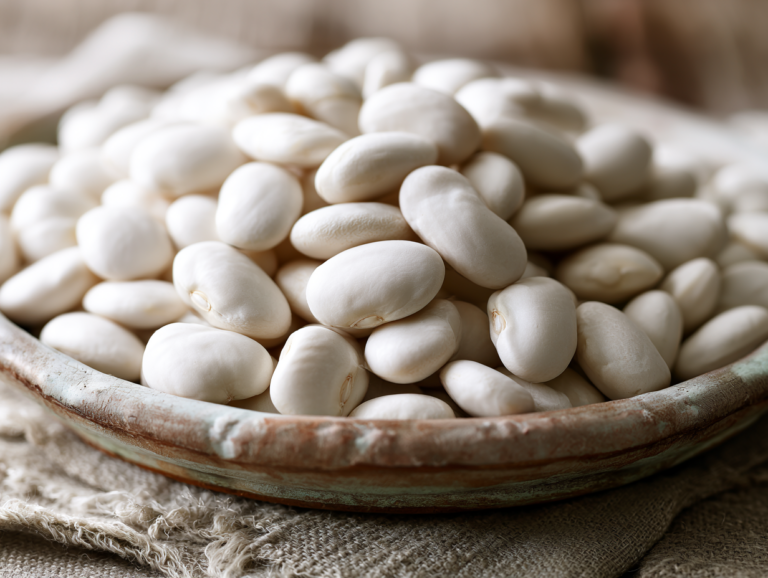
Black-eyed peas are a mild, creamy legume with a distinctive dark spot on their skin. They cook faster than most dried beans and soak up smoky, savory seasonings beautifully. A true comfort-food ingredient, they’re endlessly versatile from pot to salad bowl.
Nutrition
≈ 16 Calories and 0.1g fat per tablespoon.
Black-eyed peas punch well above their weight nutritionally. Their 6.5 grams of fiber per 100g supports digestive health and helps you feel full, while a solid 7.7 grams of plant-based protein makes them a smart meat alternative. The fat content is remarkably low and almost entirely heart-friendly unsaturated fat. They’re also a meaningful source of folate, potassium, and iron — nutrients especially valuable for people managing blood pressure or following a plant-forward diet. The low sodium content means you control the salt entirely, which is a real advantage over canned options. Nutrition per 100 g.
Culinary uses & pairings
Black-eyed peas are the backbone of classic Southern dishes like Hoppin’ John, where they’re simmered low and slow with smoked ham hock, onion, and spices over rice. They absorb braising liquid deeply, so they reward patient, well-seasoned cooking. Stewed preparations with collard greens, tomatoes, or sausage are perennial favorites across the South and mid-Atlantic.
Beyond the pot, black-eyed peas shine in cold salads and dips. Texas Caviar — a tangy marinated salad with corn, peppers, and vinaigrette — is a crowd-pleasing party staple. They also work beautifully in grain bowls, veggie burgers, and even crispy pan-fried fritters called akara, rooted in West African cooking traditions.
Pairs well with
Substitutions
Buying & storage
For dried black-eyed peas, look for bags with a uniform creamy-white color and a bold, clearly defined black eye — faded coloring often signals age, and old beans can stay stubbornly tough no matter how long you cook them. Bulk bins at natural food stores let you buy only what you need and usually have high turnover. Canned black-eyed peas are a perfectly respectable shortcut; choose low-sodium versions and rinse them well to wash off excess starch and any tinny flavor. Frozen black-eyed peas are an underrated option — they cook quickly and taste remarkably fresh, especially for Southern-style preparations.
Varieties
- Standard Black-Eyed Pea: The classic creamy-white bean with a single black spot; the most widely available variety in US supermarkets.
- Crowder Pea: A closely related Southern field pea that ‘crowds’ the pod; slightly darker, earthier flavor and very similar cooking behavior.
- Pink-Eyed Purple Hull Pea: Has a pink eye instead of black and grows in a purple pod; sweeter and more delicate, a summertime favorite in the South.
- Iron and Clay Pea: Primarily a cover crop variety grown for soil improvement and forage; rarely eaten but important to the agricultural history of the American South.
- California Blackeye No. 5: A commercial cultivar widely grown in California and among the leading varieties used for canning and dried-bean production in the US.
Recipes using black-eyed peas
7 recipes across our recipe sites use black-eyed peas. A few favorites:
Cooking with black-eyed peas tonight?
Find black-eyed peas recipes that match your diet — keto, high-protein, vegan, under 30 minutes — and build a shopping list in one tap.
History & origin
Black-eyed peas originated in West Africa, where they have been cultivated for thousands of years as a dietary staple. They arrived in the American South through the transatlantic slave trade in the 17th and 18th centuries, carried by enslaved Africans who preserved their foodways under devastating conditions. Enslaved people and poor rural Southerners grew them as a reliable, nutritious crop that thrived in hot, dry conditions. After the Civil War, black-eyed peas became deeply embedded in Southern culture, and the tradition of eating them on New Year’s Day for good luck — often as Hoppin’ John — persists strongly today. That custom is rooted in African traditions that associated legumes with prosperity and abundance; some food historians also note parallels with Sephardic Jewish New Year customs involving black-eyed peas, though the direct link to Southern practice remains debated.
How it’s made
Black-eyed peas are a warm-season legume belonging to the Vigna unguiculata species, planted in late spring once soil temperatures reliably reach 60°F (16°C) or above. Unlike many beans, they fix their own atmospheric nitrogen through root nodules, making them relatively drought-tolerant and low-input crops — qualities that made them invaluable in the sandy soils of the American South. The pods mature in 60 to 90 days and are harvested either fresh (as field peas) or left to dry fully on the plant for dried beans. After harvest, dried black-eyed peas are threshed, cleaned, and sorted before packaging. California is today the largest US producer of dried black-eyed peas, though the crop is also grown across the South and in Texas.
Good to know
- Despite their name, black-eyed peas are technically classified as cowpeas, a type of legume in the genus Vigna — more closely related to beans than to garden peas.
- Eating black-eyed peas on New Year’s Day for good luck is a tradition observed by millions of Southerners; the peas are said to represent coins and prosperity.
- Black-eyed peas are one of the most drought-resistant legumes in cultivation, making them a critical food security crop across sub-Saharan Africa today.
- The fritter dish akara, made from ground black-eyed peas, traveled from West Africa to Brazil and the American South, where versions of it survive in distinct regional cooking traditions.
- Black-eyed peas don’t require pre-soaking the way larger dried beans do — they can go straight into a pot and be fully tender in about 45 to 60 minutes of simmering.