Pinto Bean
Pinto beans are the hearty, speckled staple behind America’s best chili, refried beans, and so much more.
In a nutshell
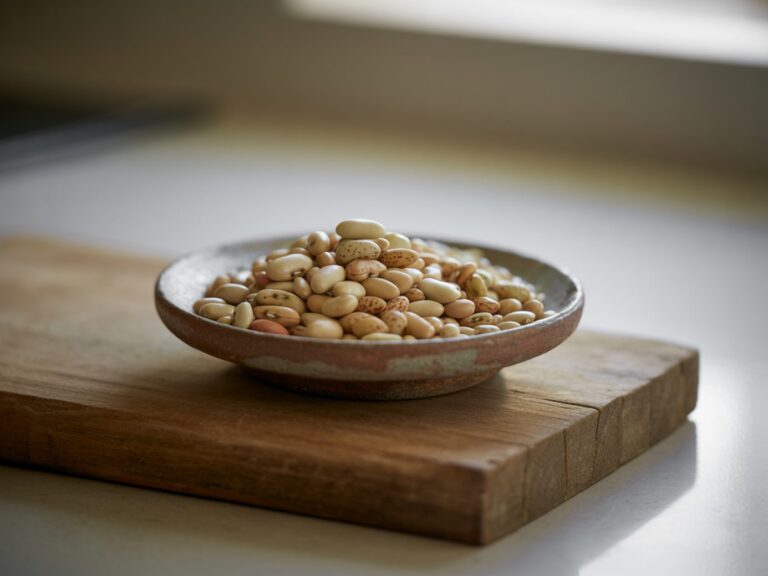
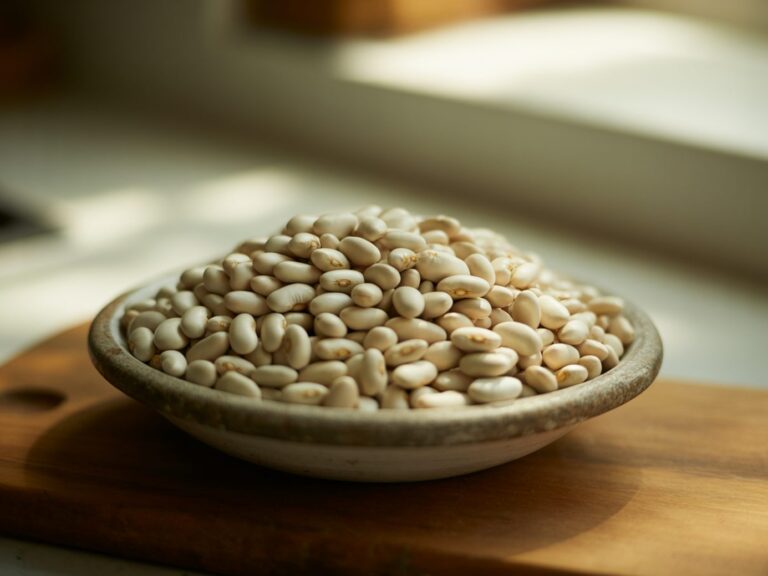
Pinto beans are a mottled tan-and-brown legume that turn a solid pinkish-buff when cooked. They’re the most consumed bean in the United States, beloved for their creamy texture and earthy, slightly nutty flavor. Affordable, filling, and incredibly versatile, they’re a cornerstone of Tex-Mex, Mexican, and American Southwest cooking.
Nutrition
≈ 19 Calories and 0.1g fat per tablespoon.
Pinto beans deliver an impressive balance of plant-based protein and dietary fiber — with roughly 9 grams of protein and 15 grams of fiber per cooked cup — making them one of the most satisfying low-fat foods in the pantry. That fiber includes a meaningful soluble fraction, which helps moderate blood sugar spikes and supports healthy cholesterol levels, so pintos are a smart everyday choice for heart health and blood sugar management. They’re also a meaningful source of folate, iron, magnesium, and potassium, nutrients many Americans fall short on. With very little fat and low sodium when cooked without salt, they’re a clean source of slow-burning carbohydrate energy. Nutrition per 100 g.
Culinary uses & pairings
Pinto beans are the soul of refried beans — mash them with a little lard or olive oil and they become a silky, rich spread for tacos, burritos, and tostadas. They’re equally at home simmered whole in a pot of chili con carne or a simple pot of beans seasoned with onion, garlic, and cumin, where their creamy interior soaks up every bit of the broth around them.
Beyond Tex-Mex, pintos work beautifully in soups and stews, grain bowls, and even baked bean recipes where their soft texture holds a sweet, smoky sauce well. They can be puréed into dips, stirred into pasta e fagioli, or simply served as a hearty side dish alongside grilled meats. Because they absorb flavors so readily, they reward low-and-slow cooking with aromatics more than almost any other bean.
Pairs well with
Substitutions
Buying & storage
When buying dried pinto beans, look for bags with a recent crop date — beans older than one to two years cook unevenly and may never fully soften no matter how long you simmer them. The beans should look uniformly plump with distinct speckled markings and no visible shriveling, cracks, or pinholes from insects. Bulk bins at a store with high turnover are often your freshest bet. For canned pintos, check the label for low- or no-sodium options if you want control over seasoning, and give the can a quick inspection to make sure there are no dents along the seams.
Varieties
- Standard pinto bean: The widely available supermarket variety; tan with reddish-brown streaks that fade to a solid pinkish-buff when cooked.
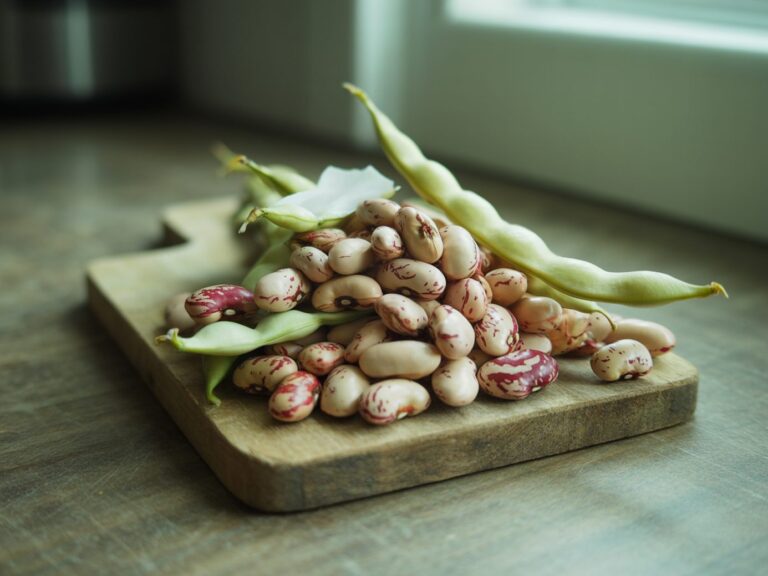
- Anasazi bean: A closely related heirloom with striking red-and-white mottling, a sweeter flavor, and a slightly shorter cook time.
- Rattlesnake bean: An heirloom pinto type with tan pods streaked in dark brown; earthy and rich, popular at farmers markets.
- Painted Pony bean: A modern heirloom variety with dramatic brown-and-cream speckles; creamy texture similar to classic pintos.
Recipes using pinto bean
1 recipes across our recipe sites use pinto bean. A few favorites:
Cooking with pinto bean tonight?
Find pinto bean recipes that match your diet — keto, high-protein, vegan, under 30 minutes — and build a shopping list in one tap.
History & origin
The pinto bean has been cultivated in the Americas for roughly 7,000 years, tracing back to the regions of what is now Mexico and Central America, where wild ancestors of Phaseolus vulgaris were first domesticated. Indigenous peoples of the American Southwest — including the Pueblo and Hopi — were growing pintos long before European contact, and the bean spread through trade routes across the Americas. Spanish colonizers encountered it in Mexico in the 16th century and helped spread it further, but it remained most deeply rooted in the borderlands cooking that would evolve into Tex-Mex and Southwestern cuisine. Today the pinto bean accounts for roughly a third of all dry bean consumption in the United States, making it the undisputed king of the American bean pantry.
How it’s made
Pinto beans are a warm-season annual legume grown from direct-sown seed once soil temperatures reach at least 60°F (16°C). The plant fixes atmospheric nitrogen through root nodule bacteria, making it relatively low-input for farmers. Pods develop after flowering and are left on the plant to mature and dry fully in the field — a process called dry bean production — before the crop is mechanically harvested, threshed to separate beans from pods, cleaned, and graded by size. No additional processing is needed for the dried product; canned pintos are simply pre-soaked, cooked, and packed in water with or without added salt before sealing and heat-sterilizing the cans.
Good to know
- The name ‘pinto’ comes from the Spanish word for ‘painted’ or ‘spotted’, a reference to the bean’s distinctive speckled raw appearance.
- Pinto beans are the number-one selling dry bean in the United States by volume, outpacing navy, black, and kidney beans.
- The speckled markings on a raw pinto bean completely disappear during cooking, leaving a uniform pinkish-tan color.
- Like all legumes, pinto beans contain oligosaccharides that gut bacteria ferment — soaking dried beans and discarding the water before cooking noticeably reduces this effect.
- A single cup of cooked pinto beans provides roughly half the daily recommended intake of folate, a B vitamin critical for cell repair and fetal development.